Job opportunity
Corporate Partnerships Manager
Help empower the lives of everyone born with congenital heart disease (CHD) in our region.
Our Fundraising and Marketing team are the driving force behind our charity. We are 100% self-funded, and we successfully manage a diverse range of income streams to ensure we can deliver our help and support each year. Children’s Heart Surgery Fund are proud of our Corporate Partnerships, we invest in relationships to maximise opportunities for businesses to fundraise for us and get involved in our activities and events.
We are looking for an exceptional person who is a natural relationship builder to join CHSF as one of two full-time Corporate Partnership Managers. Reporting directly to the CEO, you will be responsible for securing new business and seeing these partnerships through to co-deliver meaningful income generating projects that are enjoyable for teams as well as valuable for us.
Closing date: Monday 3 August 2026, 10am
Interviews will be held at our Leeds office wc. 17 August 2026
For more information, including an informal chat about the role please contact ruth.davany@chsf.org.uk
If you would like to apply, please submit a CV and personal statement to detail how you meet the criteria in the person specification. Applications should be emailed to hr@chsf.org.uk
You can also apply via CharityJob by uploading your CV and cover letter.
We are an equal opportunities employer and welcome applications from all parts of the community.
LATEST NEWS
Leah and Brad found out the 20 week scan that their daughter, Mabel, had Coarctation of the aorta, a large Ventricular septal defect (VSD) and a smaller left side of the heart. She had open heart surgery at five days old.
Now Mabel’s family are taking on the Leeds Inflatable 5k to raise funds for CHSF, to say thank you for the care they received.
“Mabel was born in December 2025, but our heart journey began much earlier. At our 20-week scan, we were told that Mabel had serious heart problems. Like the 13 babies in the UK who are diagnosed with congenital heart disease (CHD) every day, Mabel would face challenges from the very beginning of her life.
“From that moment on, we were cared for by the amazing team in Leeds, and throughout our journey there were many charities that supported us. However, the charity that made the biggest difference to our family was Children’s Heart Surgery Fund.
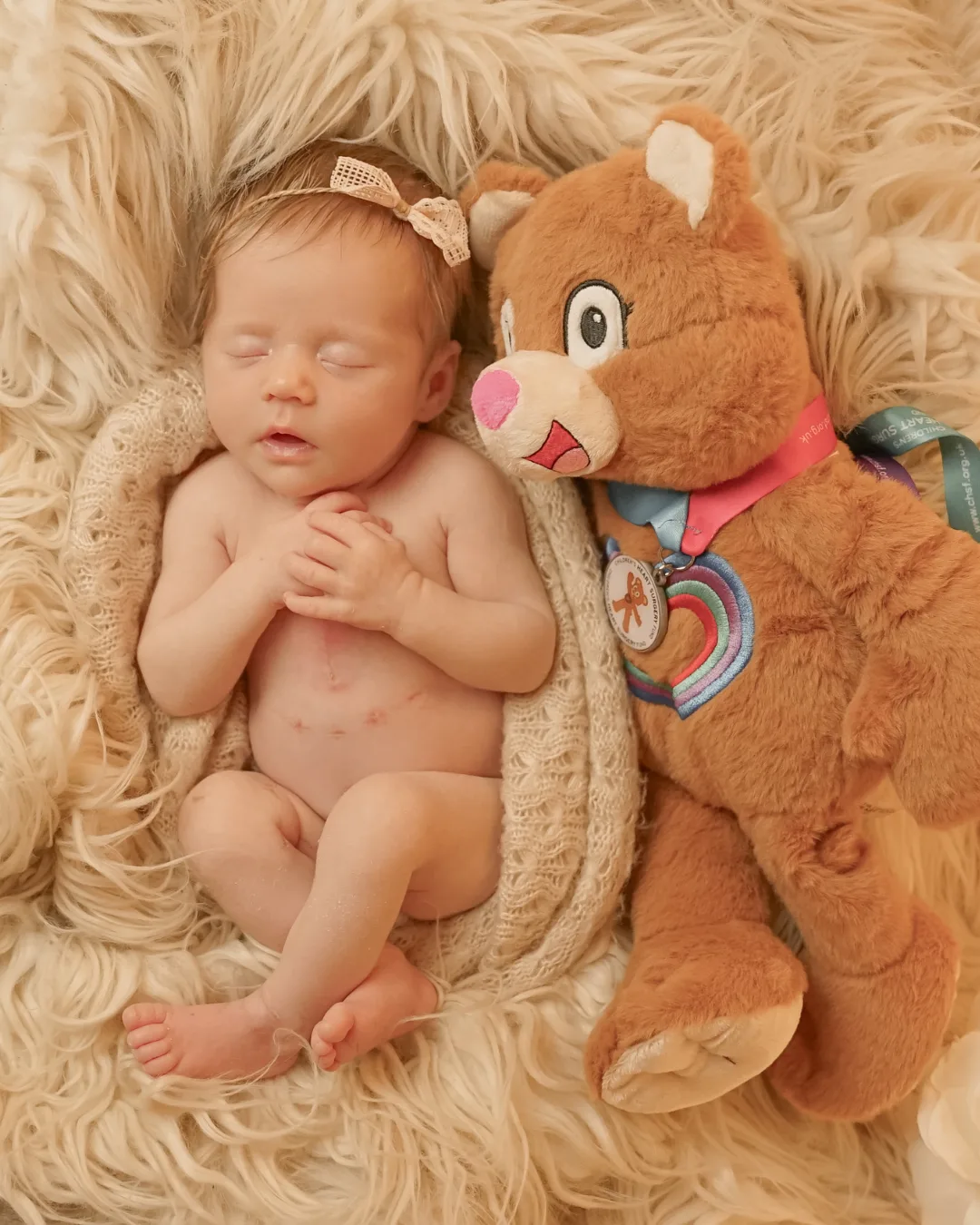
“When Mabel needed open heart surgery, they gave us a place to stay near the hospital, providing us with so much more than just accommodation. We had our own private bedroom, bathroom, kitchen, dining area, living space and laundry facilities – a safe and comfortable place to stay close to our little girl while being so far from home.
“They also helped ease the financial pressures of our stay by providing money for washing facilities, toiletries, food and other essentials. Their kindness didn’t stop there. Mabel received a Katie Bear, a medal and a certificate to celebrate her incredible bravery after open heart surgery. Her big sister, Delilah, was also made to feel special with a Super Sister sibling certificate.
“Throughout our stay, Katie Bear paid visits with gifts, and the charity made sure Christmas was magical despite everything we were facing. On Christmas Eve, they brought presents for us and both girls, and on Christmas morning we woke up to huge bags of gifts waiting outside our door. During one of the hardest times of our lives, CHSF brought comfort, joy and hope when we needed it most.
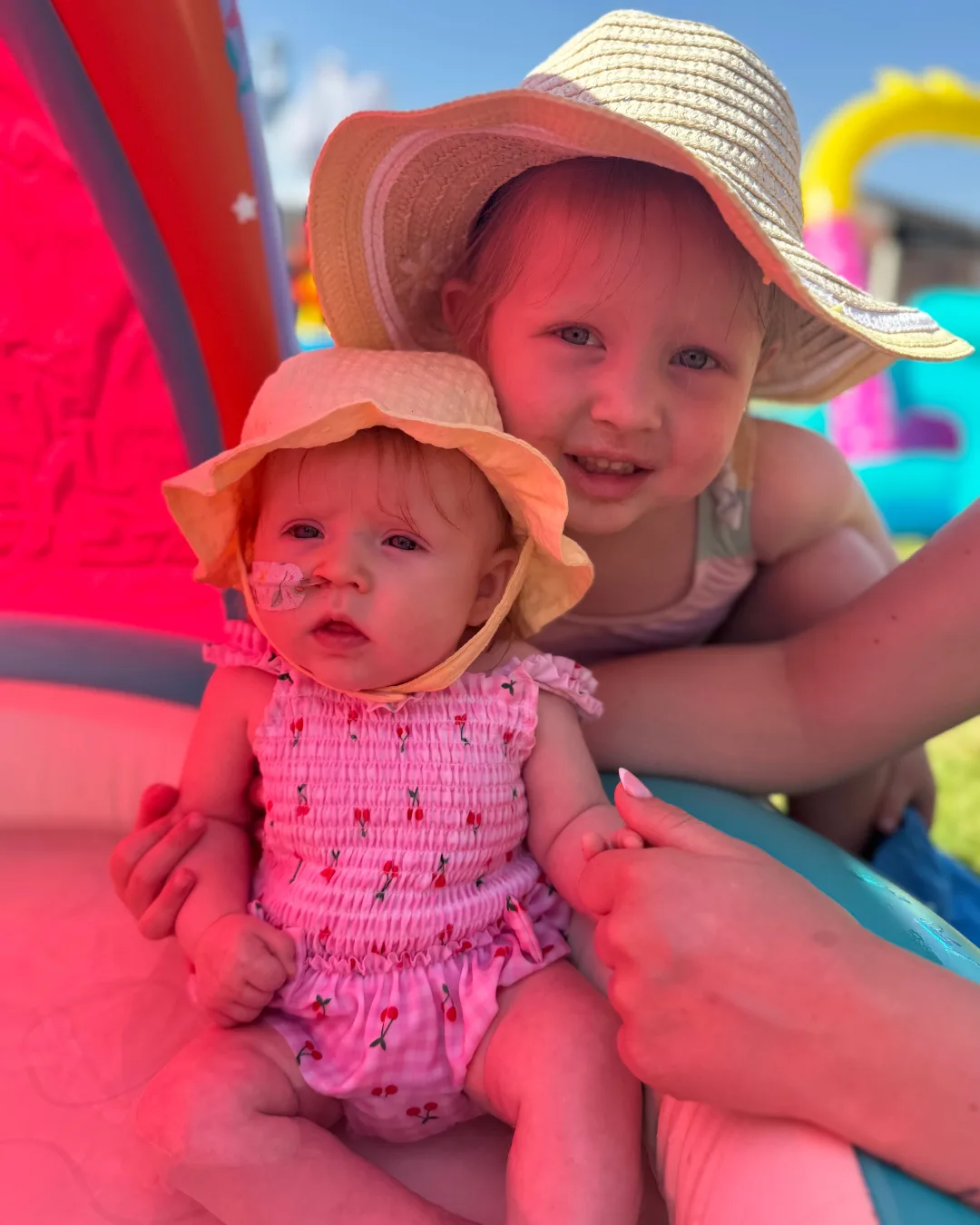
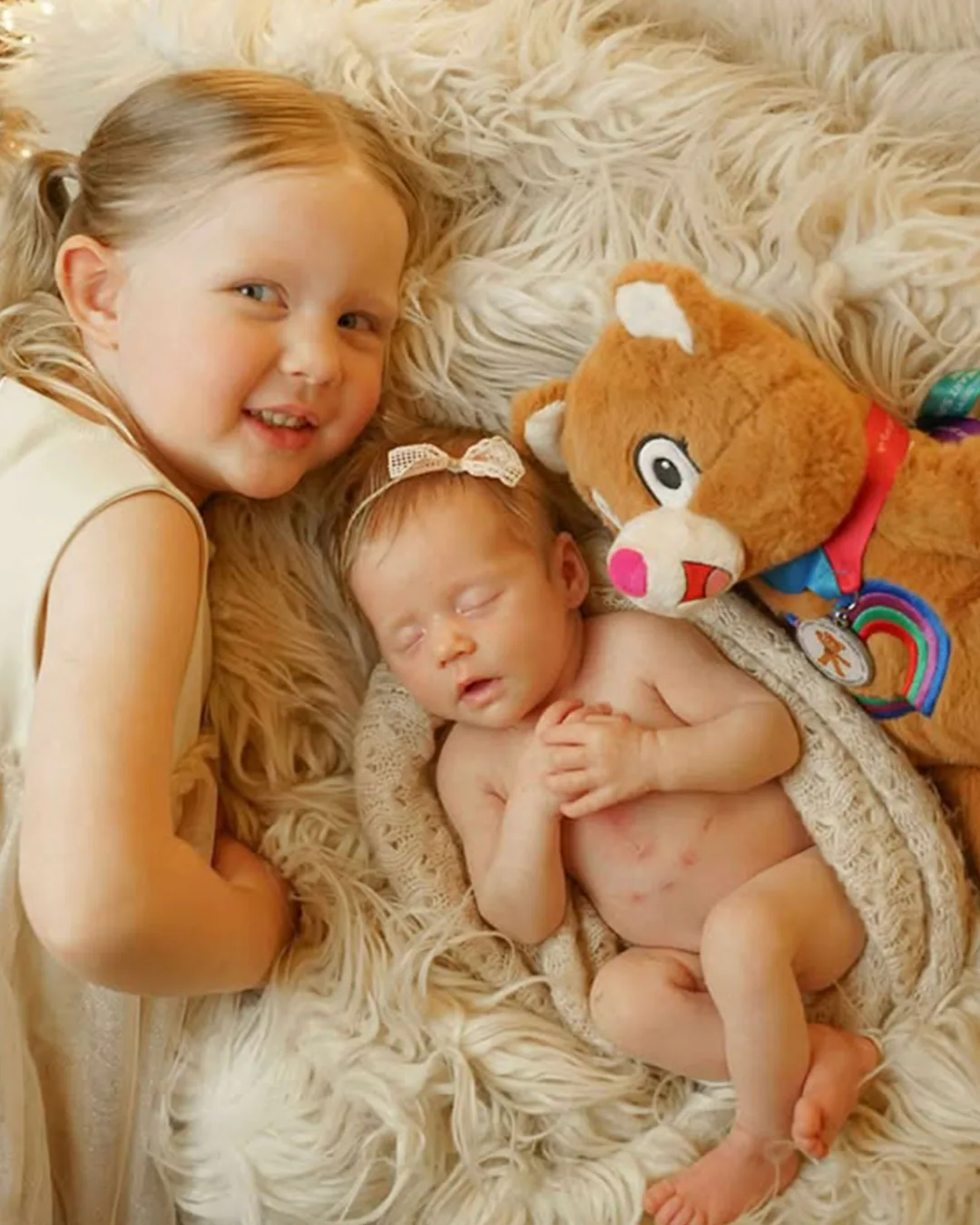
“What many people don’t realise is that Children’s Heart Surgery Fund does so much more. They provide things like home heart-monitoring devices, training for cardiac staff – the list goes on. They are not a government-supported charity, so everything they do is only possible thanks to donations and fundraising.
“Quite simply, we couldn’t have made it through our journey without them.
“This is why on 20th June, me, Brad, Alicia and Kenisha will be taking on a 5K Inflatable Run to raise money for the incredible Children’s Heart Surgery Fund.
“We want to give something back to the charity that gave so much to us and helped carry our family through the toughest chapter of our lives. Every donation will help CHSF continue supporting children with heart conditions and their families, providing practical help, comfort and care when it is needed most.
“Thank you for supporting us, supporting Mabel, and helping other families facing a similar journey. Every mile we run is for Mabel, and for every child and family who needs the support of Children’s Heart Surgery Fund.”
A huge thank you to Leah, Brad, Alicia and Kenisha who are taking on the 5K Inflatable Run to raise funds for CHSF tomorrow! Please sponsor them if you can! www.justgiving.com/page/leah-rattenbury-1
A donation today helps us continue providing practical, family‑focused support to babies like Mabel and their loved ones throughout treatment and recovery.
Please help us continue to support more families who need us.
“The support was amazing and the team got me through the hardest time of my life. Amazing support” — heart mum
During the month of May…
- 39 families worked with overall
-
23 families received a tailored packaged of Family Support
-
8 families engaged with
—
-
6 young people and their families worked with and supported
- 13 Travel Grants given
- 7 attended Cardiac Cafe
- 27 Supermarket Vouchers given
- 0 Exceptional Grants given
Moments this month
Chylothorax Snacks
Sometimes the smallest ideas can make the biggest difference. This month, through conversations with the play team and dietitian, we identified a new way to support children on Ward 51 who are following a Chylothorax diet as part of their recovery.
A Chylothorax diet is a special low-fat diet used to help some children recover after heart surgery by reducing strain on the body while it heals. We recognised that many of the snacks typically offered through the wellbeing trolley were not suitable for these patients, meaning some children were unable to fully take part when the trolley visited the ward.
In response, we created a dedicated snack box filled with “Chylothorax safe” options for children and families to choose from. This simple initiative has helped ensure children on restricted diets can still be included in wellbeing activities, offering them greater choice, independence and a sense of normality during their hospital stay.
“Thank you to all the supporters that have allowed us to provide some tasty snacks for our patients on the specialist MCT diet! The diet is needed in some cases after surgery to stop drains flowing. It is really hard to stick to and very limited, meaning meals can be boring, and snacks can be repetitive. Having some different options available is exciting and brightens up a boring day on the ward. It will also help children struggling with weight loss to get some extra energy on board. This will really help so many children moving forward.” – Alix, Dietitian
Being able to choose a snack alongside other children may seem small, but for families navigating long inpatient stays and recovery, these moments of inclusion and autonomy can have a meaningful impact on emotional wellbeing.
Family Support on the Road
Leeds Cardiac Cafe
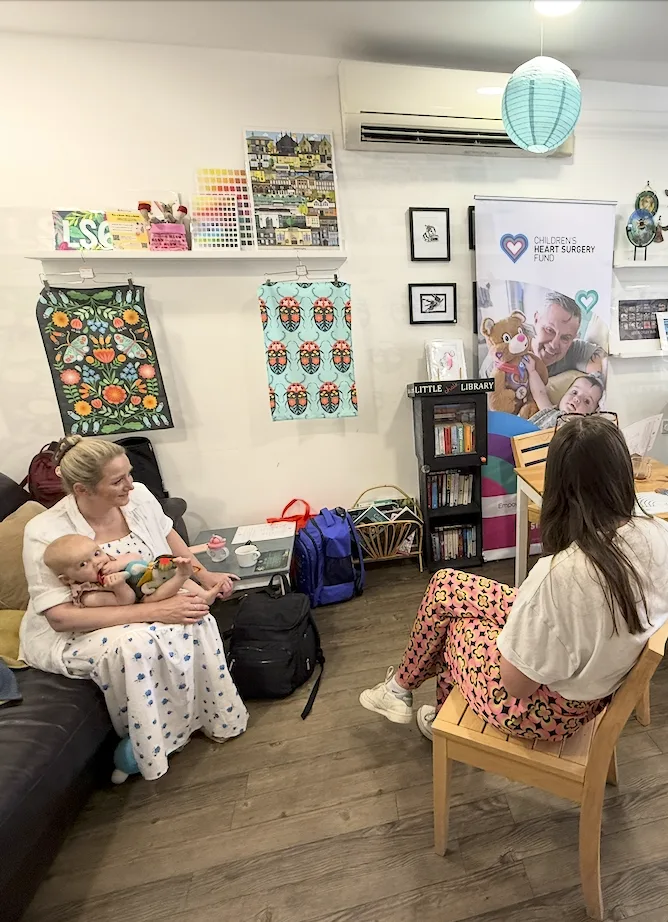
This month we hosted our Cardiac Café at Café 21 Co, a lovely coffee shop run by our friends at Sunshine and Smiles. We always value opportunities to work alongside organisations whose values align so closely with our own, and it was incredibly special to bring families together in a space built on inclusion and understanding.
The Cardiac Café provided a safe and social environment where families could connect with others who simply “get it”, without needing to explain their story, justify their emotions or feel like they need to hide their experiences.
These informal community spaces continue to be so valued by the families we support. They offer opportunities for peer connection and create moments of understanding away from the hospital environment. For many parents, simply being able to sit with others who understand their journey can be incredibly powerful.
One parent shared:
“Thank you to the ladies at the Cardiac Cafe in Leeds today, enjoyed a coffee with some lovely company. Highly recommend for families to come along to these in the future, a great space to share all sorts of emotions and stories with a team who have been with us from the very start.”
Feedback like this this highlights the importance of creating compassionate spaces where families feel listened to, supported and part of a wider community throughout their heart journey.
How is Family Support making a tangible difference to families?
Celebrating Siblings
This month, we continued to recognise the importance of supporting not only our patients and parents, but the wider family unit too. One family has now been on the ward for over six weeks, with mum staying alongside baby throughout this time. During the month, the patient’s older sister was able to visit the hospital for a special sibling visit. To help celebrate this important moment, we presented her with a personalised “Super Sister” certificate, including her name and the date of her visit.
Although a small gesture, the impact was significant. The visit allowed the sibling to feel included in her sister’s journey and recognised for the important role she plays within her family. Her time on the ward was filled with cuddles, play and quality time together, helping to maintain family bonds during a prolonged hospital admission. Alongside ongoing practical support through travel grants and weekly Tesco vouchers, this moment highlighted the importance of emotional wellbeing and ensuring siblings feel seen, valued and connected during challenging times.
Taking a break
Long-term hospital admissions can be a hard time, particularly when families are balancing life between the ward and hospital accommodation. This month, we supported one family who have been in hospital for over two months with a Deliveroo voucher for mum and dad.
Following conversations around wellbeing support, the family shared that what would help them most was the opportunity to enjoy a hot meal together without the pressure of cooking or leaving the hospital. By providing a takeaway voucher, parents were able to spend intentional time together in the Brotherton Wing accommodation while remaining close to the ward and their child. This offered both comfort and peace of mind.
While practical in nature, this support created space for parents to pause, reconnect and feel cared for themselves, something that can often be overlooked during lengthy inpatient stays.
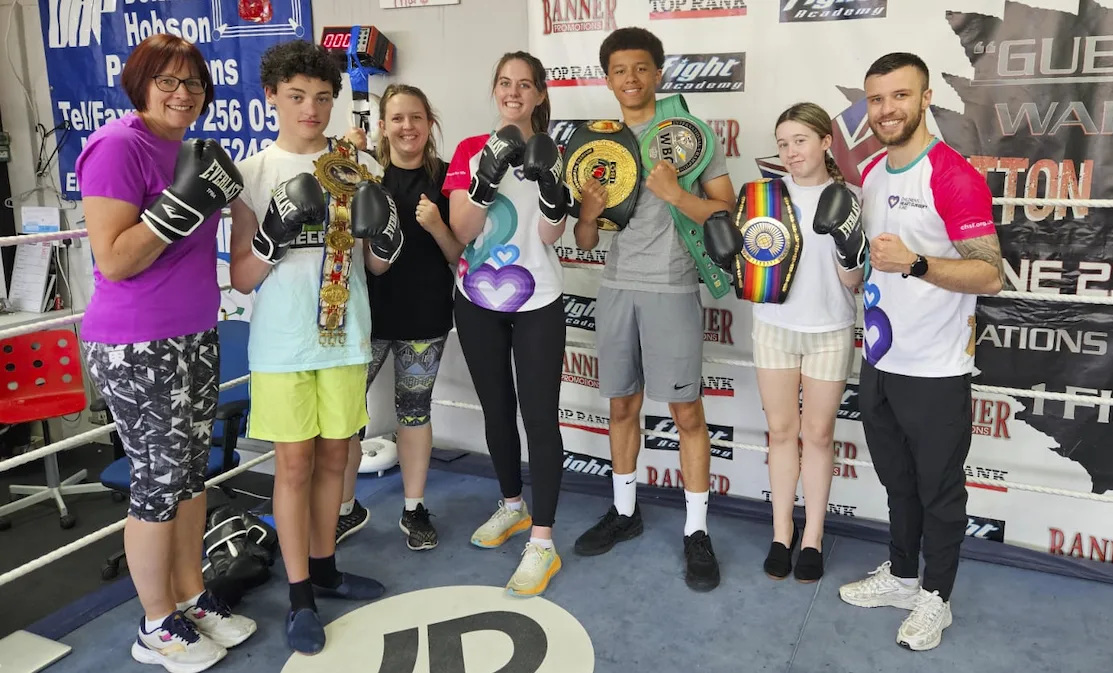
Youth Event
Boxing with Tommy Frank
This month we teamed up with our ambassador, Tommy Frank, to deliver a ‘Boxing for Wellbeing’ workshop for young people. Tommy Frank is a professional boxer from Sheffield who was born with congenital heart disease and underwent open heart surgery at the age of five. He went on to build a successful career in boxing, becoming a champion and using his platform to inspire others.
The session gave young people the opportunity to learn basic boxing techniques in a safe, supportive and inclusive environment, while also hearing Tommy’s powerful personal story. His journey offered a clear message that a health condition does not define potential, and that goals and ambitions can still be achieved, even if the path looks different.
Young people were fully engaged throughout, working collaboratively to learn boxing combinations, try something new, and build confidence through movement and activity. The workshop also provided a valuable space for focus, self-expression and wellbeing, with both young people and staff actively participating and enjoying the session together.
Tommy’s encouragement and openness had a lasting impact, helping young people reflect on resilience, identity and what they can achieve.
Find out more about our work with young people here.
It’s only with the help of our incredible supporters that we can continue to be there for every family that needs us. Thank you.
Find out more about CHSF Family Support
We are extremely grateful to The Liz & Terry Bramall Foundation for their generous support over three years towards our Family Support Service.
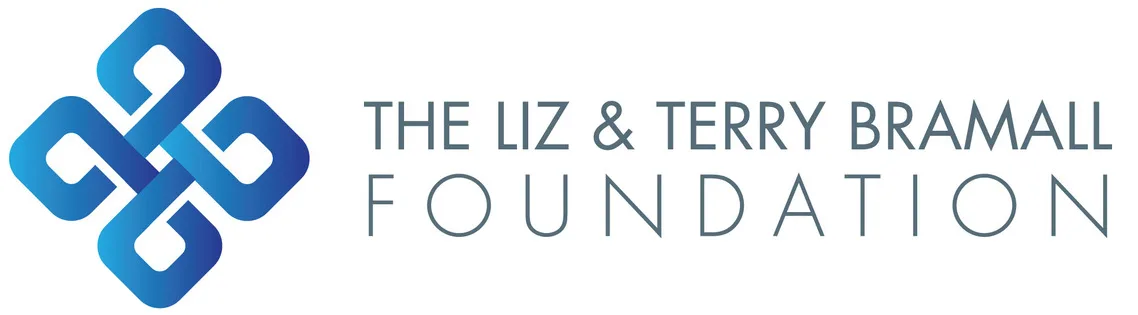
Because of the incredible work of the Leeds Congenital Heart Unit and because of your support, Kalina celebrated her first heartiversary on 3rd June this year.
Happy Heart Day Kalina from all of us at Children’s Heart Surgery Fund!
Kalina’s mum Karly-Kay said:
“It’s been a whole year since discharge.
“I still see blue themed corridors and hear the noises from being in intensive care, the sound of crash carts rushing to go save another child’s life and the goosebumps that follow. The “we’ve got this” look from fellow heart parents.
“I remember the long, sleepless nights. The drains coming from her chest and the endless wires in every direction I looked. The dressings, the stitches, the medications.
“But I also remember how her eyes lit up when she first saw us after surgery – like all was right in the world because her mum was there.”
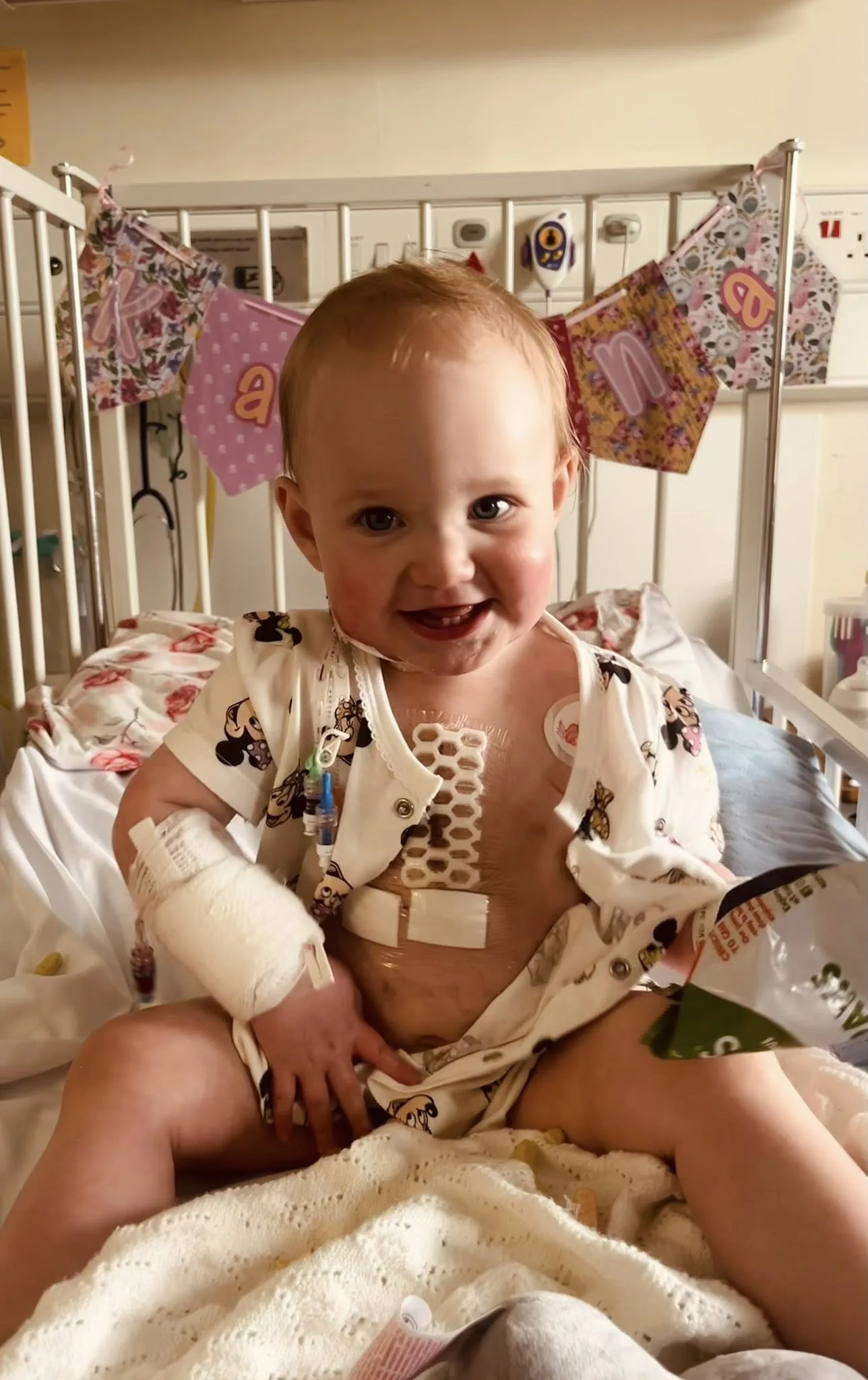
“With a daughter like mine, the good will forever outweigh the bad. But this past week- marking a year since life-saving open heart surgery, we let ourselves feel, reminisce and remind ourselves how incredibly grateful we are to get a second chance at doing life together.
“7 hours , 8 minutes and 54 seconds in theatre for a lifetime of gratitude and love. Thank you Children’s Heart Surgery Fund for making miracles happen and thank you to Dr Giuseppe Pelella for saving my child’s life.
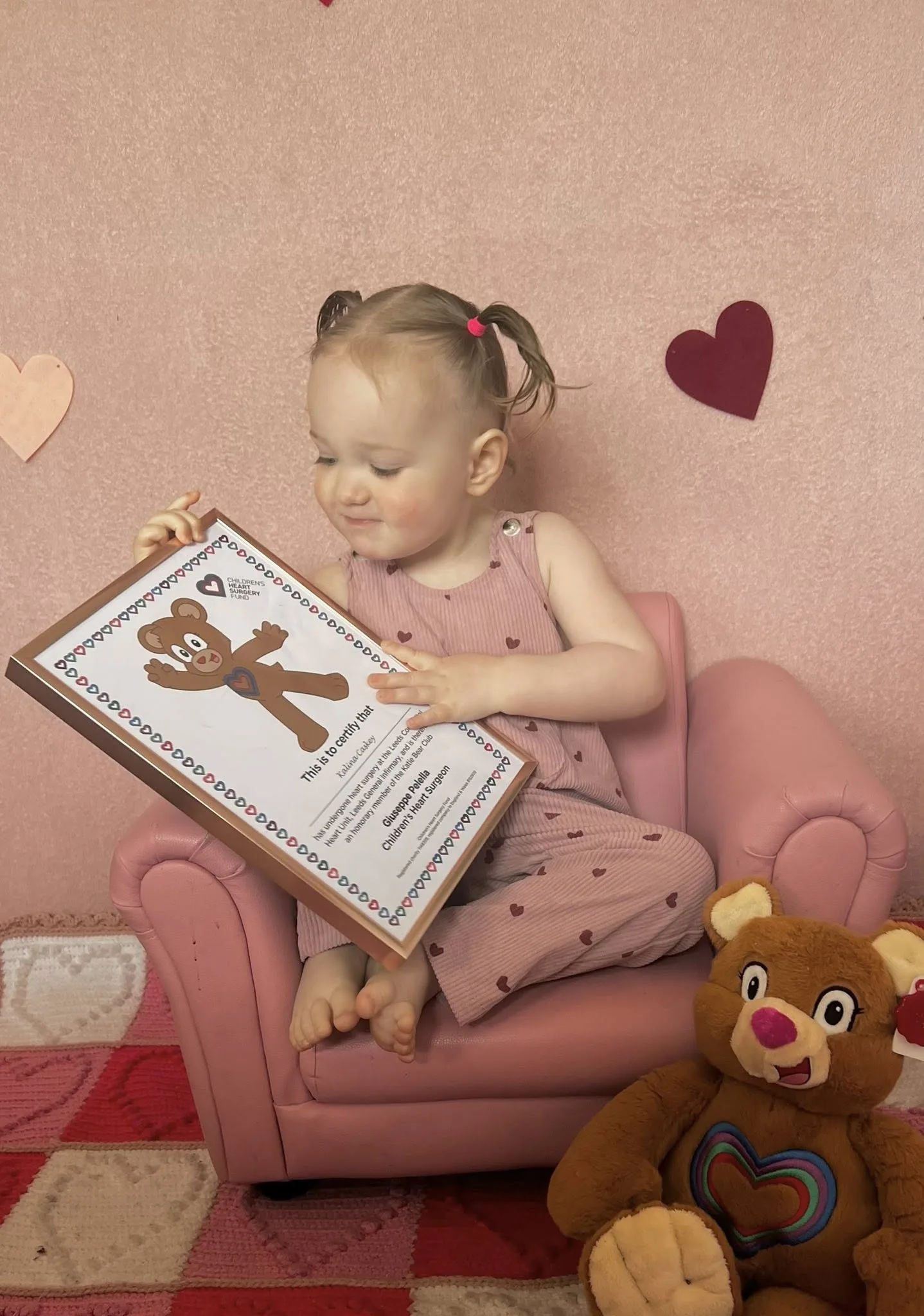
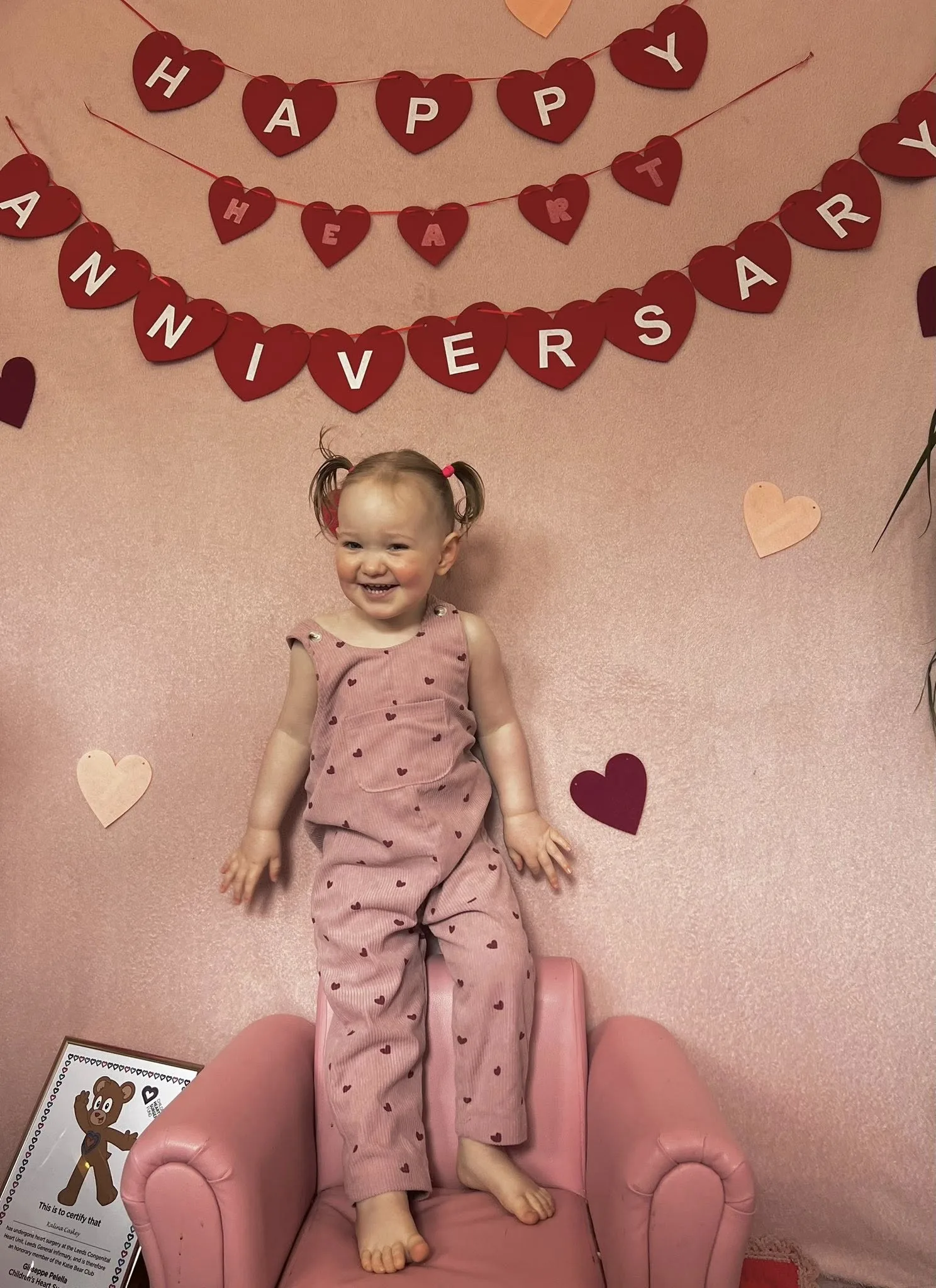
“I will never stop bragging about my heart warrior but also about every single person who has been a part of our journey to get to where we are. Every surgeon, every doctor, every specialist, every PICU nurse, every HDU nurse, every staff member on L51. You didn’t just save her life, you saved mine.”
A donation today helps us continue providing practical, family‑focused support to babies like Kalina and their loved ones throughout treatment and recovery.
Please help us continue to support more families who need us.
Heart mum Danielle shares her experience of daughter Matilda’s heart condition – from diagnosis at 20 weeks to the time they spent at Leeds General Infirmary and once home.
She’s now taking on a 100km Ultra Challenge to give something back to CHSF after the support her family received along the way.
“When I was around 20 weeks pregnant, I had an amniocentesis due to a suspected chromosome normality. It was during that scan that the consultants noticed a problem with Matilda’s heart.
“I was sent straight for a scan with the cardiology team and they initially diagnosed Hypoplastic left heart syndrome (HLHS). They said that Matilda would need several operations and may not live beyond five years old – which obviously broke us.
“But as her parents we had to keep fighting for her. I had scans every week – sometimes several times a week – and towards the end of my pregnancy, a scan revealed that it her heart issue wasn’t HLHS afterall and was Coarctation of the aorta (CoA) and Bicuspid Aortic Valve (BAV).
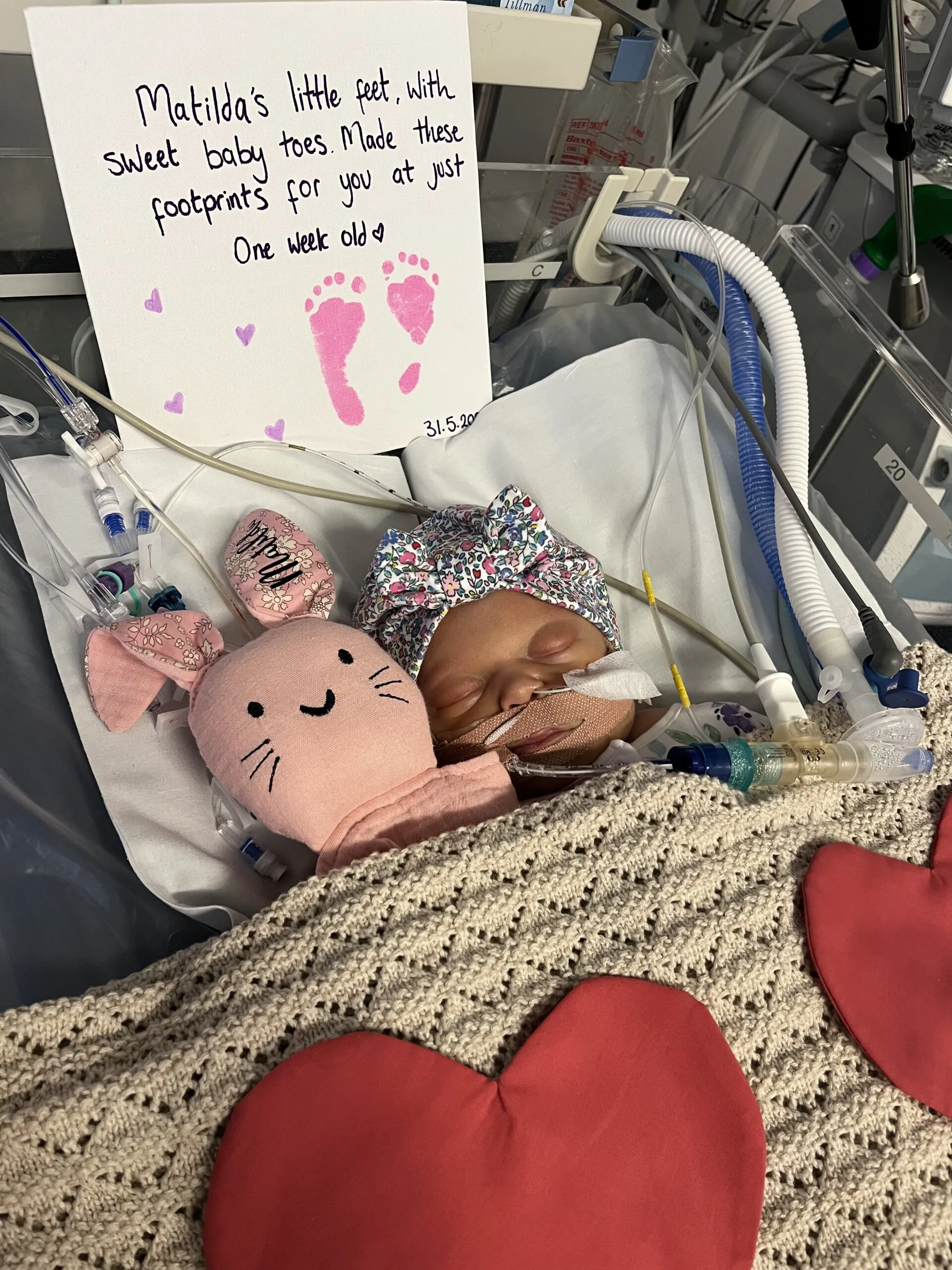
“I had a planned induction at Leeds General Infirmary (LGI) and we stayed there for around one month. Matilda had open heart surgery at five days old and had a keyhole surgery at five months old. She now has scans around every nine months and is doing amazingly well!
“During one of the most difficult and emotional times in our lives, CHSF were there in so many ways. Whilst in hospital we felt totally helpless, but Children’s Heart Surgery Fund were there to offer emotional support, and also financial support too. We lived in Eckersley House whilst there which we are extremely grateful for (CHSF make a donation towards this accommodation each year). CHSF provided us with a grant so that during the hardest time of our lives, at least the financial strain was reduced.
“They helped to provide food vouchers while staying in hospital, small but meaningful gifts like Katie Bear (their mascot teddy), certificates and medals for heart warriors, and crucial emotional and psychological support for families going through similar experiences.
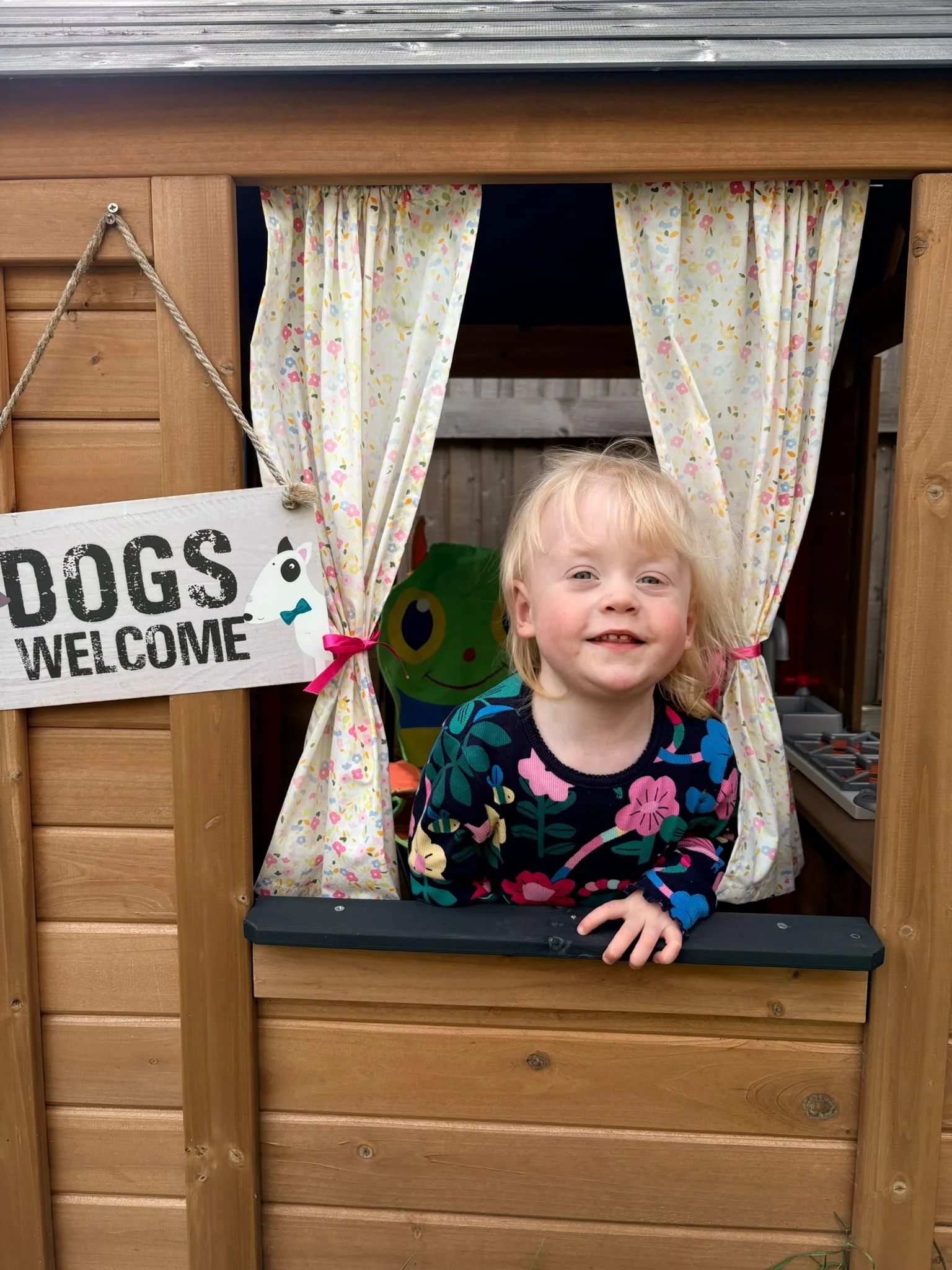
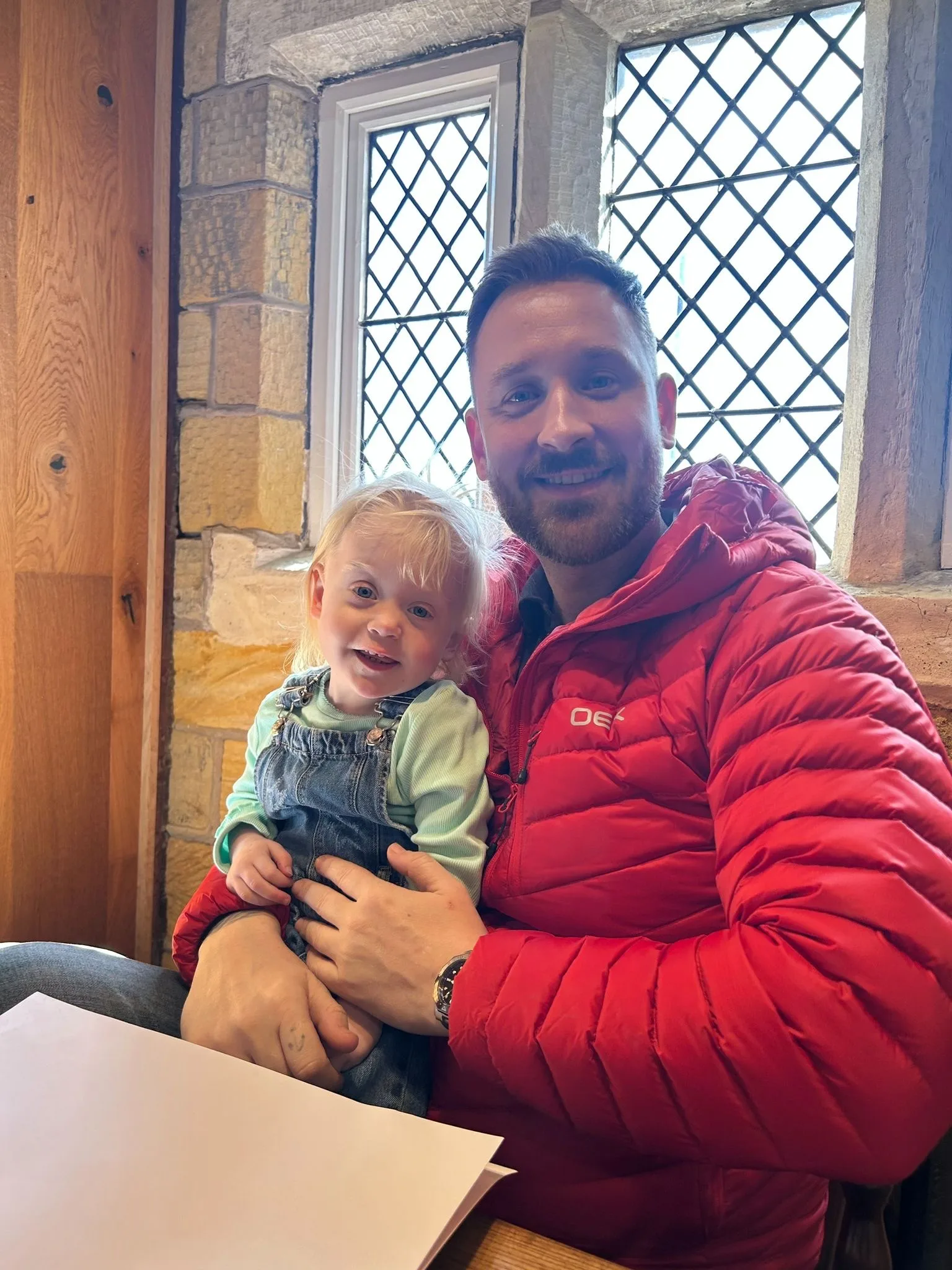
“The Charity still support me now. I am in regular contact with the team and I am so grateful that I am able to turn to CHSF for support. Their social media page has also enabled me to reach out to other heart warrior mums which has helped so much. Thank you so much for all you have done for me and my family!
“On Saturday 4th July to raise funds for CHSF, I am taking on the Peak District 100km Ultra Challenge. I want to give as much back as I can and raise as much awareness as possible. In many ways, I keep thinking… ‘if I can get through those moments and the pain of seeing her go through that, then I can get through this challenge too.’ This run is my way of turning that experience into something positive.
“I’ve wanted for a long time to give something back but never felt able to do anything meaningful enough. I may not be able to change what we went through, but I can take on something that pushes me to my limits to help support other families who will go through the same thing.”
Danielle is taking on the Peak District 100km Ultra Challenge to raise money for CHSF and to support other families going through similar experiences. If you’d like to support her, you can donate at www.justgiving.com/page/danielle-nugent-5

Matilda turned 2 on 24 May, because of you!
We want to shout the biggest “Happy Birthday” to Matilda from all of us at Children’s Heart Surgery Fund.
We hope you have the best day!
A donation today helps us continue providing practical, family‑focused support to babies like Matilda and their loved ones throughout treatment and recovery.
Please help us continue to support more families who need us.
“Thank u for remembering me. I can imagine u meet lots of families“
— heart mum, during a ‘touching base’ call
During the month of April…
- 63 families worked with overall
-
25 families received a tailored packaged of Family Support
-
38 families engaged with
—
-
16 young people and their families worked with and supported
- 5 Travel Grants given
- 10 attended Cardiac Cafe
- 21 Supermarket Vouchers given
- 0 Exceptional Grants given
Moments this month
There for the ‘firsts’
“We have a 4-month-old who has been in hospital since birth. Like many of our newest heart warriors we watch them grow and develop, we are there to see their firsts and share the small wins with families.
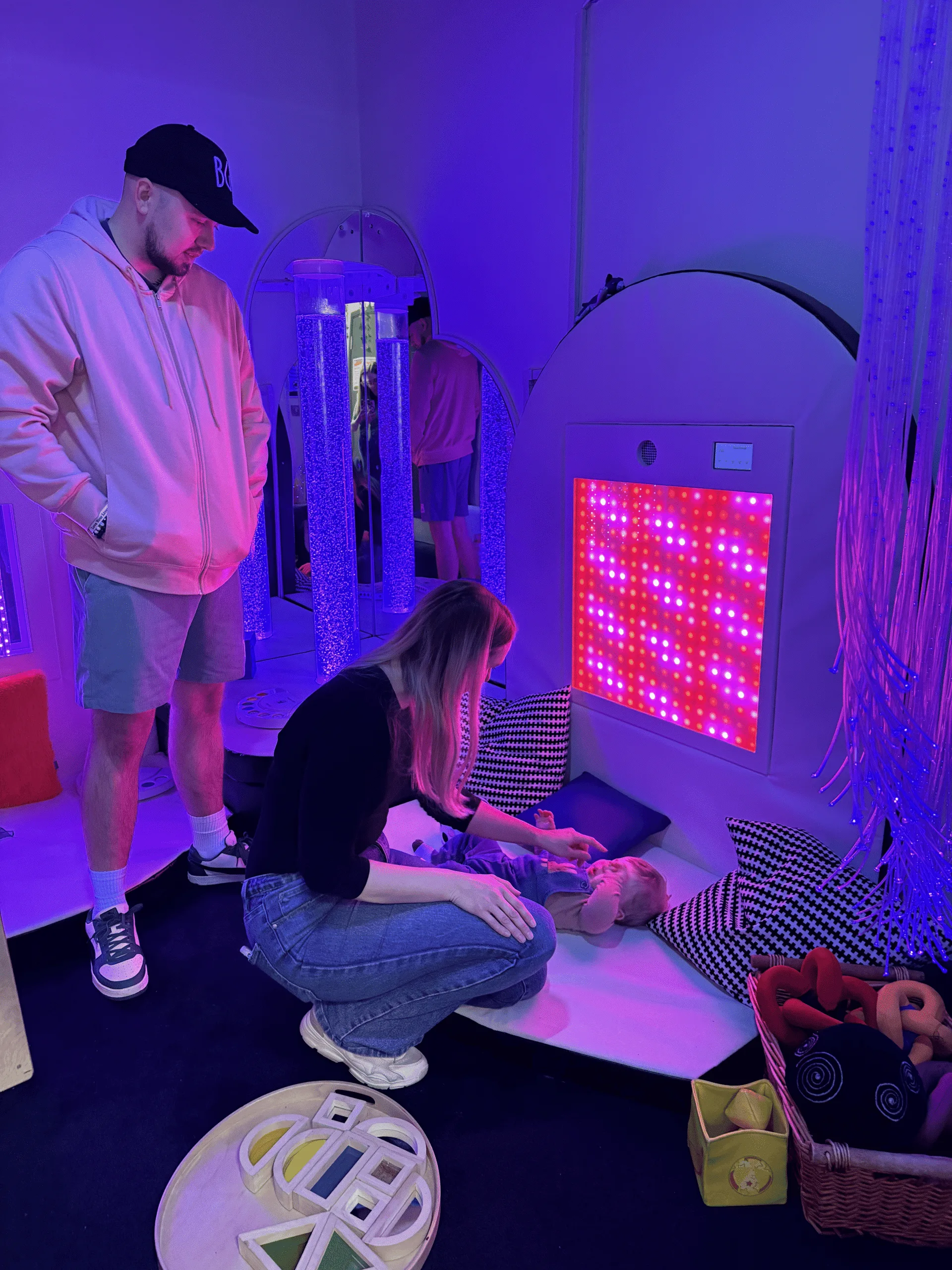
“This particular baby is developing to be very nosey and has started exploring his environment as Mum holds him in her arms which is something she wasn’t able to do for such a long time. Knowing the family and recognising how much he is starting to explore we were able to wheel in the L51 Sensory Trolley (funded by CHSF) – this is something Mum had never used before.
“On seeing how happy both Mum and Baby were as he watched himself in the mirror whilst looking at the lights, we knew this gesture of understanding their needs had created a lasting first for them and a small win we were able to share together.” – Lu, Family & Youth Support Worker
Including the whole family
“When a newborn was rushed to Leeds as an emergency admission, we were there immediately for the family to offer the practical support needed, however it is the relationship we have built that has enabled Mum to feel safe, voice her needs and feel connected to CHSF.
“The family is of Muslim faith, and this is something that is so very important to her especially now her son is critically ill. We have prioritised respecting Mum’s religious beliefs, talking about this with her, asking questions and taking time to understand the importance of it. Her family are also very present and supportive, and again we take the time to greet them, ask how they are and make them feel included.
“We go the extra mile to make each family feel like they are the most important thing to us in that moment, and we can’t possibly put a cost on valuing another person and what this means to them as an individual.” – Sarah, Head of Family Support
Family Support on the Road
Sheffield Cardiac Cafe
This month the team went to Sheffield for our fourth cardiac café of the year. Four families (10 people) attended and shared their journey and experiences. Over cups of tea families were able to make connections and hear about what helped them through their journey. For some it was fundraising, for other it was music and sometimes, it was simply being with their family.
The Family Support team were able to connect with families and provide support and referrals after the event.
How is Family Support making a tangible difference to families?
Visiting siblings and cousins
In April we have seen many families visiting the ward over the Easter holidays and on sunny afternoons. We have been able to keep siblings and visiting cousins entertained with packs of crafts, Lego and ‘Super Sibling’/’Super Cousin’ certificates. These make the children who aren’t the patient feel seen and valued by CHSF.
Young adults on the ward
This month the team have been supporting long-term inpatients on the wards. This has included a craft session, organising a much appreciated Bubble Tea treat, and working closely with the team of Leeds Teaching Hospitals Trust youth workers to engage young people and encourage them to attend Youth Club.
Heart families in community
This month saw the launch of the Family Support ‘Touching Base’ model where the team follow-up with families after they have been discharged. This is to check in with families and see if they need any more support from CHSF.
From these calls the Family Support team have supported families with finding food banks, signposting for housing support, connecting families with their local family hubs and simply just having a chat.
It’s only with the help of our incredible supporters that we can continue to be there for every family that needs us. Thank you.
Find out more about CHSF Family Support
We are extremely grateful to The Liz & Terry Bramall Foundation for their generous support over three years towards our Family Support Service.
For children and young people living with congenital heart disease – and for their parents and carers – outpatient appointments can bring anxiety, sensory overload and lots of waiting in an unfamiliar environment.
Thanks to funding from Morrisons Foundation, and because of the incredible generosity of Children’s Heart Surgery Fund (CHSF) supporters, a Rhino Sensory Voyager Hurricane Trolley is now supporting young patients and families at Leeds Children’s Hospital.
CHSF supports the Leeds Congenital Heart Unit at Leeds General Infirmary, it’s patients with congenital heart disease, and their families across Yorkshire, North Lincolnshire and North-East Derbyshire. We know from families that hospital experiences don’t just affect the moment you’re there – they can shape how a child feels about treatment well into adulthood.
The Rhino Sensory Voyager Hurricane Trolley has been introduced to help change that experience for children and young people attending cardiac outpatient appointments. This mobile, multi-sensory trolley brings together colourful interactive projections, fibre optic lights and calming sounds, helping to create an environment that can be tailored to each child’s needs.
Whether it’s used to create a calm, relaxing space, a playful distraction, or a quiet “safe zone”, the trolley gives families more choice and control during what can often be a stressful visit.
A big impact for children with additional needs
Outpatient clinics can be overwhelming, particularly for children with additional needs.. The Leeds Congenital Heart Unit cares for a high proportion of children with learning disabilities – for example, congenital heart conditions are present in around 40–60% of babies born with Down’s syndrome.
Until now, there have been limited sensory resources available in the outpatient setting. The Rhino Sensory Voyager Hurricane Trolley helps to fill that gap, supporting children who may struggle with noise, bright lights or long waiting times – while also easing anxiety for parents and carers.
We previously funded a sensory trolley on the children’s heart ward (L51). One parent said:
“We were delighted to be asked if Hollie wanted the sensory trolley in her room. Hollie absolutely loves the coloured lights. It gives her a great distraction from other things around her.”
A member of the Leeds Teaching Hospitals NHS Trust Learning Disability and Autism Team also highlighted the wider benefits:
“They provide people with calming sensory stimulus which leads to a more relaxed environment, reducing anxiety and boredom and promoting an environment where health care becomes more accessible.”
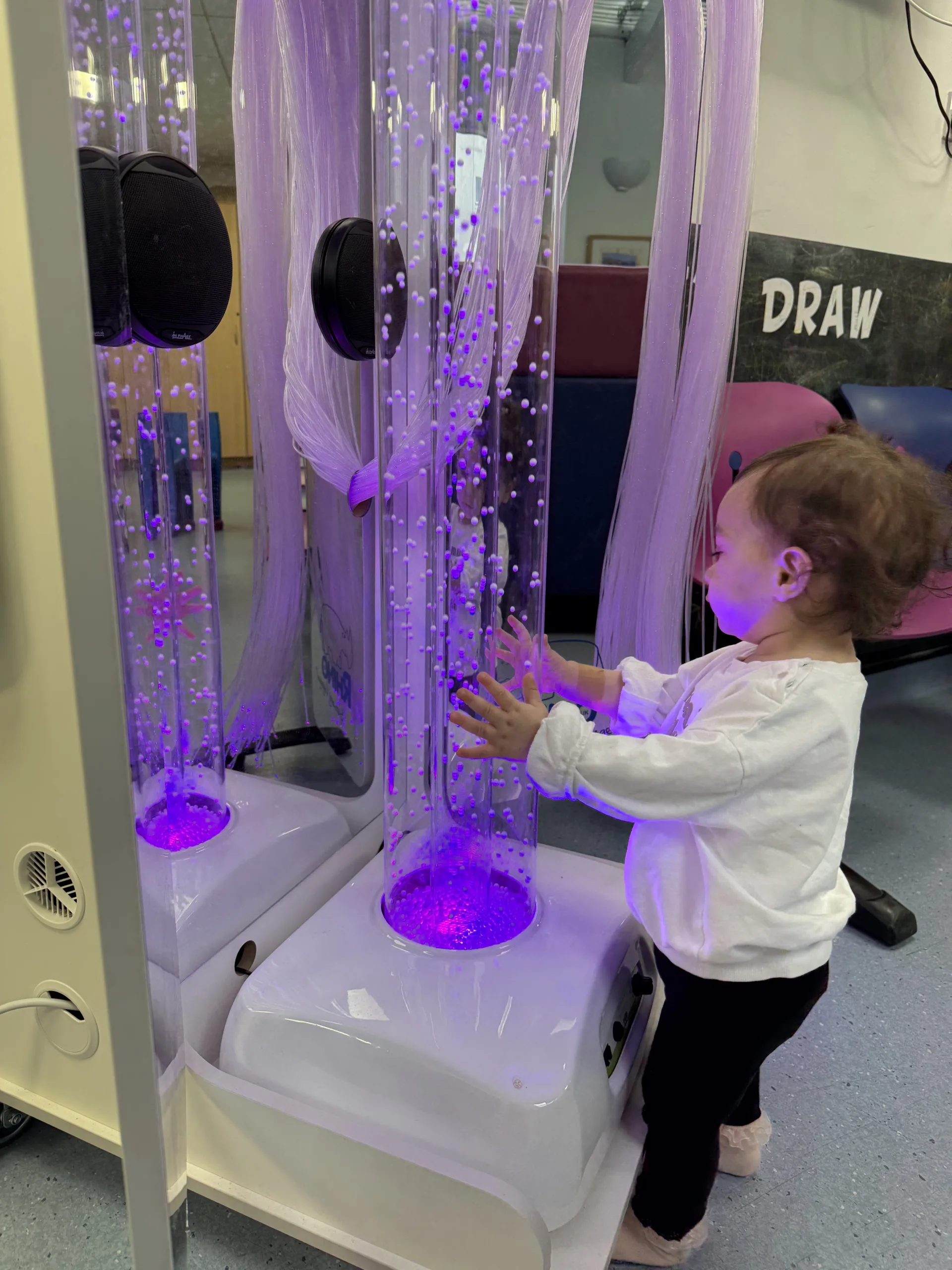
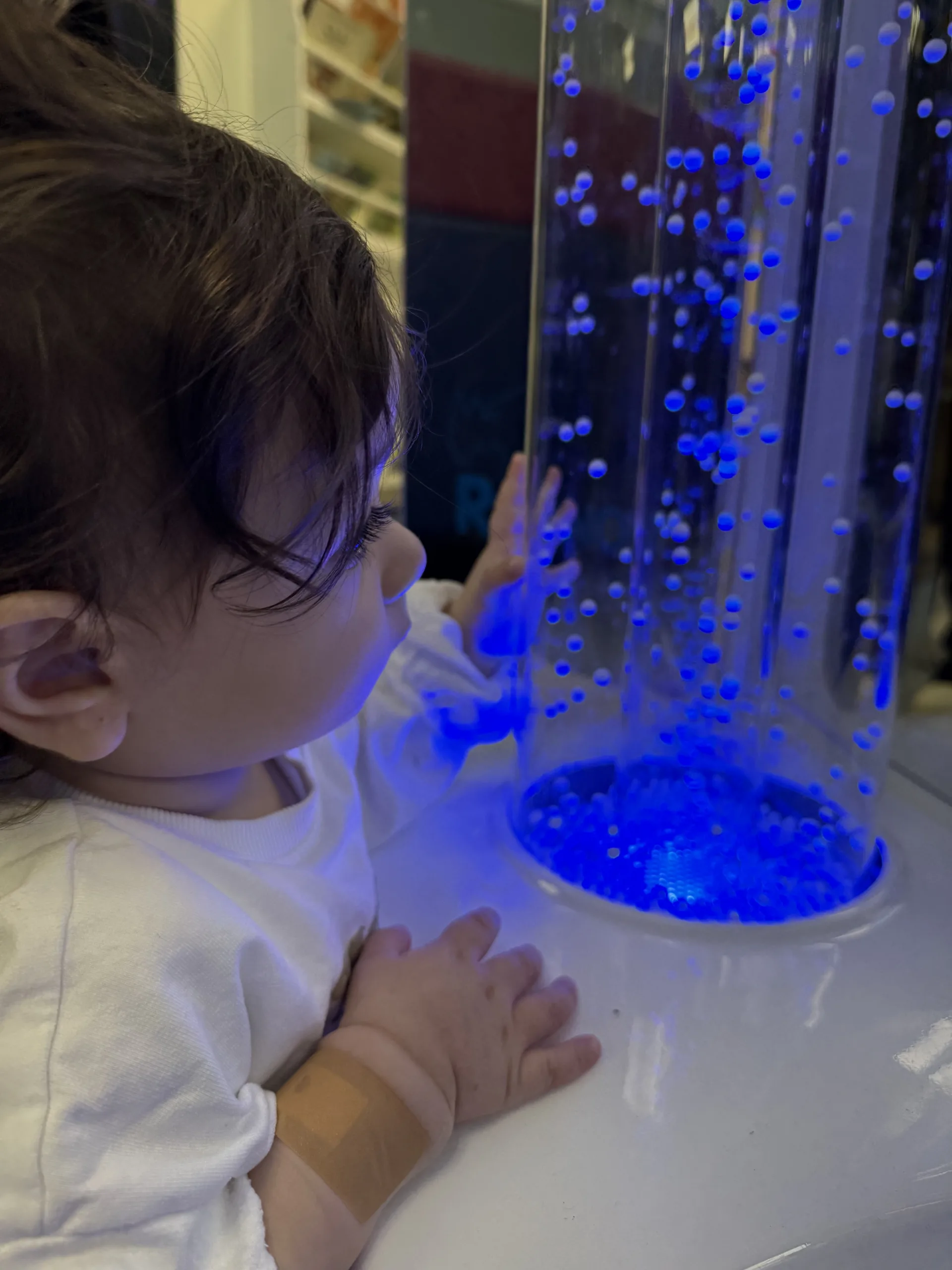
The sensory trolley will be used every day in the cardiac outpatient waiting area and can be moved into individual clinic rooms when needed. Around 4,700 young patients attend cardiac outpatient appointments each year, and many thousands of family members pass through the department alongside them.
We expect the Rhino Sensory Voyager Hurricane Trolley to benefit countless children and families – promoting enjoyment, relieving anxiety and helping children build more positive associations with hospital care.
Thank you Morrisons for making this possible!
We are incredibly grateful to Morrisons Foundation for funding this vital project and recognising the importance of emotional wellbeing alongside medical care.
Your support helps us respond to what families and clinical teams tell us they need most – creating kinder, calmer experiences for children in our region living with lifelong heart conditions.
#BecauseOfYou
Because of you, we can keep being there for our world-class heart unit, patients and families.
By making a donation to CHSF you are ensuring vital funding to the Leeds Congenital Heart Unit and personalised support to families when they need us most.
In this blog, Zephyr’s parents Phil and Poppy share their family’s journey from an AVSD diagnosis at the 20‑week scan through premature birth, hospital stays and surgery, to getting Zephyr ready to head home.
He also reflects on the practical support Children’s Heart Surgery Fund provided along the way, from time on the ward to help for the whole family.
“We found out about Zephyr’s Atrioventricular septal defect (AVSD) at our 20 week scan.
“We didn’t truly know how to process for the diagnosis, but we knew from day one that we weren’t going to let it stop us raising the most awesome little man possible.
“Zephyr was born 7 weeks early and spent 5 weeks in neonatal care. We had him at home with us for around a month and a half before we had to take him to hospital due to some respiratory issues.
“Fast forward 5 months, two separate long hospital stays, one pulmonary artery band surgery and taking things slow and steady with recovery – we are finally ready to get Zephyr home to his eagerly awaiting big sister, Aurora.
“Zephyr still needs his full AVSD fix but we could not have gotten through our journey without Children’s Heart Surgery Fund!
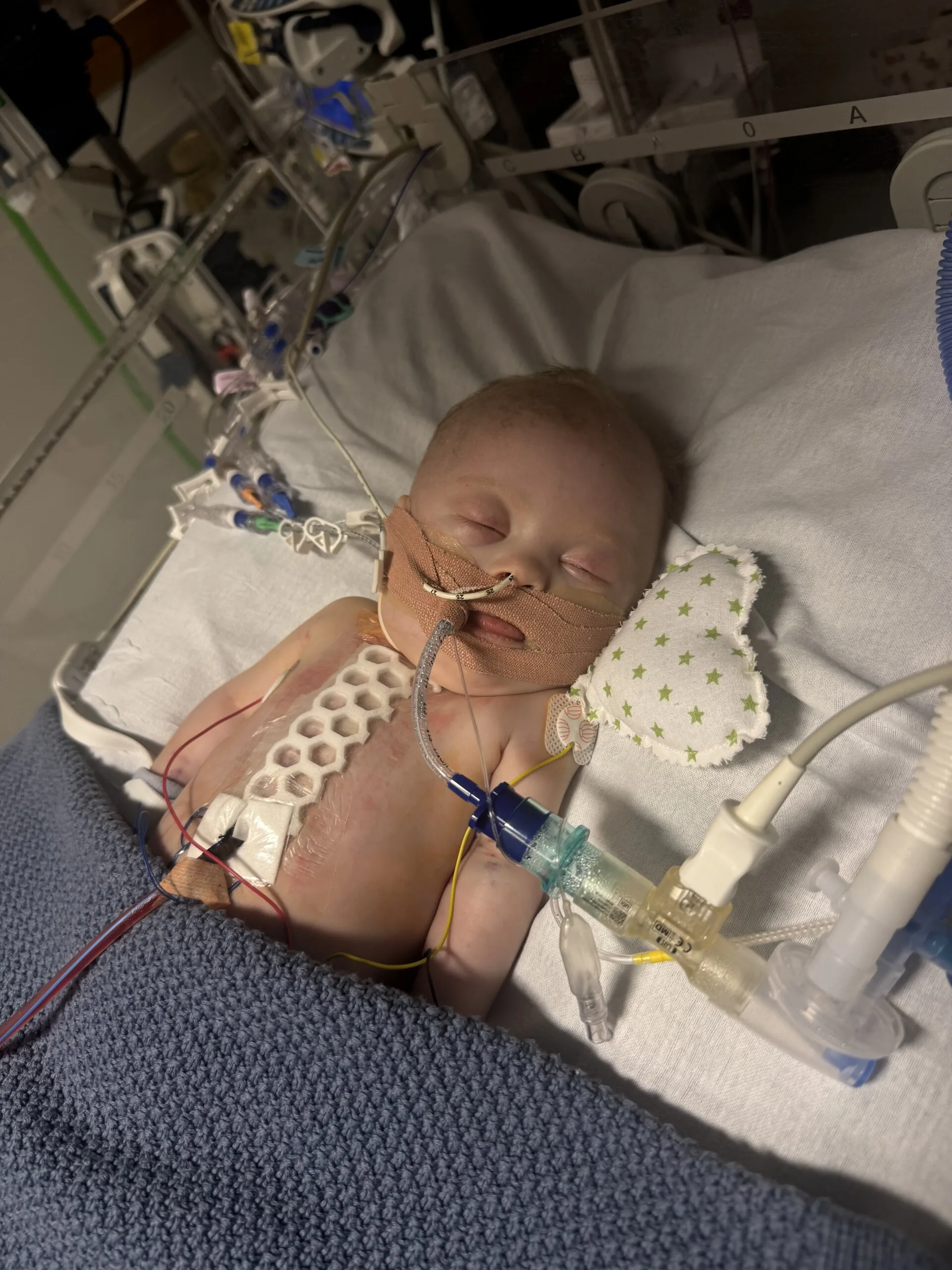
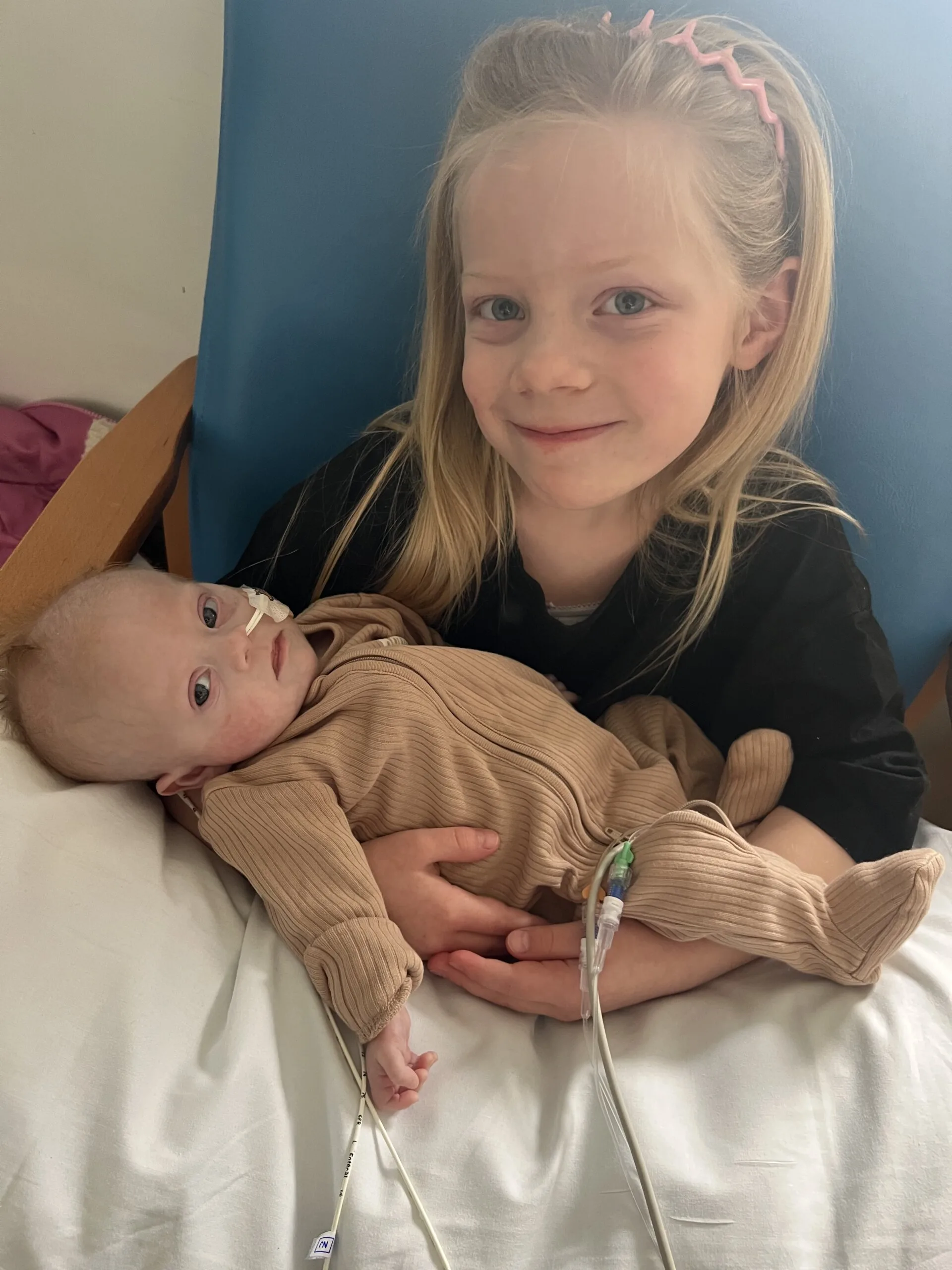
“CHSF have helped in more ways than they will ever know – from travel grants, Tesco vouchers, Cardiac Cafés, Wellbeing trollies on the ward, funded family activities and Zephyr’s Katie Bear – to just general weekly check-ins and catch ups from Sarah and the Family Support team.
“A special thank you to Sarah for always making sure we had everything we needed, nothing was ever too big or too small to ask.”
Your donation helps us continue providing practical, family‑focused support to babies like Zephyr and their loved ones throughout treatment and recovery.
Please help us continue to support more families who need us.
During the month of March…- 27 families worked with overall
-
19 families received a tailored packaged of Family Support
-
8 families engaged with
— -
13 young people and their families worked with and supported
- 17 Travel Grants given
- 4 attended Cardiac Cafe
- 12 Supermarket Vouchers given
- 0 Exceptional Grants given
“I honestly can’t thank you and the charity enough for all the support we received. It meant so much to us during such a difficult time.“ — heart mum on the ward
Moments last month
The importance of Katie Bear“We know it’s just a bear but it has sufficient value, showing how much determination and courage she has and all the battles she keeps fighting”— Heart Mum
Celebrating Eid on the children’s heart wardThe Family Support team purchased decorations for a young person and her family to decorate their bedspace and make it their own. The young person helped decorate buns for all families on the ward to celebrate Eid.
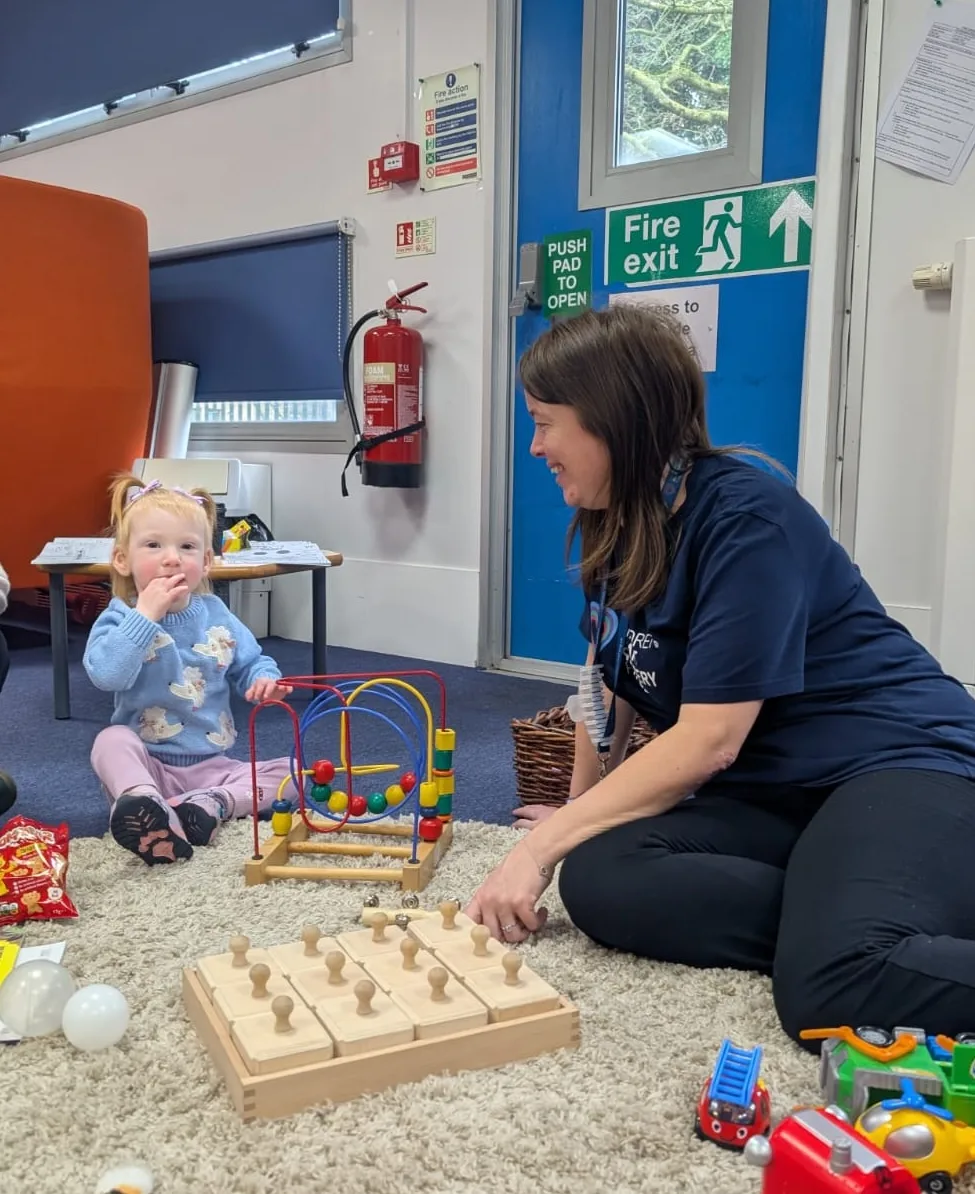
Family Support on the Road Bradford Cardiac Cafe
This month we hosted our Cardiac Cafe in Bradford. Families were able to meet each other, chat about their experiences and have a break in their day with people who understand.
After the success of 2025’s event, we hosted the cafe at Bradford West Family Hub again and enjoyed using the space and all the toys!
The ball bit was a group favourite!
How is Family Support making a tangible difference to families?
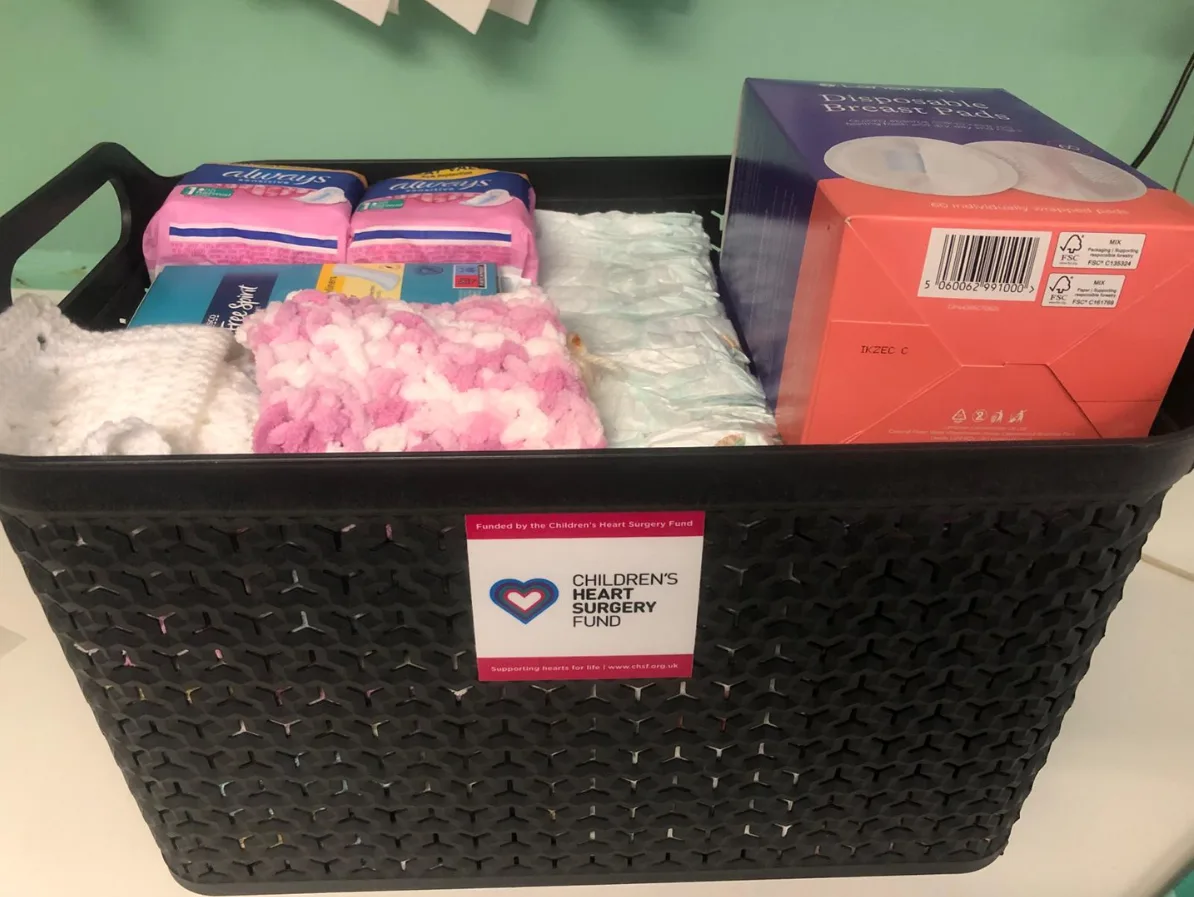 Breastfeeding Comfort & Care
This month CHSF have provided breastfeeding packs – including sanitary items, bonding square and nappies – for the new parents at the beginning of their heart journey.
 Youth Voice
In March we launched CHSF’s youth voice panel, getting feedback from young people about what they want to see from CHSF support as they get older. We met with young people online and in person to get their feedback on what we had to offer and we are exploring other ways of working with young people to develop the service – watch this space to see what they had to say!
Young person feedback
“I really appreciate everything you’ve done for me it’s really cheered me up that there’s people around outside of my little nuclear family that care about me and want me to get well.“Since growing up in care, my faith in society and the systems in place to look after children or even adults like myself was pretty damn well compromised and this experience has really put some faith in the system back in me. I really, really appreciate everything you’ve done for me.“[CHSF’s support has] made such a huge difference to my stay. Normally I’m a self discharger after 24 hours or whatever. But I’ve managed to stay in, and actually reasonably enjoy myself (as much as you can whilst your admitted on an ICU ward).”Working together
There is something so special about charities coming together to support a family in need and this month we saw first hand how this can have such an impact.
A massive thank you to From the Heart Charity, Retford Lions Club and Baby Bank Alliance for helping secure some very important and much needed items for a lovely heart family following their discharge from hospital.
It’s only with the help of our incredible supporters that we can continue to be there for every family that needs us. Thank you.
Find out more about CHSF Family Support
We are extremely grateful to The Liz & Terry Bramall Foundation for their generous support over three years towards our Family Support Service.
written by Helena Vesty, NHS, social care and patients reporter for the Manchester Evening News
Looming towers, dark red brick punctuated with black window frames, Gothic spires. An imposing Victorian stalwart that has dominated this northern city centre street since 1869.
It’s enough to make the most regular hospital visitor shift nervously in their shoes. Yet, for most of those people, they walk through the wood-panelled doors with a pit in their stomachs more vast than their surroundings could ever confer.
They are the parents and loved ones of fragile newborns in their first day of life, some extremely premature; weeks-old little ones struggling to cling on in the midst of complex heart conditions; babies who have battled terrifying odds for months.
But this is the only place in the whole world that uses a certain method of testing that can change the future of these little ones, and give doctors and parents crucial information they need to save these babies.
Here at Leeds Children’s Hospital, consultant in paediatric cardiology Dr Malenka Bissell and her team have found a way of giving MRI scans to these most high risk babies, without any sedation or contrast agents, substances that help blood vessels ‘light up’ on the results.
They use a baby MRI incubator, a pioneering advancement that allows babies too fragile to undergo regular MRI and CT scans to be imaged. The baby is wrapped in a thin blanket with cameras built in and placed into the warm incubator, which is then sent through an MRI machine.
Other countries, including in the United States and areas of Scandinavia, do MRI scan babies with the incubator. But Dr Bissell’s team is unique in the world in giving babies these scans while the baby sleeps naturally.
“I was very interested in the sickest of babies, our high risk programme. I was looking for ways of how to reduce their risk of dying,” Dr Bissell told the Manchester Evening News.
“We had some babies that couldn’t actually go through the MRI scanner [if we used general anaesthetic] because they were so sick that, once they had gone to sleep, they weren’t stable enough to have the MRI scan.
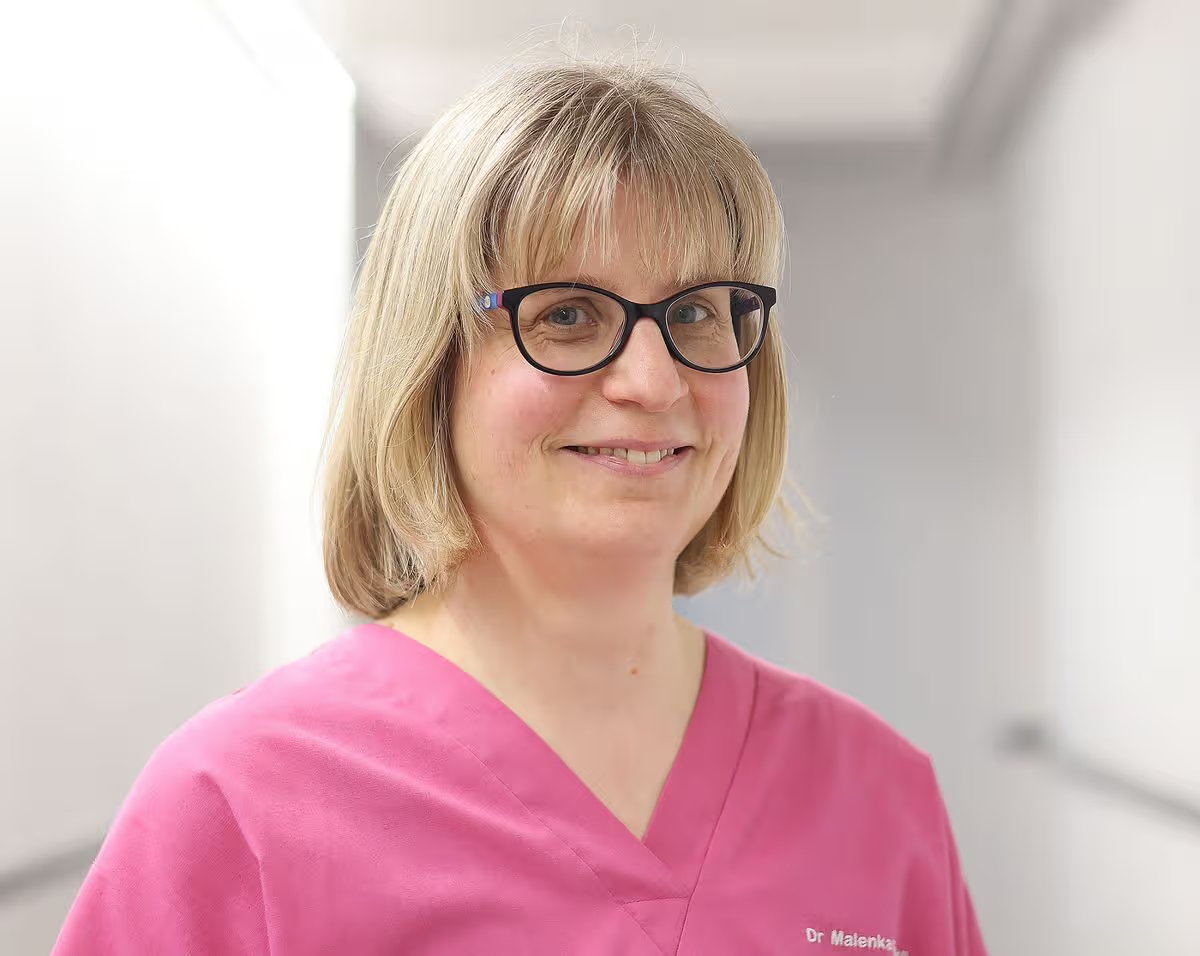
Dr Malenka Bissell (Image: Sean Hansford | Manchester Evening News)
“I was very keen to find options of how we could image them while awake, because they do it for the brain. I decided that it must be possible to do it without contrast and without giving any sedation for the heart.
“In the world, we are now the only centre that does that routinely without contrast and sedation. We’re doing a version that is completely hands off and as natural as possible.
“We’ve now given MRIs to over 100 babies. What we find is that the MRI can alert us to problems, probably about one or two weeks before we see any changes on the ultrasound scans.
“It really helps me to understand where the blood flows, how quickly the blood flows, how much it goes where.
“It really helps to tailor medical treatment, and more detailed surgical planning. More importantly, I can predict any problems that may arise, so I’m in a much better position to tell my intervention team when they go and have their catheter – wires put into the babies hearts – if they’re going to encounter any problems, and if we need to consider any procedures as part of that.
“As soon as the baby is born, we can scan. There are quite a few babies that we have scanned on day one of life to help with our decision making.”
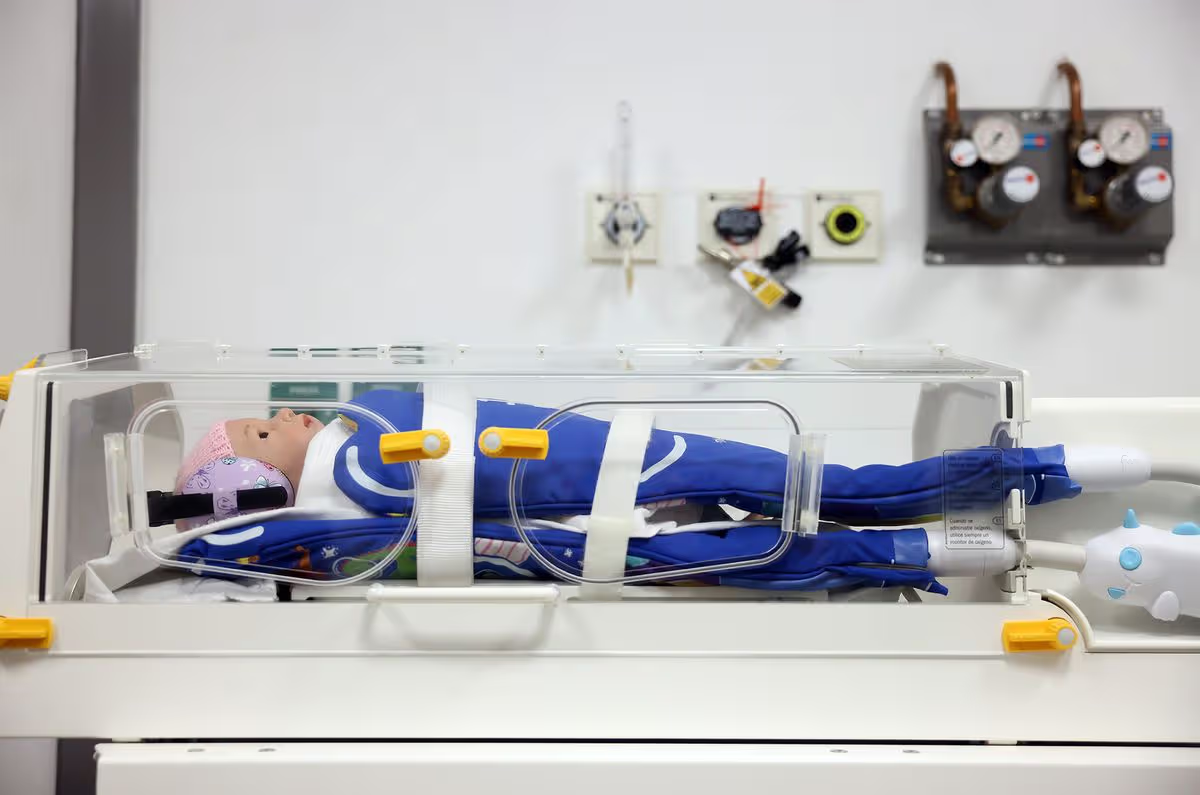
A model baby shows how the baby is wrapped in a blanket, which has cameras inside, and placed in a warming incubator (Image: Sean Hansford | Manchester Evening News)
Thanks to the numbers provided by the MRI, for some babies, Dr Bissell could prove their hearts were strong enough to support life-changing surgeries.
“The difference is having a near normal life expectancy versus living to 20 at most,” she said. “Those are the kind of decisions that we have been able to make.”
Firstly, Dr Bissell worked with MRI manufacturer Siemens to cut down the length of a scan from almost two hours to just half an hour. Then she used years of expertise – both as a doctor and as a mother herself – to curate an experience for parents and babies that encourages babies to fall asleep naturally.
By connecting with and understanding her patients and their families, she honed a routine. Parents feed their babies when they arrive for the appointment to make them sleepy, wrap them up cosily, and wheel them up and down the corridor.
Then comes music, played at a loud level to match the noise of the MRI machine. The doctor has learned that it’s not the volume that keeps the babies awake, but the stop-start of the machine that disturbs them.
Often, Dr Bissell plays her ‘magic CD’, filled with her native German lullabies. She joked that she’s never known a baby who didn’t ease off into a lovely slumber to this music – apart from her own daughter.
Sometimes, she also plays Disney music or, for families of Muslim faith, the Quran, whatever will make them feel most at rest.
Once the babies are nearly asleep, the babies get noise-cancelling headphones and are go into the MRI room, where the lights are dimmed. And the scan goes ahead.
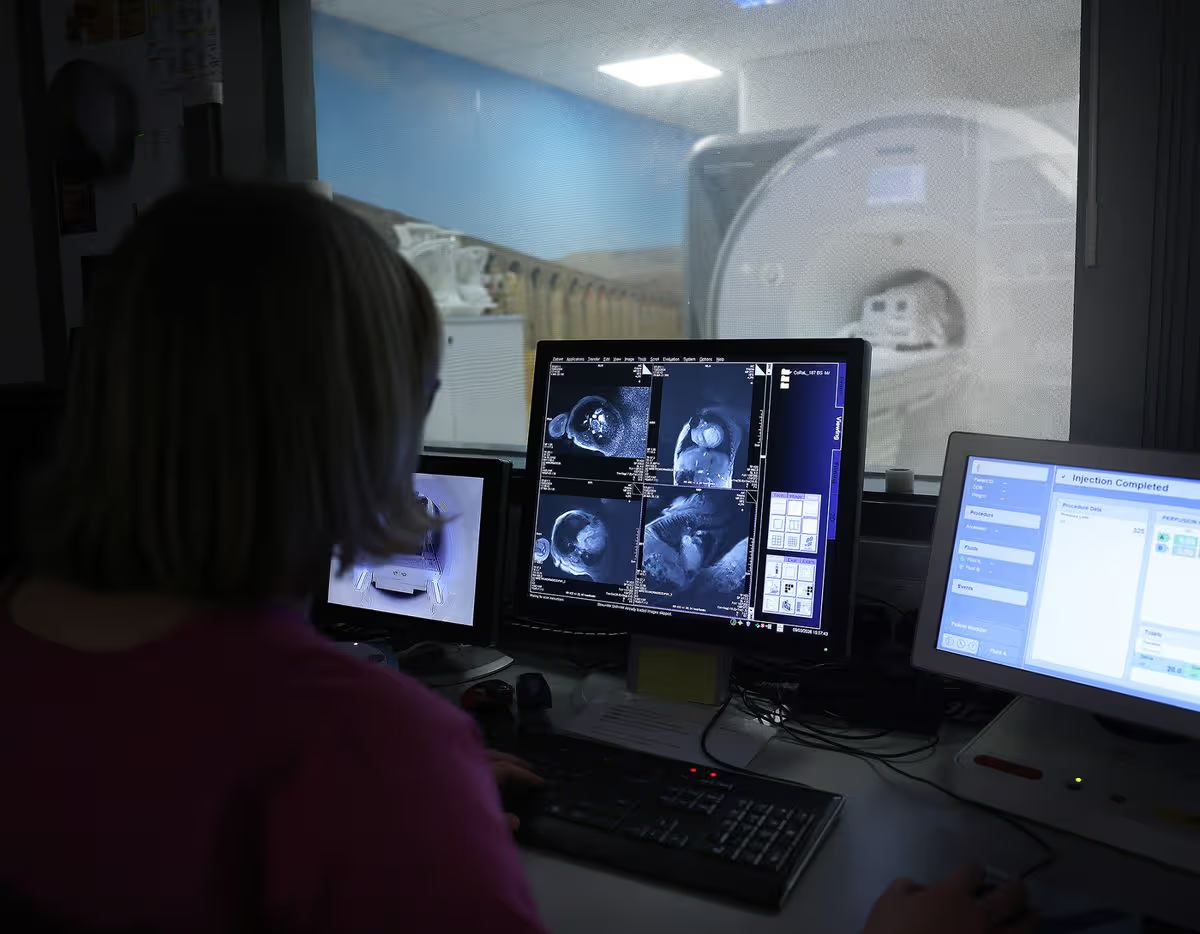
Dr Bissell can view the results as the baby is being scanned in the MRI machines (Image: Sean Hansford | Manchester Evening News)
Advances like this are vital for families like the Silvers. When they were expecting their first child, mum Charlotte and dad Joe thought the pregnancy was going just fine.
But, ‘as soon as he was born, it was obvious there was a problem’, Charlotte told the M.E.N. These new parents could never have imagined that their little boy, Billy, would arrive five-and-a-half weeks early in October 2023, in an emergency C-section, with an undiagnosed heart condition.
Billy was born with pulmonary atresia with intact ventricular septum, a rare and critical congenital heart defect. In the womb, Billy’s pulmonary artery didn’t open, so there was no blood flow to the bottom right ventricle of his heart. “It was like doing a constant bicep curl, but nothing moving through it,” Charlotte shared.
“He built up a lot of muscle, so it was extremely small.”
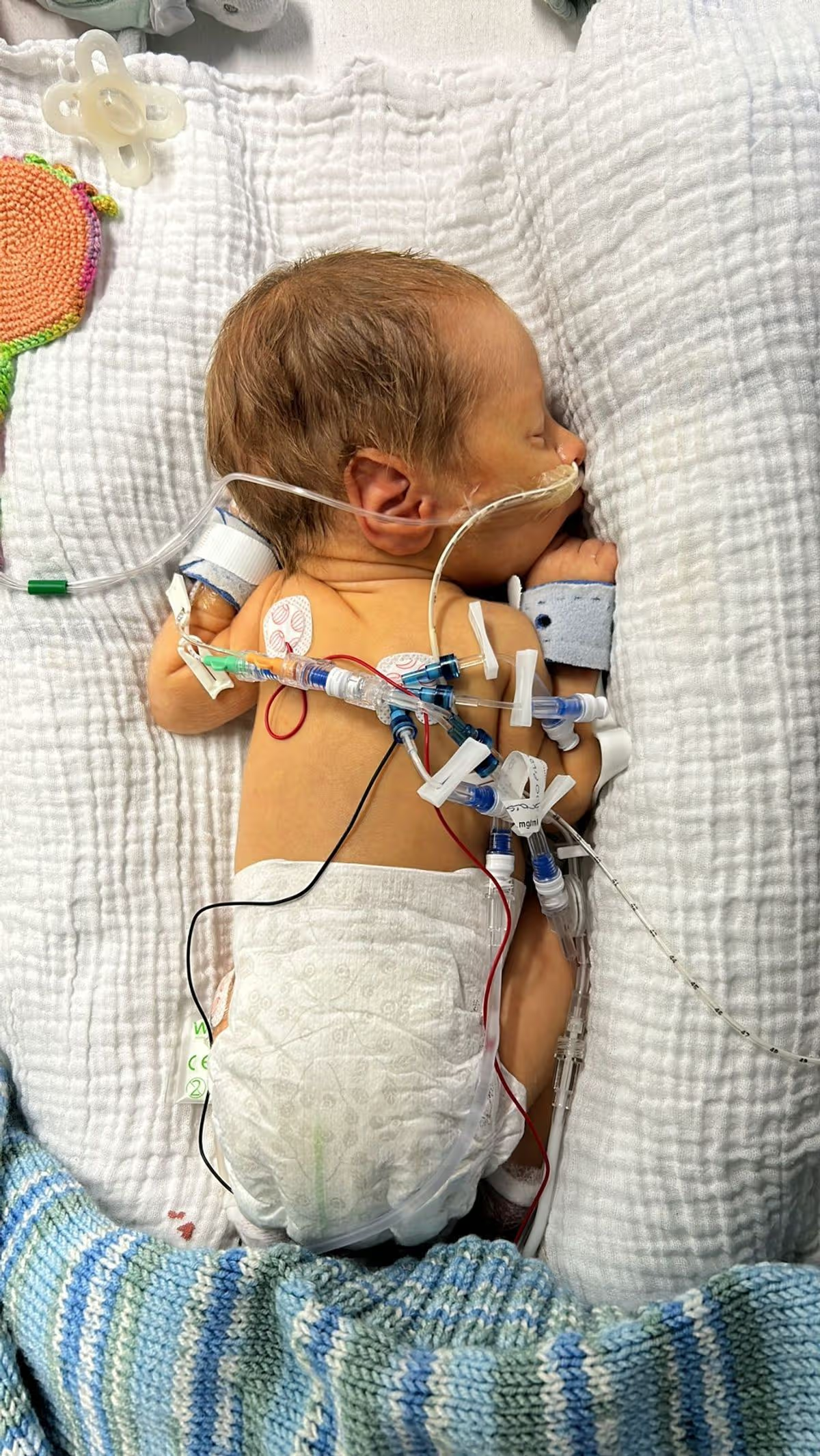
Billy arrived five-and-a-half weeks early in October 2023, in an emergency C-section, with an undiagnosed heart condition.
Billy was born at a general hospital close to their Harrogate home, needing an urgent transfer to a specialist hospital equipped to deal with his complex condition.
“He was emergency transferred, luckily, to Leeds which is down the road from us,” said Charlotte.
Billy was meant to be three-and-a-half kilos before his first open heart surgery, but everything changed when he went into cardiac arrest. When he had the operation in an emergency, ‘he wasn’t even two-and-a-half kilos’.
The first operation had to perforate the pulmonary artery to try and get the blood flowing,” shared Charlotte. In another heartbreaking turn, it failed.
“We didn’t know if he was going to die or not,” added Billy’s dad. “If this was the only chance we’re going to have to care for him, then we had to do it – it wasn’t giving him milk, or giving him a bath, wrapping him up, and sending him to bed like it normally is – it was changing a tube.
“But if that’s the only thing we could do because he might be dead this time next week, then that’s what we’d do.”
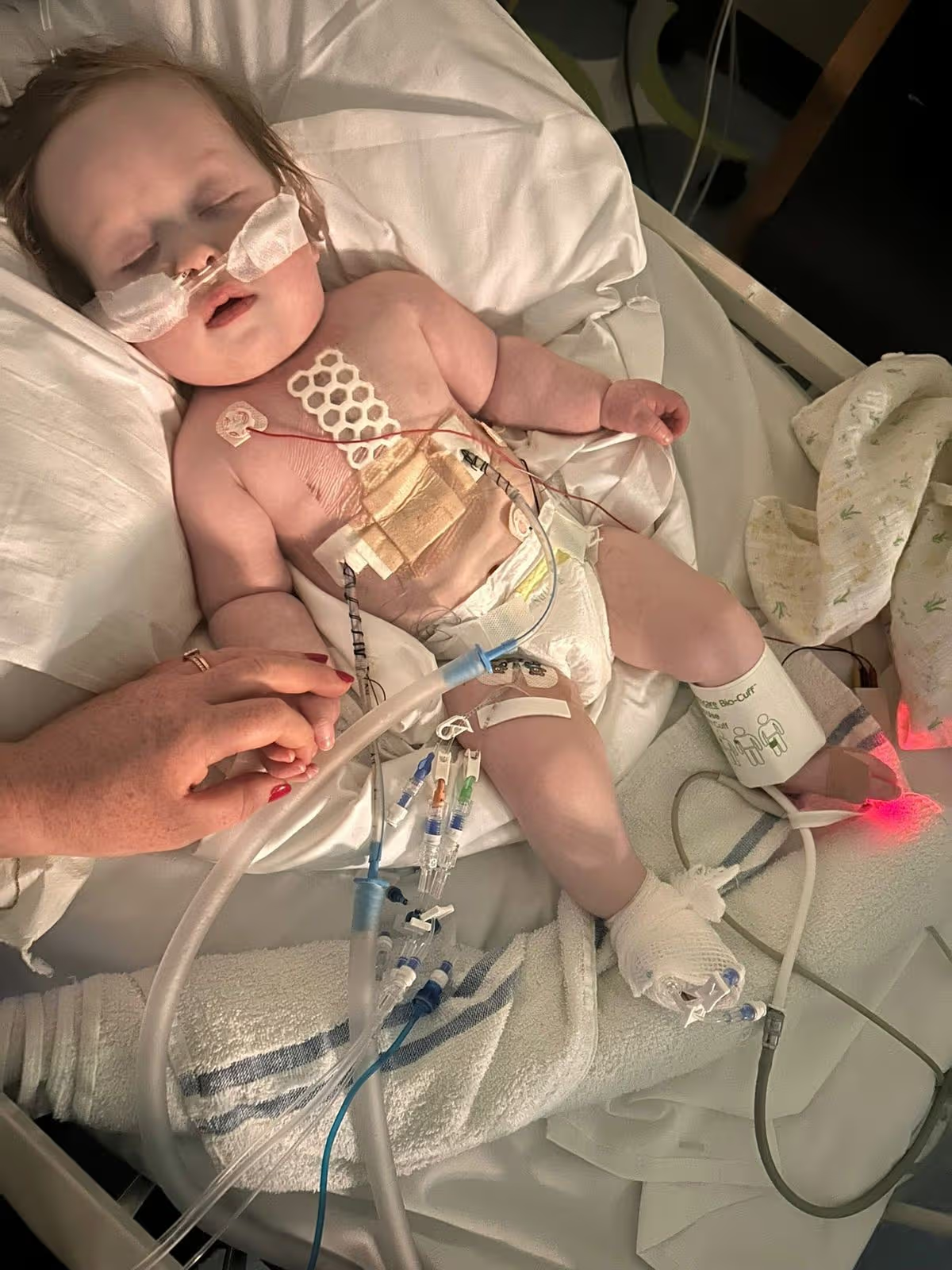
Billy was born with pulmonary atresia with intact ventricular septum, a rare and critical congenital heart defect.
Billy defied the odds. Three months later, he was finally able to go home for the first time, in January 2024. A few months after, he was asked to come back for more tests.
Billy had always been examined using echocardiograms, known as ‘echos’ – ultrasound tests are routinely used to look at the heart’s structure, pumping function, and valve health.
But they have drawbacks, especially for a ‘prodded and poked’ little baby, ‘having a blood test every day and wires coming out of him’.
“There were a lot of times we’d come out of an echo, and Malenka would say ‘we didn’t really manage to get a good view of X, Y, and Z’ – either because he was unsettled or other reasons,” said Joe.
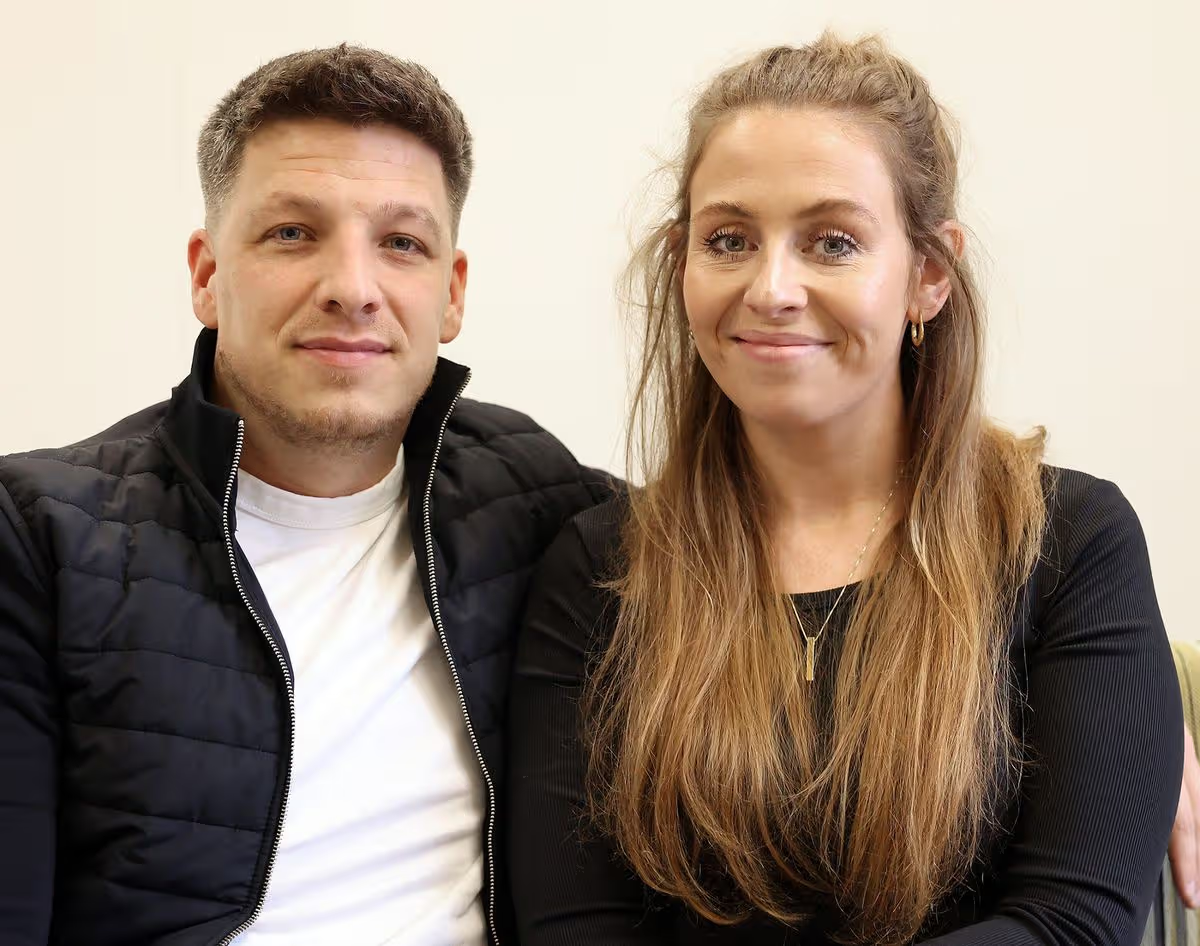
Parents, Charlotte and Joe Silver, were determined to make sure they could give Billy the best care possible when he went home from hospital, learning as much as they could from long stints on wards (Image: Sean Hansford | Manchester Evening News)
But when he was invited back, Dr Bissell wanted to try doing an MRI – as one of the first patients to go through the process she was trying to craft. Still early in creating a routine that would work for most babies, Billy struggled to settle.
So the family and the doctor decided to get Billy to sleep during the scan by letting mum Charlotte go in the machine while breastfeeding the baby.
Unconventional perhaps, but Dr Bissell said Billy’s MRI gave results that could change the course of his treatment, and ultimately his life.
“We’ve had quite a few babies, like Billy, where the MRI actually showed us that the heart is more capable than what we were predicting in ultrasounds,” she explained. “In Billy’s case, he had a good left heart, but there was always a question about whether the right heart would be able to do anything.
“Because of the MRI, we were able to actually design a bespoke surgery for him, rather than the standard surgery, so that we are still making use of that right heart.
“Actually, we have seen some growth of that right heart over time showing us that the MRI was right, and it was right to say that actually it can cope with more than the ultrasound was showing us.”
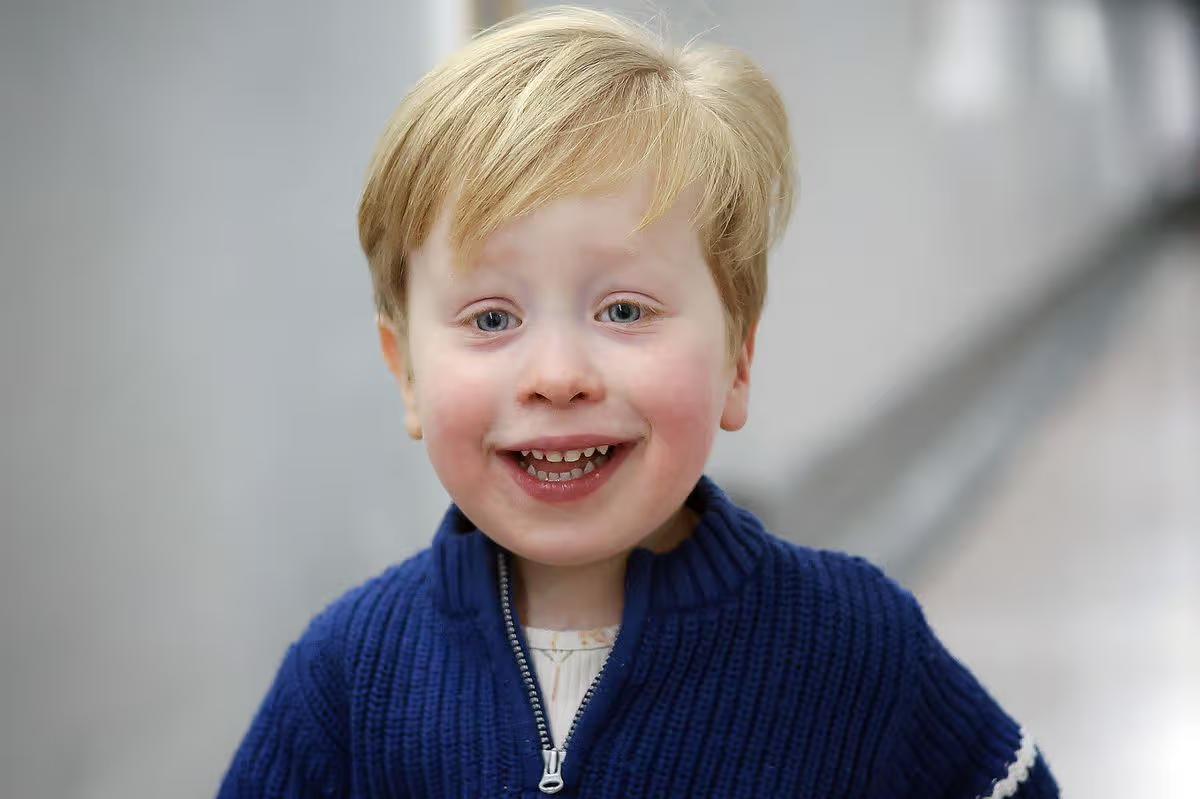
Billy (Image: Sean Hansford | Manchester Evening News)
The MRI results also allay the fears of parents like Charlotte and Joe.
“Parents really struggle with the uncertainty in the high risk programme,” Dr Bissell added.
“With the MRI, we can provide more certainty and that is really important for parents, even if there are problems. And because we’re so hands-off, we can also repeat the MRI.”
Doctors can check medical care has worked. Or, if a child has such poor heart function they couldn’t have surgery at first, they can be regularly monitored.
Dr Bissell is now working with hospitals globally to teach her method – including sharing her ‘magic CD’. But this style of treatment still only exists in Leeds – and the incubator here had to be funded by the charity, Heart Research UK, alongside the Children’s Heart Surgery Fund which has a base at Leeds General, and other groups.
The Silvers say they were ‘extremely blessed’ that Billy managed to get a bed in Leeds, only 40 minutes away from home, but it should at least be available at major cardiac centres across the country for every family like theirs. While Dr Bissell is hoping that the incubators will be funded more widely through the NHS, in light of her promising results.
“We were one of the first families to use the MRI, and that imagery helped Malenka push things forward for the incubator,” said Charlotte.
“Malenka is the reason that Billy’s surgery has been directed in the way that it has, it was her plan. We couldn’t be more grateful for that.
“And if [the MRI] helped her get to the conclusion that ultimately helped Billy, and more families can benefit from that, that’s amazing.”
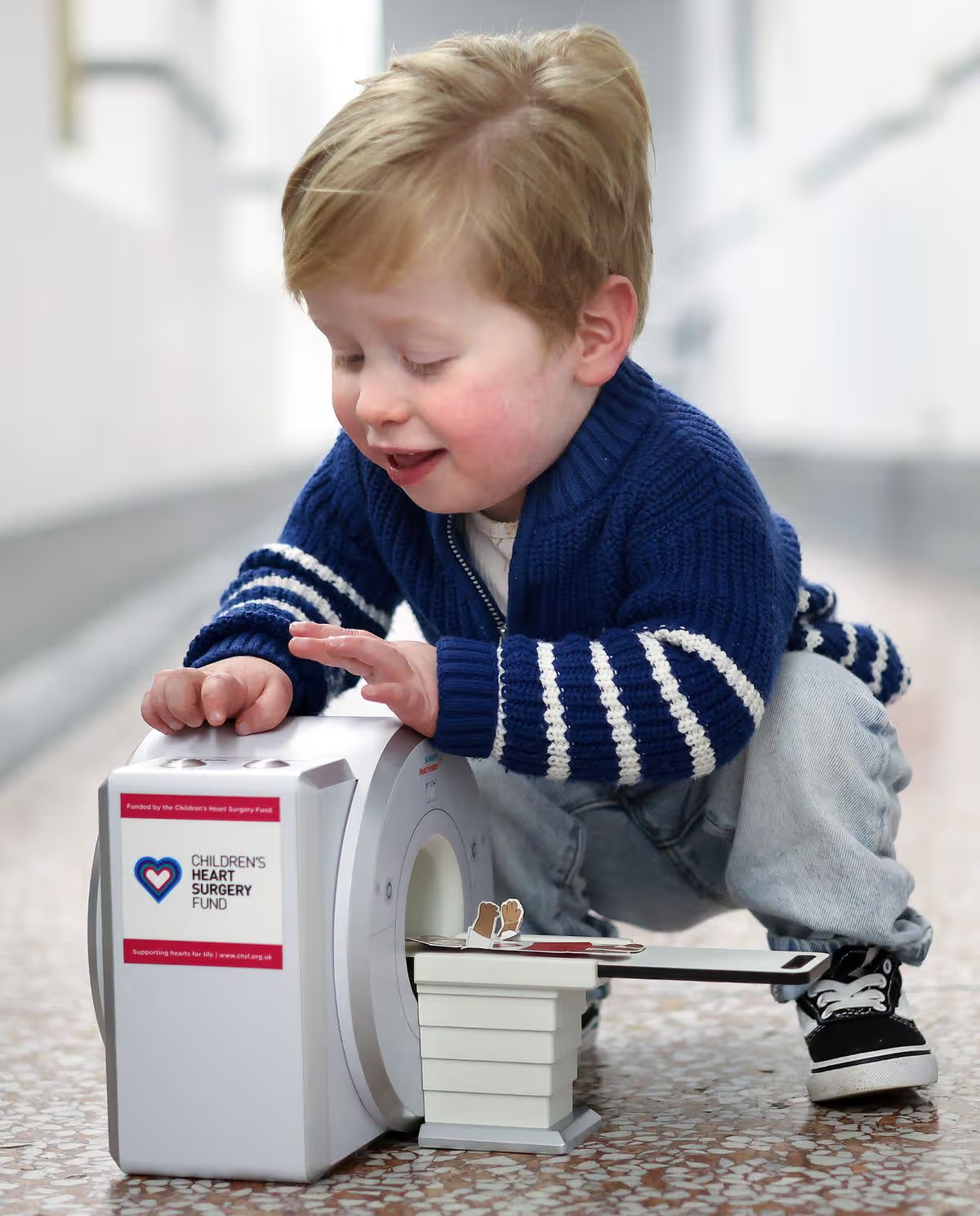
Billy playing with a toy version of the MRI machine (Image: Sean Hansford | Manchester Evening News)
Billy’s first years have been unimaginable, but thanks to his care – shaped by Dr Bissell’s groundbreaking work and the unwavering dedication of his parents – rays of sunshine are breaking through the clouds.
Billy’s last scan shows ‘his heart was looking better than they ever could have hoped for really’, shared Charlotte. Unless you looked at his scar, his parents told, you might never know he had a heart condition.
“For me, the biggest reward is seeing children like Billy doing so well, living normal lives, despite their really quite severe heart condition,” added Dr Bissell.
Instead of wires surrounding the now two-and-a-half-year-old Billy, he’s racing around with Bluey, Peppa Pig, and the Potato Heads.
“Billy’s excelling – he’s walking now, his speech is amazing, he is just enjoying life. So when he does, you’ve got to let yourself go with it,” Charlotte sighed, looking proudly on at her son.
“He’s an absolute legend. There’s only one Billy Silver.”
Because of you, we can keep being there for our world-class heart unit, patients and families.
By making a donation to CHSF you are ensuring vital funding to the Leeds Congenital Heart Unit and personalised support to families when they need us most.