
Thanks to your donations, CHSF have funded a series of regional children’s congenital cardiac nurses (CCNS) in local hospitals in recent years.
One such CCNS is Paula Cowgill, based at the Calderdale Royal in Halifax, who has a special thank you for CHSF supporters.
Paula recently received a set of 10 Alivecor KardiaMobile devices to help the local patients she looks after. And they are producing fantastic results!
Kardia devices enable patients to monitor their heart rhythms at home using their mobile phone and then email or text the results to the Leeds Congenital Heart Unit.
And thanks to Tesco, CHSF were able to fund 40 of these devices throughout 2024.
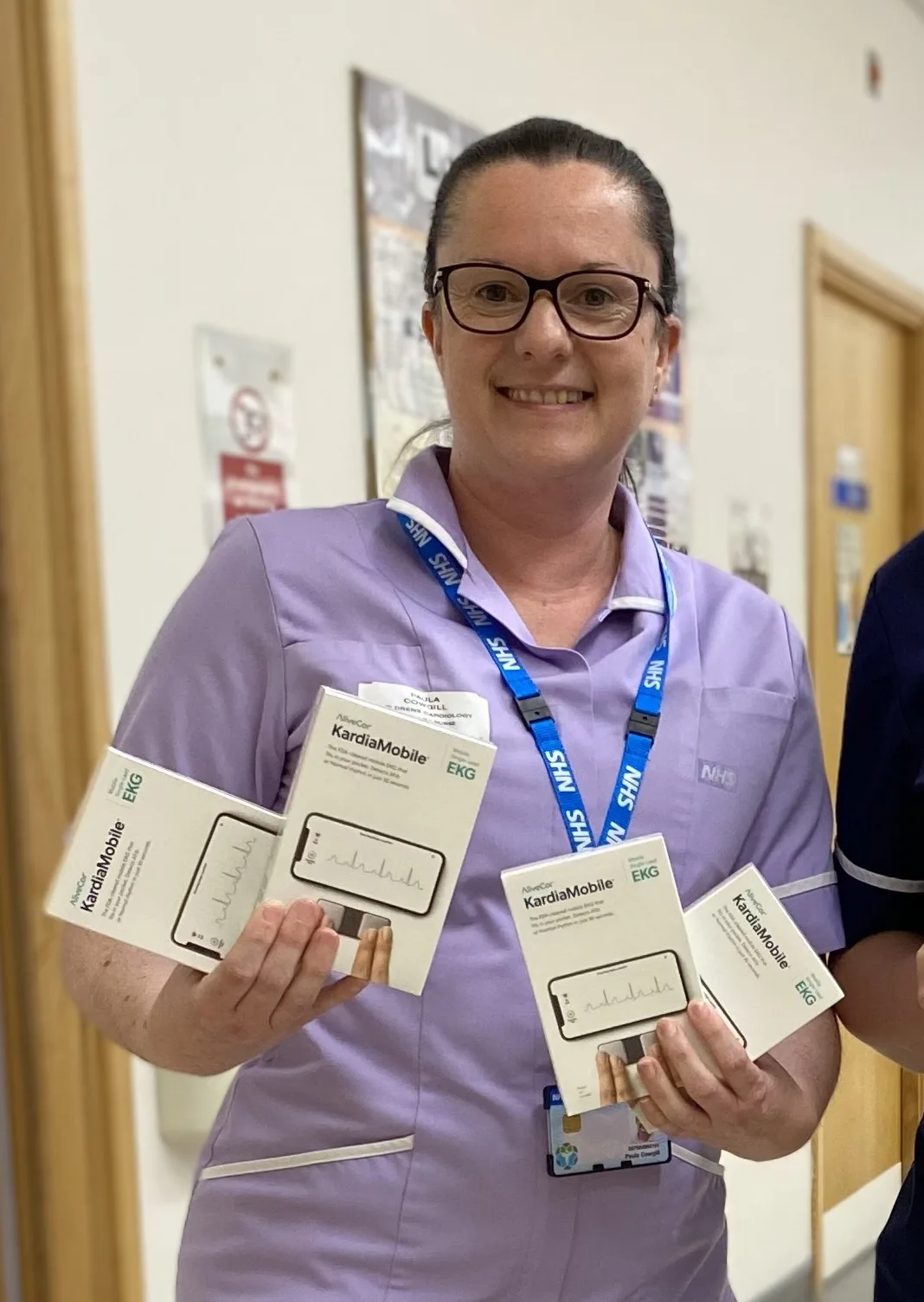
Issuing patients with these devices is a more efficient approach to monitoring their hearts, removing the need for a hospital stay and providing an alternative to coming to hospital for their tests.
Paula had this special thank you for CHSF supporters: She said:
“We currently have 7 of the Alivecor devices in use with our paediatric patients. This has led to one prompt diagnosis and treatment of an abnormal heart rhythm to the relief of the young person and his parents.
“The other devices are enabling remote monitoring, reassuring patients that their symptoms at that time are not related to the heart.”
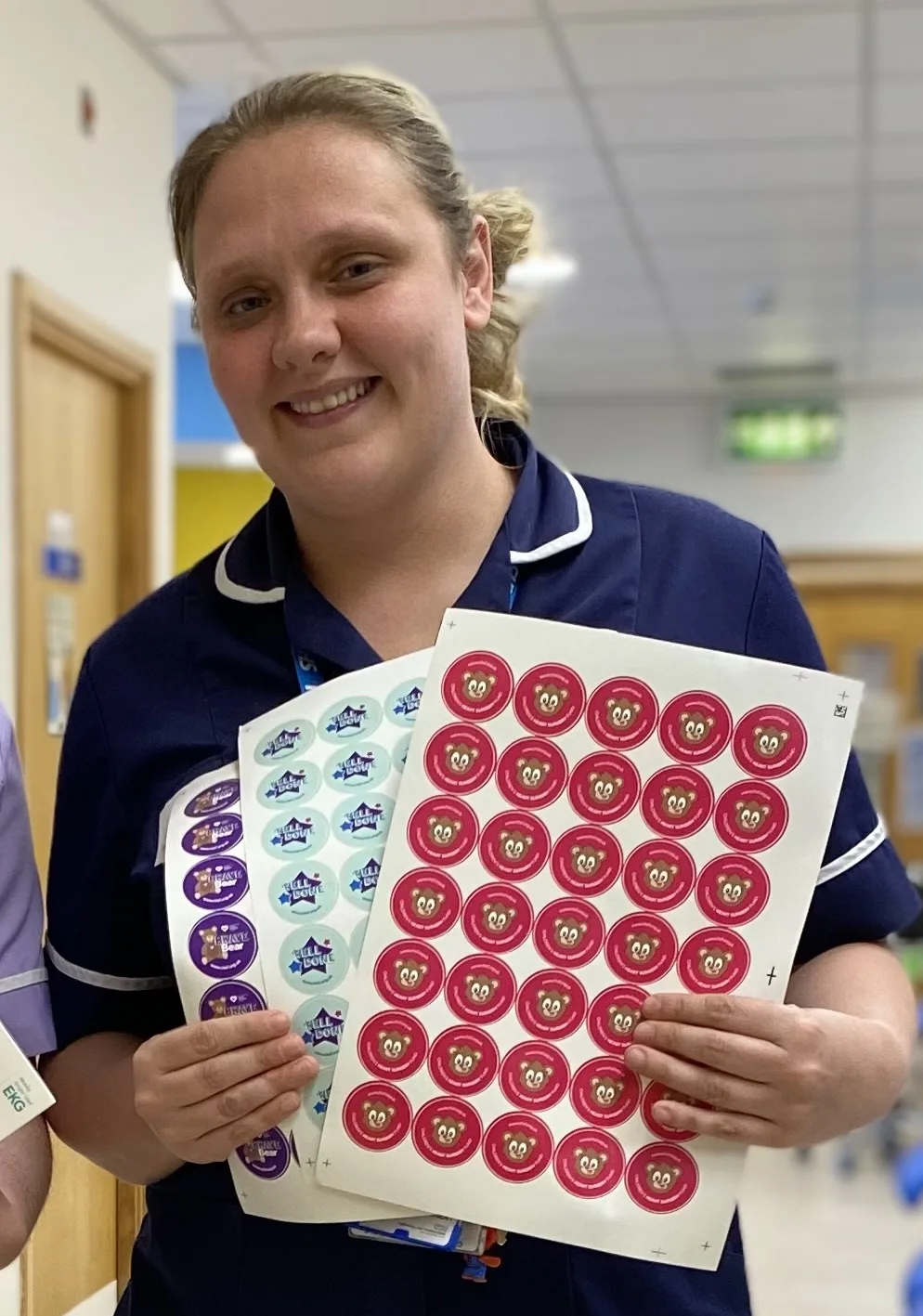
The team at Calderdale also received a set of reward stickers, designed in-house by CHSF’s fab Digital Marketing Manager Olivia, to help young patients with their appointments:
Paula added:
“The stickers are loved by most of our younger patients, and are given to everyone who wants one. It’s a positive reward given at end of the clinic experience and makes the child feel proud of their achievement.”
A huge thank you to Paula and all the local CCNS’s across our region for the fabulous job they do supporting our young people and families!
And thank you to everyone who supports CHSF with donations, spreading the word about our vital cause and making sure patients with congenital heart disease across our region receive the best possible treatment. We couldn’t do this without you!
It is only with your support that we can keep funding vital and life-changing projects for our heart unit, patients and families.
Thanks to your donations, the Physiotherapy and Speech and language therapy (SALT) teams have received some new equipment and resources to help with clinic appointments and ongoing care.
A special play mat and chairs, along with special food pouches are being used for assessments in physiotherapy, speech and language during high-risk clinics. Read on to find out more!
Your donations funded special puree pouches and bite melt foods required for speech and language assessments.
Swipe to see pictures from a recent high-risk clinic, featuring heart heroes Lottie enjoying the new equipment and Sienna (in her pumpkin dress).
These special foodstuffs are so important to some children with congenital heart disease as introducing them to solids prior to surgery improves oral intake outcomes following surgery.
Speech and Language Therapist Jess Symonds, whose role was funded thanks to your donations has this thank you for supporters:
“I just wanted to thank CHSF and supporters for the grant to purchase food pouches and melty puffs. This has allowed us help introduce weaners to our high-risk babies when they attend clinic.
“This has meant that parents have support when introducing purees to their babies.
“All the pouches have now been used to support babies in their feeding journey and all the babies are now eating well.”
Specialist Physiotherapist in Adult and Children’s Congenital Cardiology Sarah Hibbert also wanted to thank you for helping to fund specialist mats and chairs.
These resources allow for patient assessments, and enable the family to be given suggestions on equipment and play for home. The chairs also give the patients a more comfortable and supportive seating to enhance the patients journey enabling early mobilisation.
Sarah said:
“Jess and I just want to say a huge thank you to you and your supporters as the equipment allows us to assess the patients in each clinic appointment, and then advise the families on ongoing development”
It is only with your support that we can keep funding vital and life-changing projects for our heart unit, patients and families.
Vital new monitor part of ‘revolutionary MRI process’ for newborn babies.
£45,000 has been donated to Children’s Heart Surgery Fund (CHSF) as part of the J9 Advisory £100,000 Charity Challenge to enable the purchase of life-saving MRI monitoring equipment.
The monitor is part of a revolutionary MRI process at the Leeds Children’s Hospital, unique to Europe, which is transforming the care of newborn babies with heart disease.
The new equipment allows seamless and mobile monitoring of vital sign measurements in the poorliest babies from the bedside before, during and after an MRI scan. The monitoring equipment is completely MRI safe with no need to disturb the baby if it’s sleeping (and risking the success of the MRI scan) to change monitoring equipment.
This process utilises a state-of-the-art MRI Baby Incubator – a ground-breaking alternative to established paediatric MRI scans. It is unique in that Leeds is the only European heart unit which can conduct MRI baby scans in the incubator while the young patient is awake.
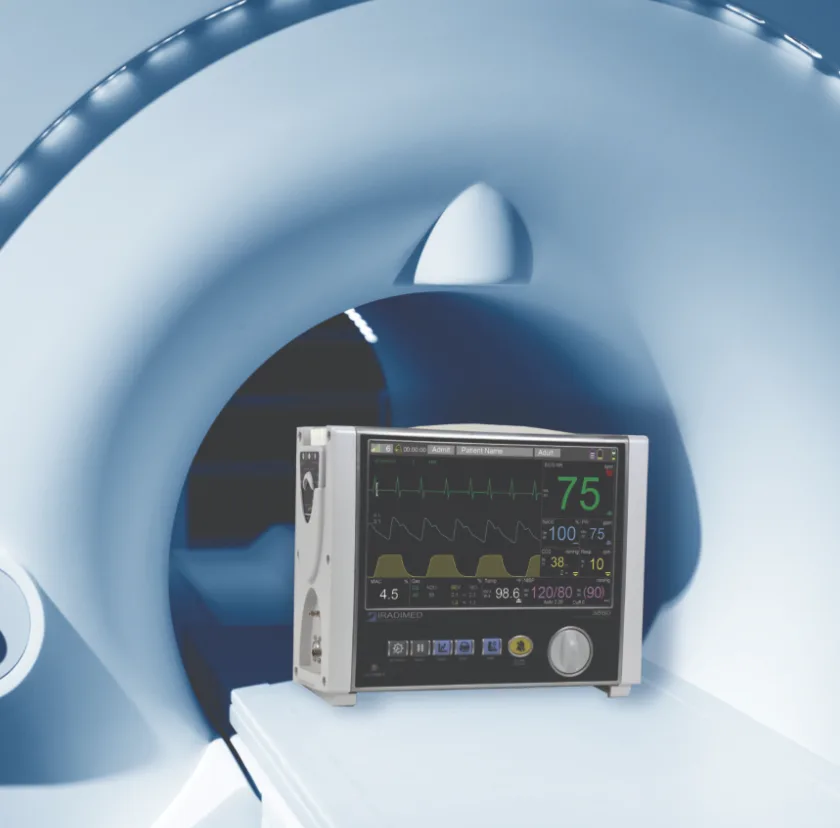
The incubator, which was installed in 2021, allows babies to have an MRI scan of the heart without the need for a general anaesthetic. They can be awake or asleep during the scan, and it allows them to be transported directly from the Ward into the MRI department thus minimising potential distress.
In 2022, J9 Advisory funded two infusion pumps for the incubator allowing the medical teams to continue giving lifesaving medications during the MRI scan.
Johnny Abraham, Managing Director of J9 Advisory added:
“I am thrilled that our £100,000 Charity Campaign has funded this essential monitoring equipment, and would like to thank everyone who has generously helped us make this happen by donating money, time and prizes to our fundraising.
“It was amazing to hear that this is the only unit in Europe being used in this way, and it was put to use within days of being installed”
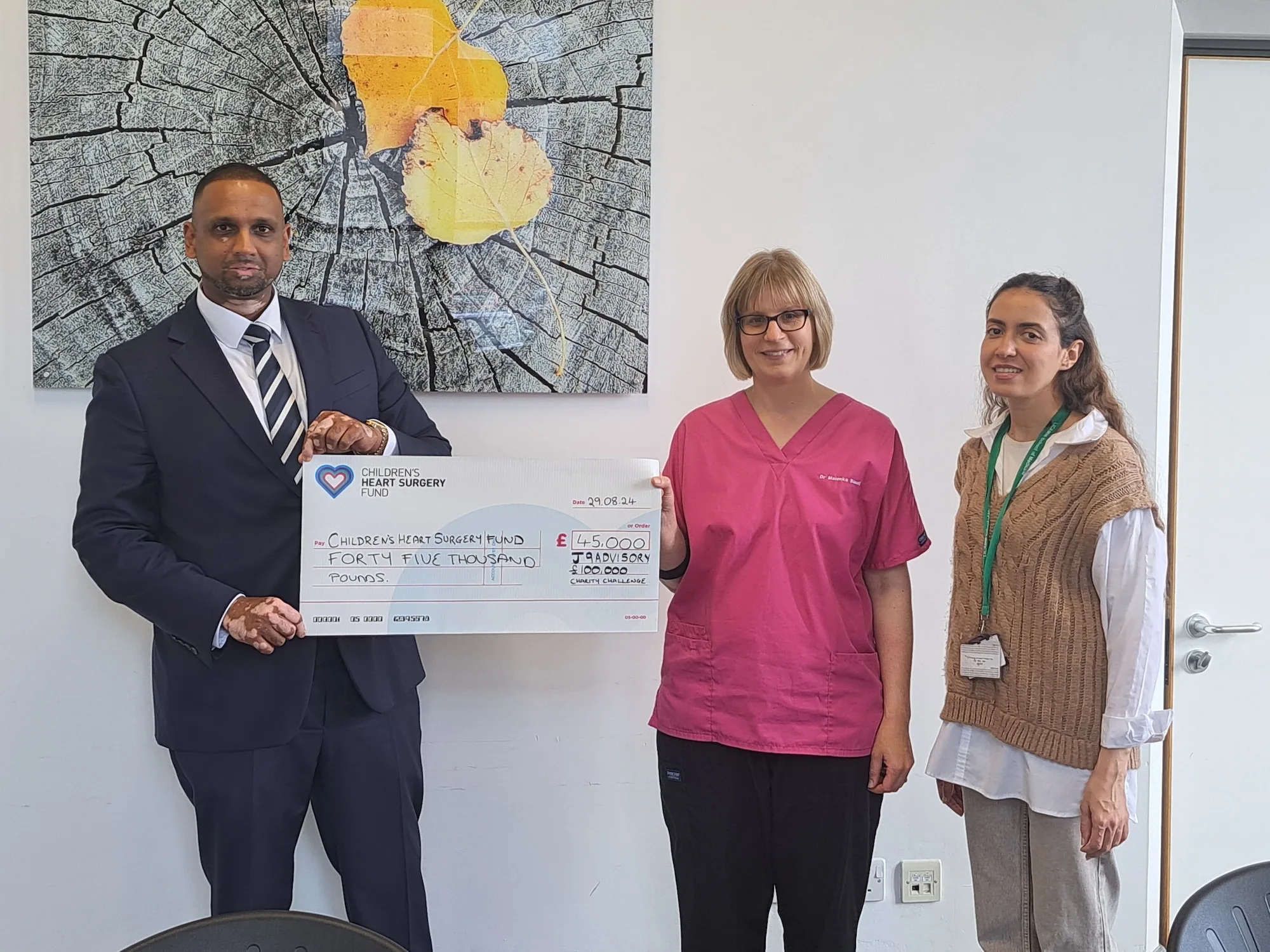
Dr Malenka said:
“We are incredibly grateful to Johnny, J9 Advisory and their business network. I am so excited that we can now seamlessly monitor even the most fragile of our babies without needing to disturb the baby to change monitoring equipment to an MRI safe unit. This revolutionary MRI process is transforming how we look after and image especially our newborn babies.”
“Now all babies can have an MRI Baby Incubator scan instead of a CT scan which uses radiation and is missing crucial information about blood flow.”
Heart hero Sophie’s mum, Emma-Jane Hickie, was so glad the incubator was available, not least because the medication feed was needed during Sophie’s treatment.
Emma said:
“The incubator is an amazing piece of equipment. I’m very grateful that this was available to assist in Sophie’s treatment. Just over 24 hours after Sophie was born, Dr Malenka came with the incubator to take Sophie to her MRI. Sophie had echocardiograms before and after surgery.
“The MRI was a lot less stressful for Sophie. The echocardiograms use cold jelly which Sophie did not appreciate. Being swaddled and warm in the incubator was just like being in her Intensive Care Unit bed so didn’t seem like she was actually having a test done. After all the poking and prodding our babies have to go through with having congenital heart disease the MRI is extremely beneficial as it is completely non-invasive.
The Hickie family live in Lincoln, and Leeds is the nearest specialist Unit which could help treat Sophie. Sophie is now 23 months old and is turning 2 in October.
Emma continued:
“Sophie is doing really well at the moment. She will be turning 2 next month. She is currently very nearly 23 months and will be 2 on the 26th of October.
“She went on her very first holiday abroad this year and absolutely loved it.”
We’re incredibly grateful to Johnny Abraham for funding this revolutionary piece of equipment as part of the J9 Advisory £100K Charity Challenge.
If you or your business want to get involved with a CHSF project, email corporate@chsf.org.uk
The state-of-the-art echocardiogram machine at Wharfedale Hospital in Otley is making a huge difference to regional cardiac care.
This cardiac ultrasound machine already allows visiting sonographers and cardiologists from the Leeds Congenital Heart Unit to provide specialist care for adult patients in the Otley area.
And Leeds-based clinician Dr James Oliver says the service is planned to extend to younger patients in the coming months, and will then be used to diagnose and monitor patients of all ages.
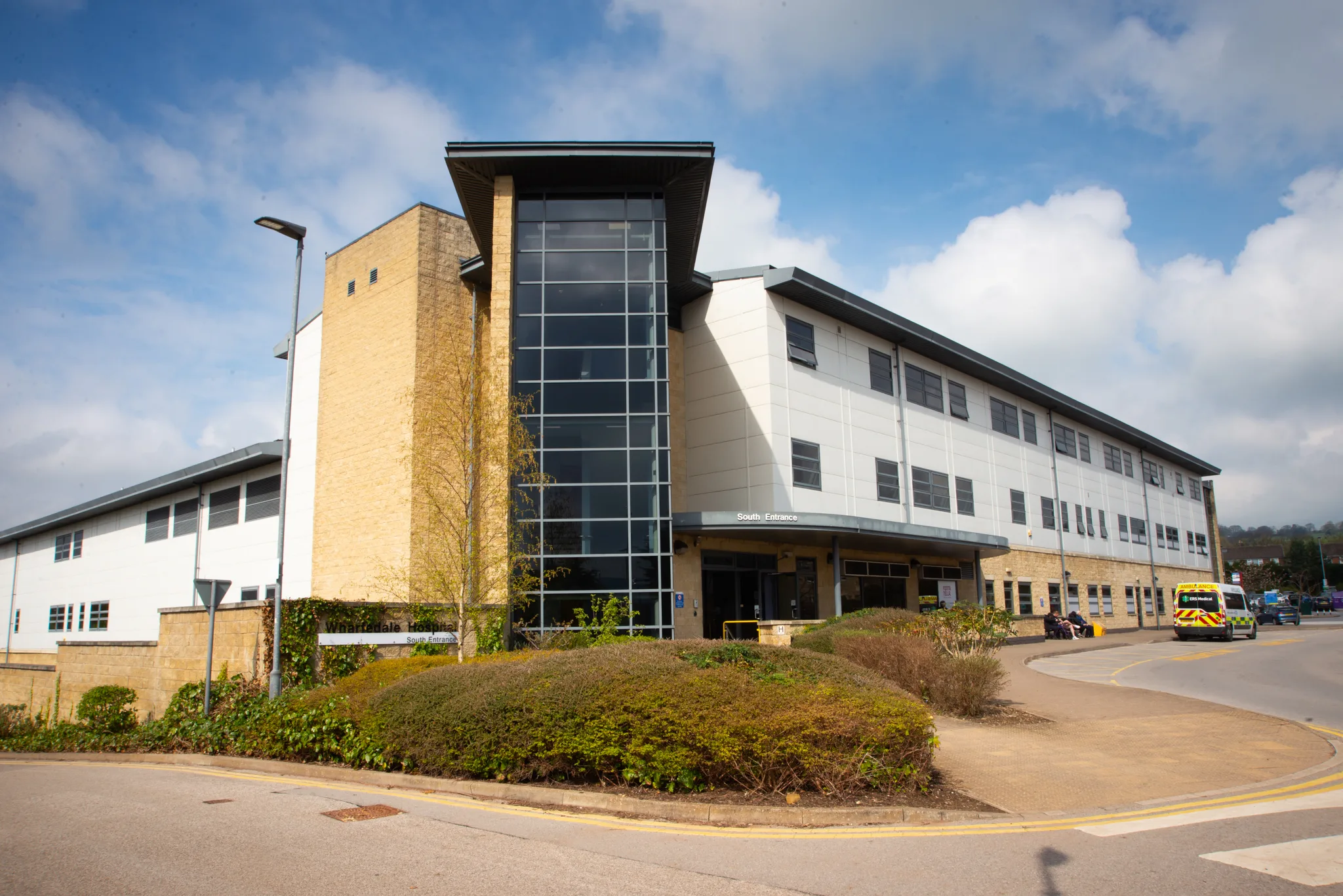
Wharfedale Hospital in Otley, Leeds
Since October 2023, more than 400 adult patients attended clinics at Wharfedale Hospital.
Each clinic can accommodate up to 16 patients, where they have observations, cardiac ultrasound scans and a consultation, all on the same day.
Dr James Oliver, Lead Clinician for Congenital Cardiology at Leeds General Infirmary said:
“At the moment the Echo machine is used weekly on a Monday for an all-day clinic in adults. It means we can offer the same high standard of care to the patients we see in Otley as we do in LGI.
“Now that we have the machine in place, we hope to start running children’s clinics at Otley as well, which will be absolutely fantastic.”
This service is relieving the pressure to be seen for scans at Leeds General Infirmary, enhancing patient care and quality of life.
Dr Jan Forster, Consultant Congenital Cardiographer at Leeds General Infirmary said:
“We have limited space to perform the specialist echocardiograms at LGI to assess patients with congenital heart disease. Thanks to your donation, this new service allows a visiting team from Leeds to provide specialist care in a timely fashion in an accessible and convenient location.
“The echocardiogram allows us to diagnose and monitor heart conditions as part of the consultation.”
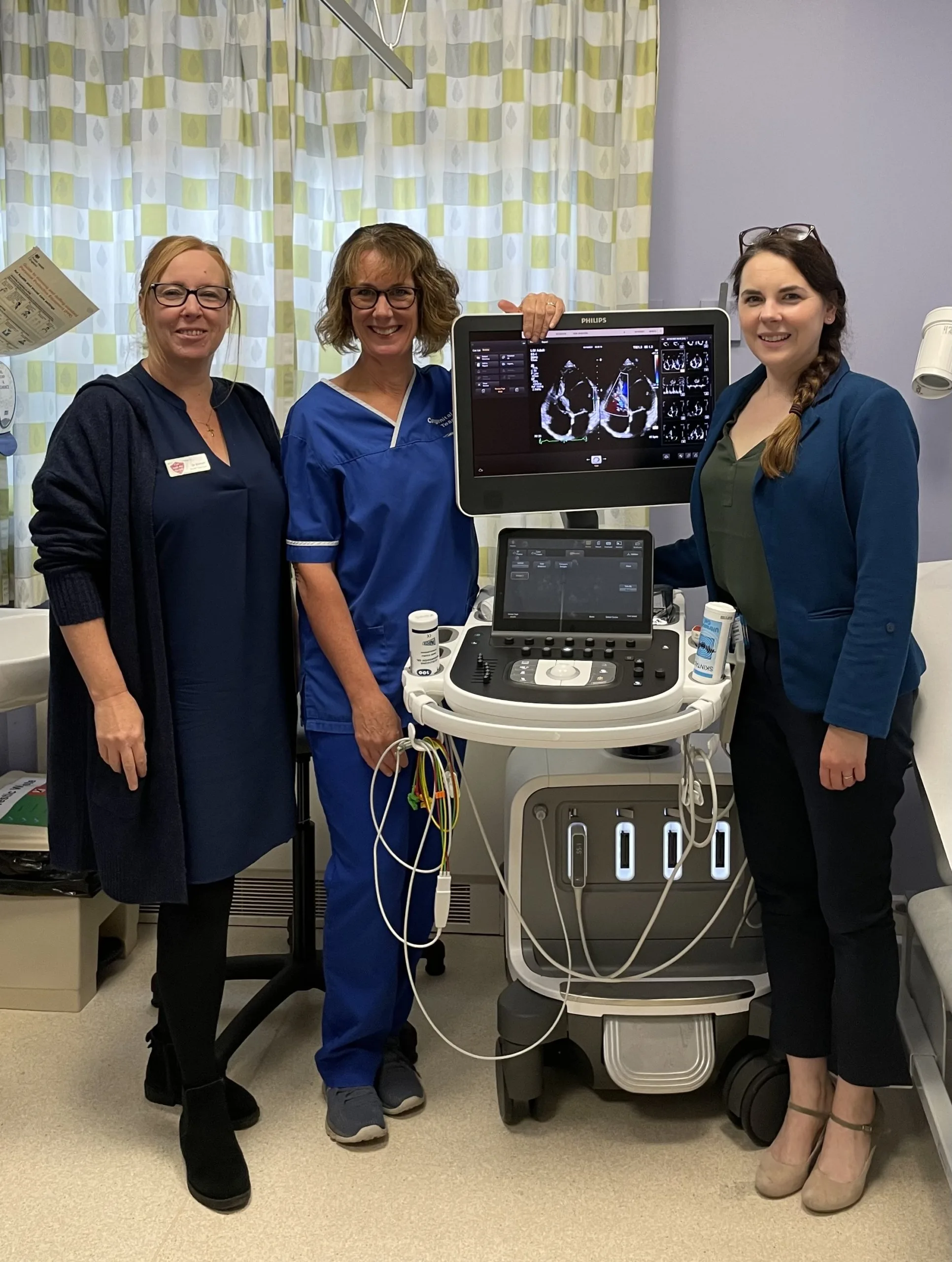
Pictured at Wharfedale L to R: Jo Birkett (Adult Congenital Nurse Specialist ), Jan Forster (Consultant Congenital Echocardiographer), Dr Ellie Joy (Consultant Adult Congenital Cardiologist)
Adult patients, such as Angela, who has been attending Wharfedale Hospital since the clinics started, have found the experience to be a positive one:
“Going to Wharfedale for clinic appointments is so convenient and in a lovely surrounding. It is so much easier to attend than the Leeds General Infirmary.
“I see the same doctor each time and I do not feel the appointments are rushed. The appointments are always on time too.”
This equipment has a life span of at least ten years, with the expectation it will be used progressively more over time.
This will be achieved with the gradual introduction of clinics for young patients and increased clinics for adult patients.
As the service progresses, it is expected that benefits will include – easing in waiting lists, reductions in missed appointments and improvements in wellbeing of patients through the provision of a local service.
This echocardiogram machine, comprising of a Philips EPIQ CVx cardiac ultrasound machine and an echocardiography couch, was only made possible by the support of a multitude of generous funders.
The funders included: Liz and Terry Bramall Foundation, Ilkley and District Round Table, Leeds Hospitals Charity, Take Heart and Yorkshire Children’s Hospital Fund.
Thank you so much for helping make such a difference.
MORE NEWS
Over recent years – and thanks to your fundraising and donations – Children’s Heart Surgery Fund have provided hundreds of INR machines to patients with congenital heart disease, and their families. But, what are INR kits, and why are they necessary?
What does INR mean?
Patients with congenital heart disease – of all ages – are sometimes prescribed drugs (Warfarin) to help thin the blood and prevent harmful blood clots.
Whilst a patient is on this medicine, their ‘INR’ needs to be calculated. INR is the measurement of how long it takes the blood to clot.
INR stands for ‘international normalised ratio’. It’s a blood test that measures how long it takes for blood to form a clot. INR tests help doctors to work out the best dose of drugs a patient needs.
An INR result will vary according to a patient’s age, the medicines they take and their health status.
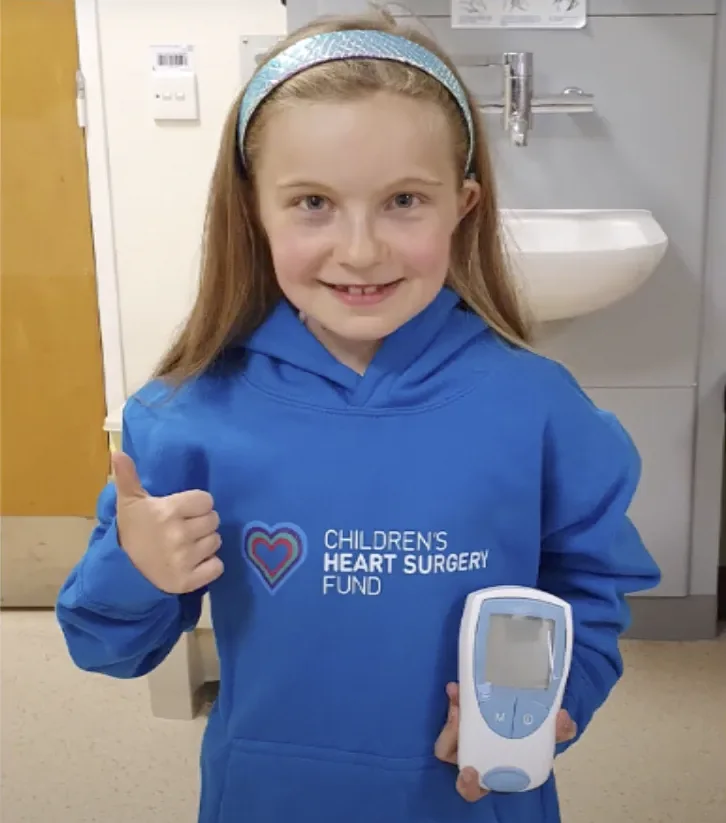
INR machines are life-changing pieces of kit for CHD patients of all ages.
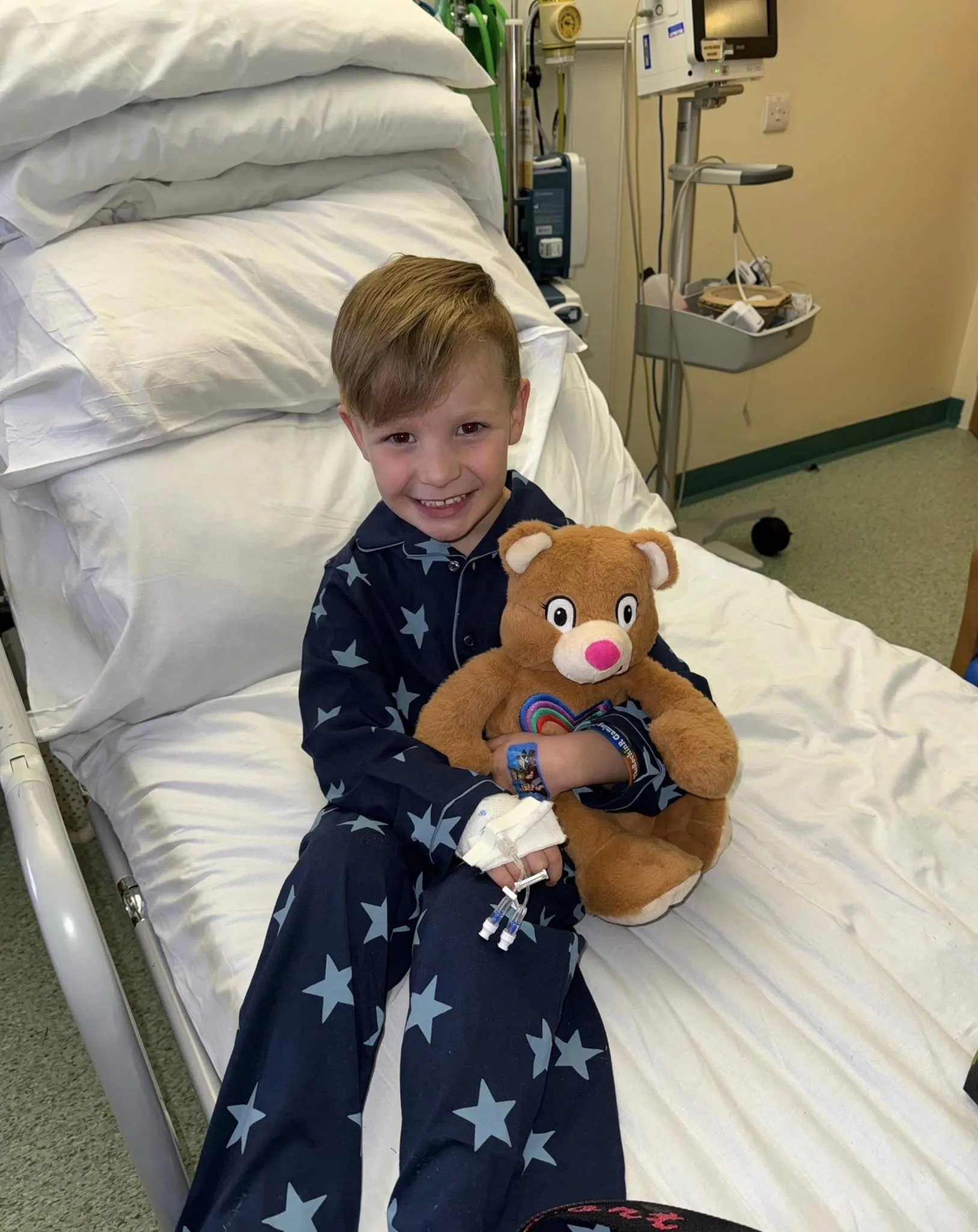
Roman from Doncaster is 5 years old. He was born with a large hole in his heart and his pulmonary veins needed redirecting.
Roman’s mum Lauren told us about his journey so far:
“He received open heart surgery at the Leeds Congenital Heart Unit in March 2024 and is now recovering well at home after his surgeon successfully fixed what she wasn’t sure could be technically possible. Roman’s INR readings are extremely important to ensure the corrected veins are not at risk of clotting.”
What are INR machines?
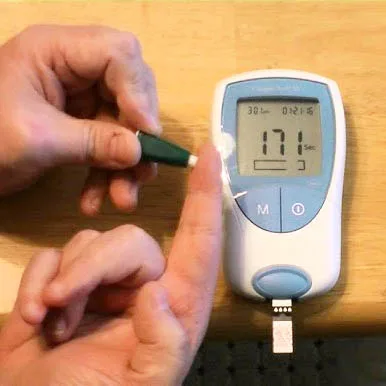
An INR machine is a portable device which allows an individual to measure their own INR at frequent intervals.
This is done via a machine which involves a finger prick, and a small amount of blood is analysed. Results can then be telephoned into the Warfarin clinic.
Heart hero Roman shows us how it’s done…
“It is so important that we can measure a patients INR to minimise the risks of taking Warfarin.
“Needing to attend hospital and having regular blood tests can be a traumatic experience and have a negative emotional impact on our patients. Having the ability to test the INR at home via finger prick, at a time convenient to the child and family can help to minimise these negative experiences. The children when able can be taught to use the machine themselves and this therefore empowers them to have greater control for their own health needs.
“INR kits can be taken on holiday, enabling our patients and families to check their INR levels all over the world! The kits enable our patients to travel with the reassurance that they can continue to check their levels whilst away.
“The INR kits can also be used on our adult patients too, continuing to empower patients to be involved in their own health care and reduce the negative impacts of taking Warfarin on everyday life.
“We are so grateful to CHSF for funding this equipment, we are privileged to see first-hand what a positive impact these machines have on our patients and families.”
To summarise, what are the benefits of INR machines?
Research shows a child’s quality of life is greatly improved by doing their INR at home and not having to miss school by coming to hospital
They allow patients to live more independently, giving them more control over their care and not needing to go to hospital constantly for blood tests.
Adult patients don’t need to take time off work for example, and can go on holiday knowing they can still manage their INR levels.
Roman’s mum sees them as invaluable to her son’s continued care:
“Thank you so much for sourcing us an INR machine to take home, the thought of having to do daily blood tests at the hospital was overwhelming for us as parents, but especially for Roman!
“He’d been through so much already and he was scared… the only alternative would have been travelling to Leeds daily for a finger prick test. Due to CHSF getting to know Roman and realising what would be the best option for him, you were able to fund us our own INR Machine to take home!
“This put a massive smile on Roman’s face and allowed us to have a stress/fear free recovery phase for Roman. We are so grateful to CHSF, thank you so much.”
It’s no doubt that INR kits make a tremendous difference to a patient’s quality of life. Can you help us fund these vital machines by giving a regular donation?
100% of our funding comes from you – our amazing supporters. By giving a regular donation to CHSF, you enable us to plan for the future while saving lives today. Thank you.
The Congenital Cardiology team at Leeds Children’s Hospital were visited by five Interventional Cardiologists all the way from the USA last week.
Visitors included: Prof Vivian Dimas from Medical City Children’s Hospital; Prof Gareth Morgan and Dr Jenny Zablah from Children’s Hospital Colorado; and Prof Tom Forbes from Joe DiMaggio Children’s Hospital.
Many of our supporters, patients and families will also recognise visitor Prof. John Thomson who left the Leeds Congenital Heart Unit a few years ago to work in the USA at Johns Hopkins Medicine. It was wonderful to have him back in Leeds.
The clinicians were also accompanied by representatives from Braun USA and Occlutech.
The group flew over to learn about an ASD (Atrial Septal Defect) device, new to the USA that we have considerable experience with here in Leeds. This device will begin to be used in the USA this year.
Leeds has the largest congenital intervention programme in the UK and has considerable experience with using new devices and introducing them into practice – offering patients born with heart disease across Yorkshire, The Humber, North East Lincolnshire and North Derbyshire the very latest and best equipment and devices to treat congenital heart conditions.
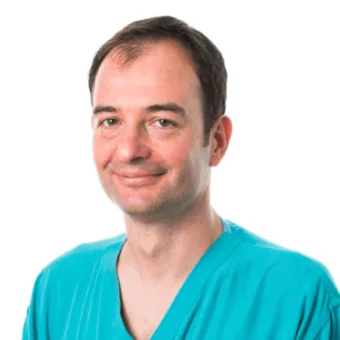
John Thomson worked at the Leeds Congenital Heart Unit from 1998 until 2021.
In that time, he led the Cath lab team and was the overall lead for the service as well as being a consultant cardiologist in both paediatric and adult congenital heart disease.
The Leeds Congenital Heart Unit is a world-class centre of excellence and is leading the way in congenital cardiac care. Children’s Heart Surgery Fund is the dedicated charity for the unit, and we are so proud to support this incredible service in our region.
Our guests from the USA had some brilliant feedback for the team at Leeds including:
“…thank you and your team for the superb work and hospitality displayed this week. We couldn’t have asked for a better demonstration of how to use the device and I know everyone learnt a huge amount.”
It’s such an honour to be able to host international visitors in Leeds, and share our learnings and practices that will benefit patients across the globe.
The exceptional cardiac service in Leeds is only possible with the support of Children’s Heart Surgery Fund and that is thanks to our amazing supporters and fundraisers!
Set up a regular donation to support the life-saving work of the Leeds Congenital Heart Unit.
The Vital Role of Speech & Language in Paediatric Cardiac Care
written by Georgie Abbott, Corporate Partnerships Manager
Every time I shadow a member of our clinical team, without fail, they always make me proud to work for Children’s Heart Surgery Fund.
Today I spent time with Jess Symonds, the newly appointed Cardiac Speech and Language Therapist for Ward 51 at the Leeds Congenital Heart Unit.
Not only was I inspired to learn more about how Jess’s role helps babies and children with their journey through feeding difficulties, but I was also in awe of her selfless dedication to this role.
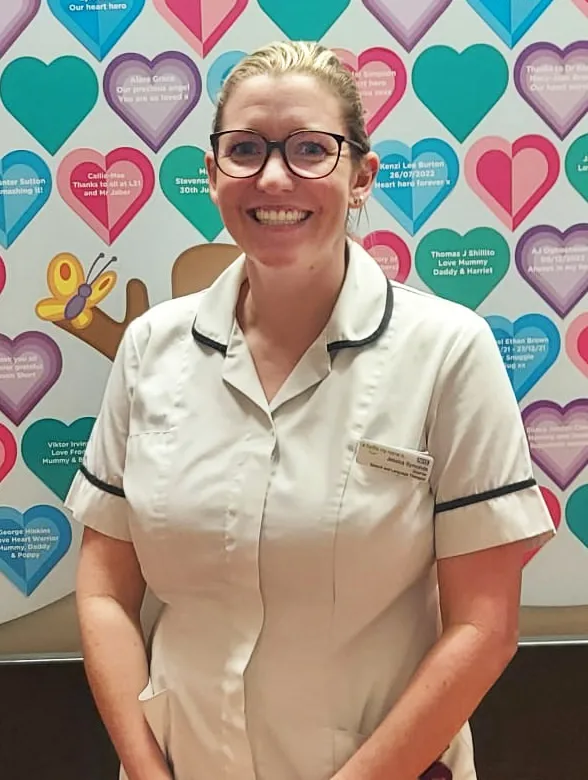
Speech and Language Therapist (SLT), Jess, assesses and treats communication and swallowing disorders in cardiac patients admitted to Leeds.
This role, funded by CHSF, ensures safe feeding, improved communication, and provides vital education and support. SLT’s enhance a patients’ quality of life and overall well-being throughout their cardiac care journey.
Jess returned to work early from maternity leave to fulfil this vital role on the ward, because she knew our young heart patients needed her support. As a mum of two young boys I often get struck with mum guilt and I imagine this wasn’t an easy decision for Jess, which is why I left the ward today feeling humbled to have met yet another unsung hero in our community.
Jess explained to me that sometimes heart surgery can cause nerve damage to a baby or child’s vocal cords, especially in an emergency situation. This means the muscles in an infant’s head and neck may be impacted, resulting in increased risk of food and drink travelling into their lungs, in turn causing chest infections and recurrent hospital admissions.
A key focus of Jess’s role is to help babies and children to drink and eat safely after surgery. She carries out bedside assessments and uses video fluoroscopy X-ray methods to identify any swallowing problems. She then works with parents to make adjustments to the baby or child’s food and drink intake. For example, thickening a babies milk or changing the texture of the food they are eating, to help support safe swallowing and reduce the risk of chest infection.
We started our ward round today visiting a four year old child who has a complex cardiac diagnosis. He was sitting in bed, happily colouring with felt tip pens. I couldn’t help but notice the tubes around his face linking him up to the oxygen machine, which he is constantly dependent on.
The little boy was breathless while he sat still in bed and when Jess spoke to his Dad to explain about the video fluoroscopy his biggest concern seemed to be whether he would be able to take his oxygen machine with him. Jess reassured the Dad that she knew his son needed his oxygen and that it would be going with them to the X-ray. Jess then focussed her attention on putting the young boy at ease and it was wonderful to see him smile when she made jokes about his teddy eating his food.
We also visited a two month old baby who was unable to drink by mouth due to the high risk nature of their heart condition. Jess has been helping the baby’s parents to keep enhancing her sucking reflex, which usually diminishes by the age of four months. They are encouraging the baby to suck on their fingers or dummy and to give the baby lots of kisses around her face.
Jess has only been in her role for three months and it was incredible to see the difference she is making to patients.
I would like to give a special thanks to Caddick Developments, who are long standing supporters of Children’s Heart Surgery Fund and helped to make all this possible by funding the first few months of this role.
Jess’s aim is to see every baby and child who has high risk heart surgery in our region each year, which will be around 350 patients in 2024.
It was clear from today that Jess has big ambitions for her role and the cardiac speech and language therapy service.
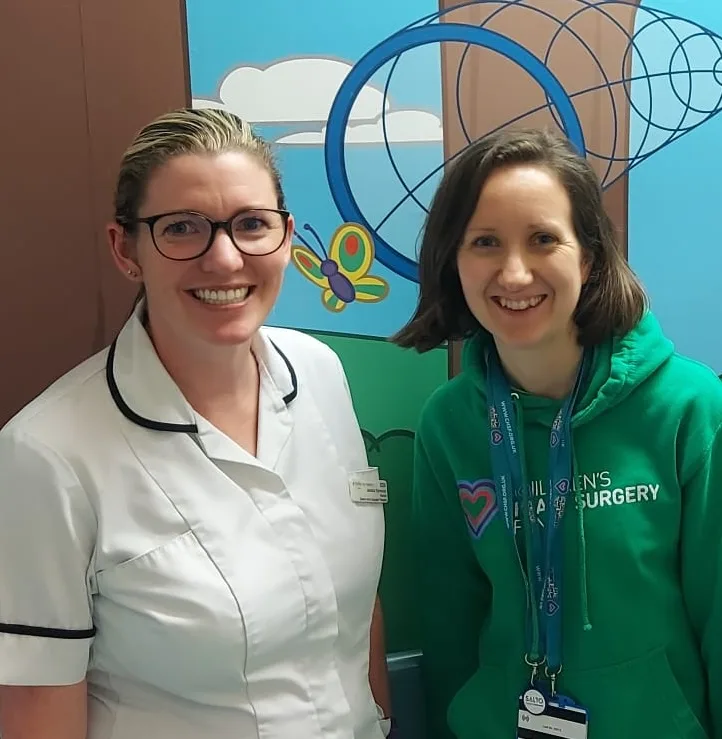
Pictured: Jessica Symonds (SLT) and Georgie Abbott, CHSF Corporate Partnerships Manager
Her dream is for a specialist fiberoptic endoscopic machine to help access small babies, who are not able to have video fluoroscopy. This is because it’s not possible to feed a child via the breast under X-ray.
The machine is portable so assessments could be done by the bedside and allow the team to carry out swallowing assessments using Fiberoptic endoscopic evaluation of swallowing (FEES).
Jess also has plans to create education packages to assist the community speech and language therapy teams when they are visiting cardiac patients, as well as early advice resources for parents.
If you or your business would like to work in partnership with CHSF to help us make Jess’s dream a reality, we would love to hear from you at corporate@chsf.org.uk
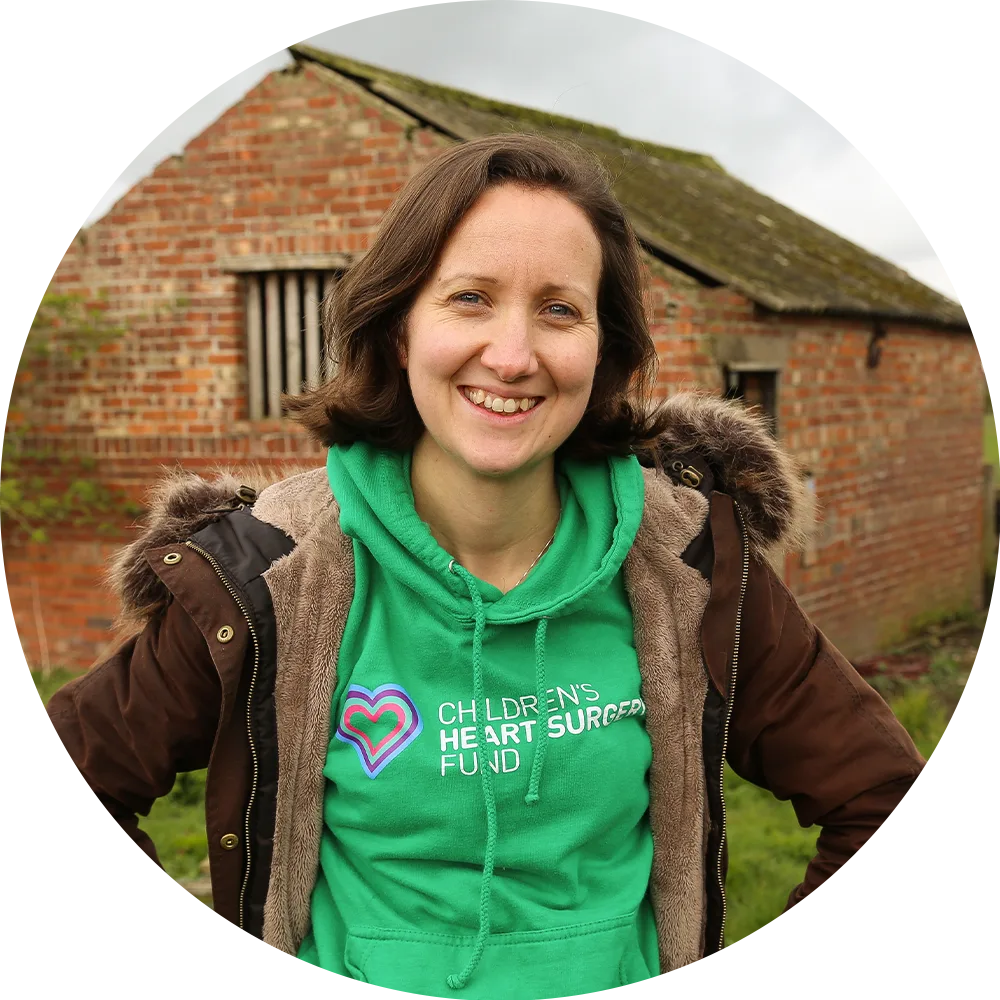
Georgie Abbott
Corporate Partnerships Manager
georgie.abbott@chsf.org.uk
Recruiting Corporate Partners across Yorkshire, The Humber, North East Lincolnshire and North Derbyshire who want to help improve the lives of children born with congenital heart defects.
A huge thank you to everyone involved for making the Cardiac Speech and Language Therapist role happen. Including Caddick Group and The Hospital Saturday Fund.
What is self-care?
Self-care is more than just having a hot bath.
Self-care refers to the things you can do to look after yourself and reduce stress.
Why is it important?
There are many benefits of self-care. It can help you to cope when things are tough and can help you manage feelings like anxiety and low mood.
How can we ‘do’ self-care?
There are many things you can do to look after yourself. No matter what you choose, the goal is to find activities that work best for you. Finding ways to build self-care into your day to day life can boost your well-being.
Self-care ideas for adults and parents…
o Exercise or do some stretches
o Do some colouring or doodling
o Listen to music or a podcast that makes you happy
o Read a good book or magazine
o If you enjoy cooking or baking, make something comforting that you enjoy

o Talk to friends and family
o Make time to look after your body, use a nice hand cream or have a relaxing bath or shower
o Go for a walk or spend some time outside in the fresh air
o Take some time away from your phone, even if it’s just a break from reading the news or social media
Self-care ideas for young people and families…
o Watch a good film
o Do something kind for someone in your family
o Try a creative activity like drawing or painting
o Go for a walk
o Have a dance party
o Spend time outside with nature
o Practice positive self-talk – tell yourself what you do really well or write down what you like about yourself
o Read together
o Play! In the park, board games, or wherever you can!
Information developed by: The Congenital Cardiology Psychology and Counselling Team. You can download the Leeds Teaching Hospitals Self-Care info booklet here.

Thanks to a generous donation from our corporate partner Caddick Group, The Hospital Saturday Fund and additional funds from our wonderful supporters, CHSF has been able to fund a dedicated Cardiac Speech and Language Therapist – Jess Symonds – who has just started in her role….
Clinical Speech and Language Therapy Manager, Victoria Watson, told us:
“Jess is going to make an incredible difference to the lives of babies and children born with heart problems across our region.
“Speech And Language Therapy (SALT) has the power to transform feeding, swallowing and communication outcomes and improve a child’s quality of life.
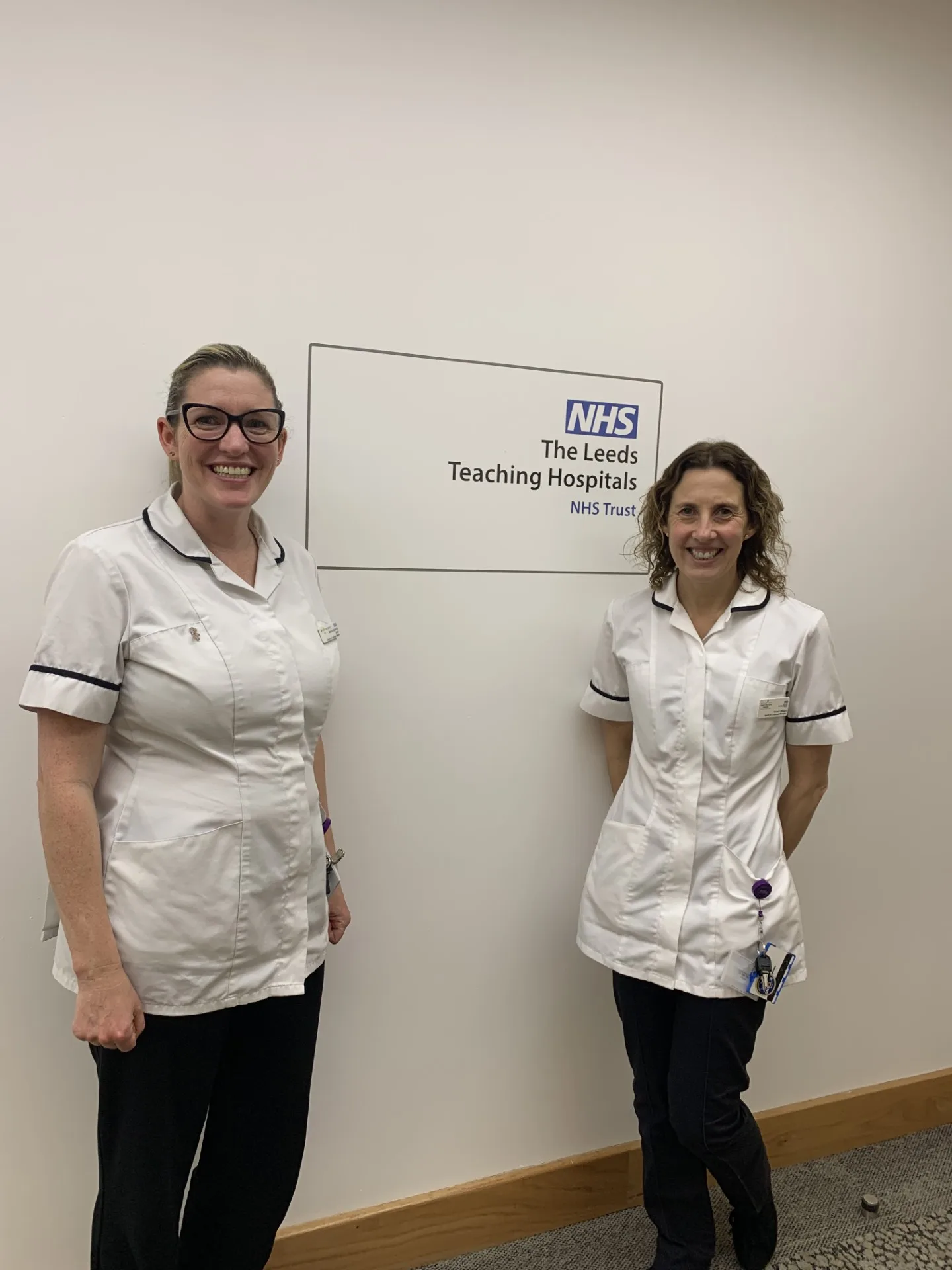
Because of you, Jess is now a dedicated Speech & Language Therapist for cardiac patients at Leeds.
“Babies and children with congenital heart disease across Yorkshire have always been supported by a wonderful community Speech and Language Therapy (SALT) team.
“Now, having a dedicated cardiology SLT, Jess will help provide regular inpatient input on the unit and attend the high-risk feeding clinic.
“She will also help provide continuity of care, assisting in bridging the gap between acute and community services.
“Jess will be a link with community SALTs who will take over the cardiac children’s care when they leave the Leeds Congenital Heart Unit.
“It will be fantastic to have SALT as part of the well-established cardiac team who provide high levels of care to so many children and families.”
A huge thank you to everyone involved for making the Cardiac Speech and Language Therapist role happen. Including Caddick Group and The Hospital Saturday Fund. We will share stories of the difference Jess is making with you all in the coming days.
At CHSF, we know that caring for people with congenital heart disease involves more than treating just the heart itself. It is so much more than that.
That’s why Mindfulness Welcome Packs are now being given to families when they arrive on the children’s heart ward, Ward L51.
Put together by CHSF’s Family Support team, these packs are a valuable tool for supporting parental wellbeing during what can be an incredibly challenging time. These packs are carefully curated to offer a blend of practical items and mindful activities.
Family Support & Youth Worker, Lucy, said:
“Hospitalisation can be a stressful experience for parents. The inclusion of items like stress balls, colouring books, and puzzle books provides opportunities for relaxation and distraction.
Engaging in these activities can help parents alleviate stress, unwind, and temporarily escape from the hospital environment.
“By providing items such as these, we encourage parents to engage in mindful activities that promote relaxation.
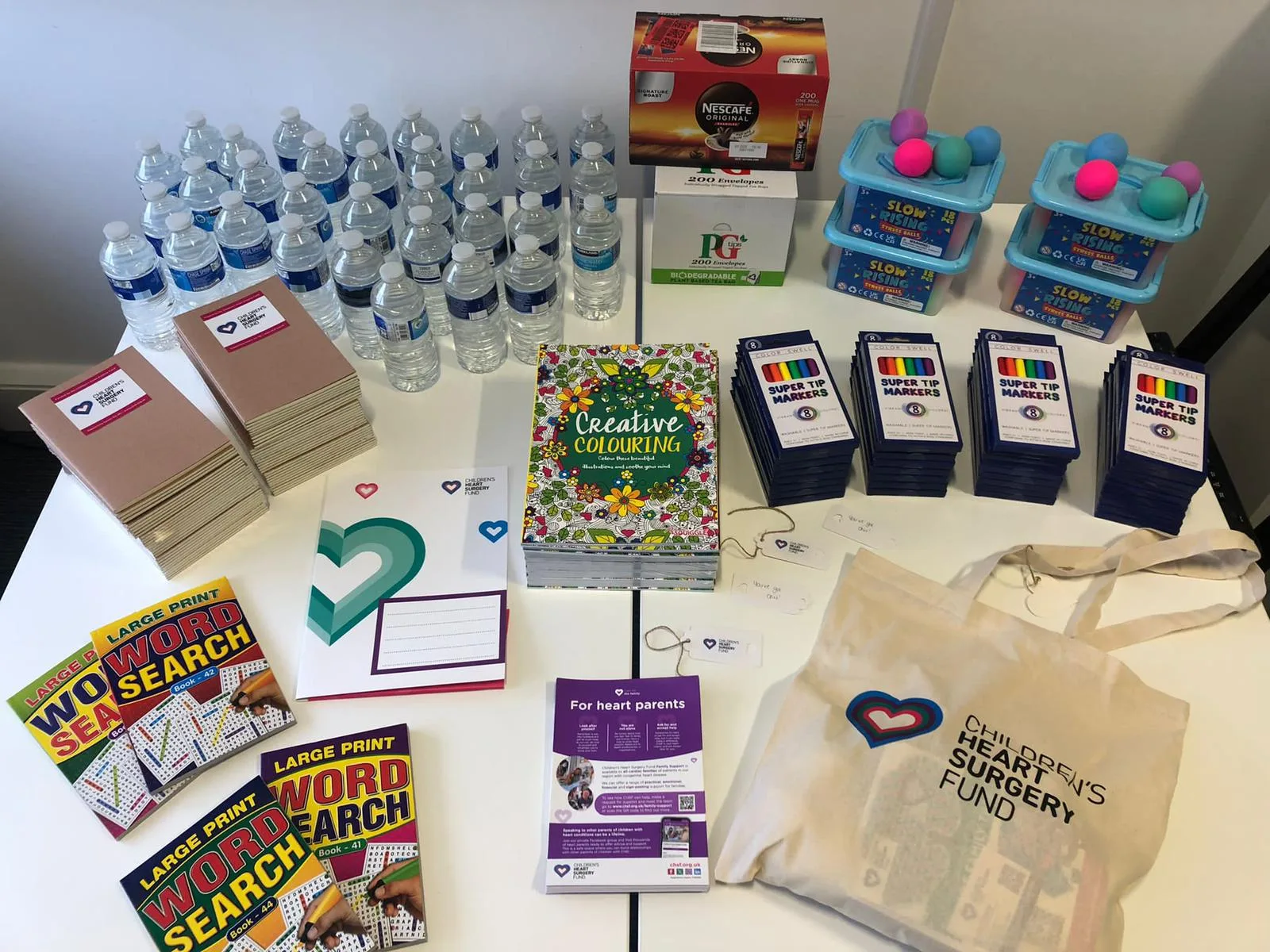
Some of the items included in our Mindfulness Packs are things like colouring books, water, a notepad and pen, a stress ball and hot drinks.
“These activities not only offer a break from ward life but also encourage mindfulness and the promoting of overall wellness.
“Staying hydrated and well fed is essential for maintaining physical health. Including two bottles of water and a snack in the mindfulness packs ensures that parents have access to refreshments throughout their stay on the ward. By prioritising hydration and nutrition, we support parent wellbeing and provide them with the energy they need to navigate the demands of staying on the ward.
“These packs serve as tangible reminders that the parent’s wellbeing matters, and it is essential to take moments for themselves.”
“The small comforts provided in the mindfulness packs, such as tea bags, coffee, and a notebook with pens, offer a sense of normalcy and familiarity in an unfamiliar environment. These items provide opportunities for parents to engage in tasks that bring them comfort and joy, whether it’s enjoying a brew or jotting down thoughts and reflections.
“By equipping parents with mindfulness packs upon their arrival, we empower them to prioritise their own self-care during their hospital stay. These packs serve as tangible reminders that their wellbeing matters and that it’s essential to take moments for themselves.
“The mindfulness packs provided to parents on Ward L51 play a crucial role in supporting parent wellbeing during their time on the ward. By offering a combination of relaxation tools, food, and comfort items, we aim to lighten the load slightly during a difficult time. Our mindfulness packs are a tangible sign of care and support, reinforcing our commitment to holistic wellbeing for families on our ward.”