Our partner charity The Sick Children’s Trust sent us a lovely letter thanking CHSF for a contribution of around £4.5k towards renovating the ground floor kitchen at Eckersley House.
The work was completed in November, and has only been possible because of your donations!
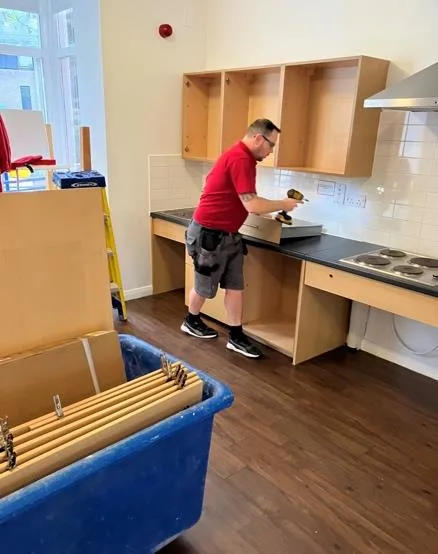
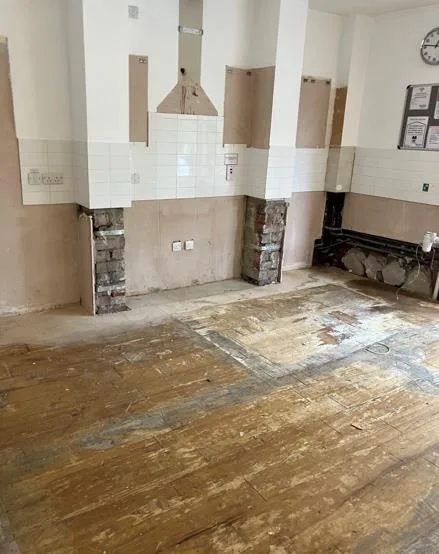
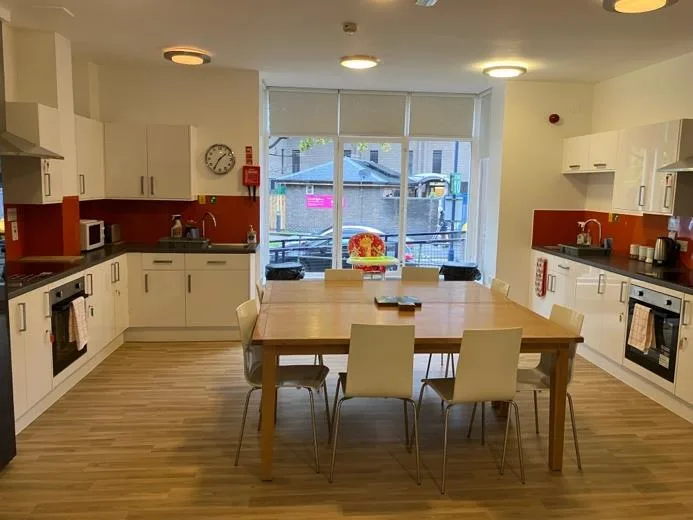
The project involved renovating the kitchen, installing new units, furniture and flooring and two sets of brand-new sinks, washers, cookers, ovens and extractor fans on each side of the kitchen.
The work commenced on 16 October 2023, and was completed on 1 November 2023.
The old flooring in the playroom was blue in colour and was also showing signs of wear and tear, so it was replaced with the same American Oak-style flooring in as in the kitchen, so it all matches together.
Here’s some before and after images of the renovated kitchen…
The Sick Children’s Trust told us:
“We are so grateful to you for your donation which was instrumental in enabling us to continue providing families with high-quality accommodation close to their child’s hospital bedside.
“Giving parents and siblings somewhere to have a family meal together away from the ward will help them maintain some of the stability of their normal family life, reducing stress and helping them to be in a better frame of mind to help care for their child in hospital.
“Because they will be able to have a balanced meal, and won’t have to rely on shop-bought sandwiches and takeaways, they will be able to look after their own health and be at their best to support their child. And because they can buy food cheaply at the supermarket like they would at home, they won’t incur any additional financial costs that could add to their stress and worry.
“Last year, nearly 90% of families staying at Eckersley House found the kitchen facilities useful during their stay, and 85% told us they had gained benefit from interacting with other families staying in the house.
Your generous support of this refurbishment project will allow us to continue delivering these benefits to many more families for years to come.”
Jane, the House Manager at Eckersley House added:
“I am very happy with the kitchen refurbishment, the new lighter flooring and white cupboards make the whole area look so much bigger. It’s great that all 8 families now have a lockable cupboard to put their food in and a large fridge freezer to store food too.
The families who have used our ‘new’ kitchen area have all been very impressed and have said they have enjoyed cooking and eating in such a beautiful area.
The playroom has had a new floor which makes the whole area flow better and looks so homely and comfortable.”

We need to raise at least £10,000 every year to fund CHSF accommodation.
Please donate what you can to help us reach our goal and ensure heart families who need to stay near their loved ones in hospital can #StayAnotherDay.
written by Georgie Abbott
Yesterday I had the privilege to spend time at an MRI Cardiac Clinic headed up by Dr Malenka Bissell. Malenka is passionate about enhancing this clinic to provide the best possible care for babies and children with congenital heart disease in our region.
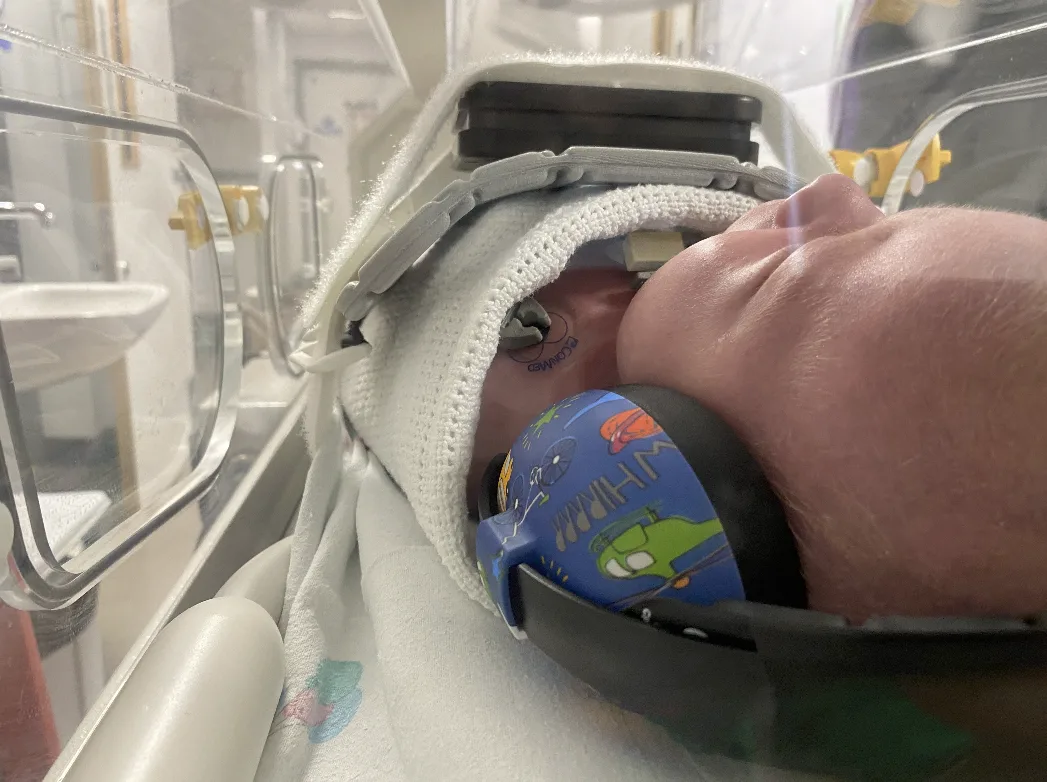
These MRI scans are vital to provide cardiologists with 3D images and flow measurements of a child’s heart. This means they can then plan surgeries and treatment effectively. Malenka has been instrumental in developing this service and, with the help of Children’s Heart Surgery Fund, was able to purchase an MRI-safe, ‘baby pod’ incubator. This enables babies to have an MRI scan without the need for a general anaesthetic.
Leeds General Infirmary was the first hospital in Europe to use this piece of equipment for cardiac MRI scans, and remains the only hospital in the UK able to offer this facility. Having spent time with Malenka I have no doubt this incredible achievement was due to her passion and dedication for this service, which can be life changing for babies and children.
Following the completion of my health and safety form, stating that I would not enter the MRI room (especially if I was wearing anything metal) I took a seat behind the monitor screens.
Children’s Heart Surgery fund are proud to work very closely with Dr Malenka Bissell, who is also a Charity Trustee. The Charity has had the pleasure of helping to fund multiple pieces of life-saving and life-changing equipment for the cardiac MRI department.
Staring at the giant magnetic donut through the glass window, I didn’t have long to contemplate the physics of how this impressive machine actually works, before a 2-year-old boy was carried into place by the anaesthetist.
Immediately I felt a pang of compassion for this young boy and his family who were waiting outside for the results. He had been born with multiple holes in his heart and these scans were vital to help the consultants measure the blood flow in his arteries.
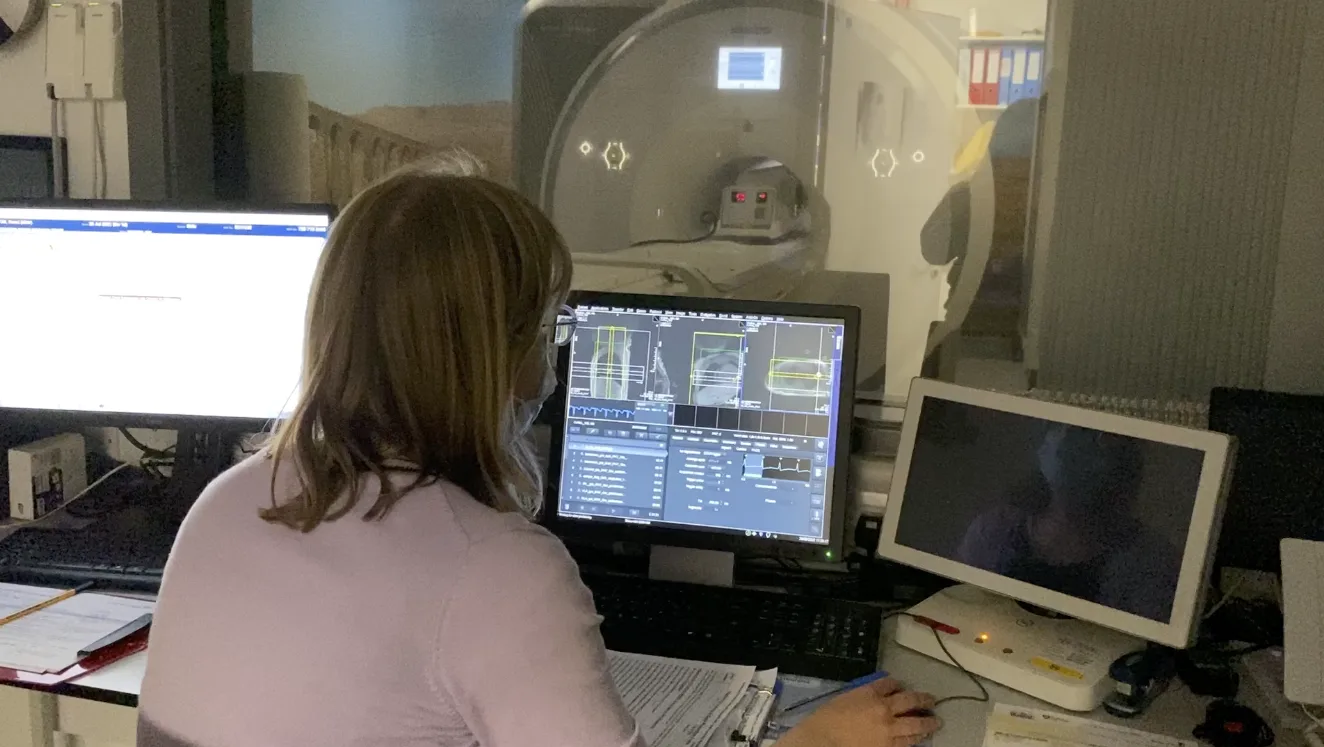
The team gently placed the young boy on the machine bed, covering him with a blanket and stroking his head to make sure he was comfortable. Watching them treat him with the utmost respect gave me a huge sense of comfort, knowing that if I was ever in this situation with my own children I would happily leave them in the capable hands of this caring and dedicated team of clinicians.
When the scan started only the anaesthetist stayed the room and Malenka took her seat next to Julian, the Cardiac MRI Radiologist. Together they worked through a sequence of the heart’s anatomy to capture 3D images and measure the blood flow in his vessels. The scan lasted just over an hour and I was so impressed by their focus and attention to every detail. I was even more impressed when Julian told me they started at 8am and would be working until 8pm that night.
As soon as this scan was complete, Malenka and Julian barely had a moment to breathe before the next patient was in place ready for their MRI scan. This baby was less than a year old with very complex conditions and the whole team continued to work diligently together.
Lunch time came round quickly and Malenka made sure everyone in her team was fed before herself with a leek and potato soup, home grown from her garden.
She told me that she wants her team to be happy because she knows the work can be intensely pressured. In particular, she commented “Julian is a rare breed, there are only 4 Cardiac Specialist Radiologists in Yorkshire, so we need to look after him”.
On top of the soup, she had also baked cakes for the recovery team to thank them for their support with the MRI Clinic. Malenka told me she dreams of being awarded some funding to take her colleagues who work in the high-risk clinic for a team building day to help boost morale.
I was already starting to wonder where Malenka finds the time to bake and cook for her team, but then she told me she writes most of her MRI reports on evenings and weekends, which are often needed for urgent consultant meetings. Another aspect of her work she is hoping to improve with additional funding is a new IT system, which could sync up systems quicker and save multiple hours of time for her and colleagues each week. I was honestly blown away by her dedication and passion for her work and I could tell while the scans were taking place she cared deeply about getting the best results for each and every patient.
As if this wasn’t enough Malenka has also recently introduced an enhanced support clinic working with the Play Specialists on Ward 51 to help reduce children’s anxieties around having an MRI scan. This is particularly important for children with additional learning difficulties such as autism.
I witnessed Anna, our Play Specialist, in action and it was clear that her support was helping the children to feel more at ease. They were able to choose a Netflix film to watch during the scan and Anna also had a miniature MRI scanner with playmobil toy figures to show them, which was funded by CHSF.
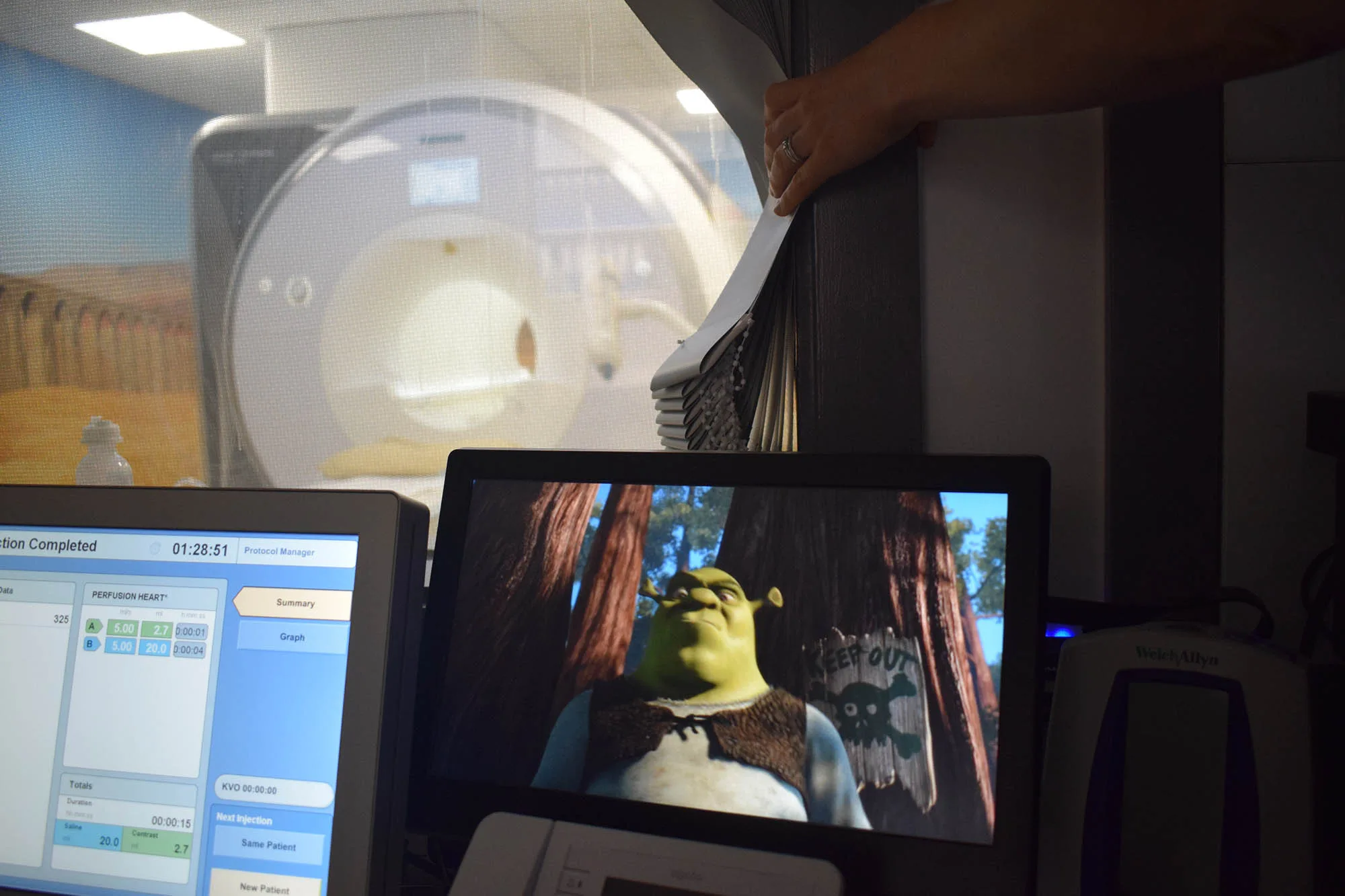
CHSF funded an MRI-safe DVD player so that young patients can watch a movie or TV show while they are having a scan. A very welcome distraction for many.
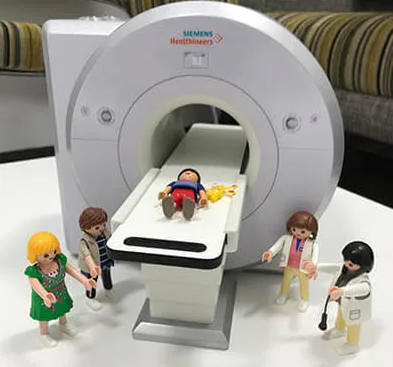
One child said she was really scared of loud noises, but after a while she enjoyed pressing the fire alarm sounds on the toy scanner. After playing for a short 20 minutes, she told Anna she wasn’t scared anymore.
Leaving the MRI clinic, I felt in awe. It was incredible to witness children taking their place in a machine used to inform life-changing treatment plans. I have huge respect for Malenka, Julian and all the team who work in this MRI clinic every day with such compassion and commitment.
If you, or your company, would like to work together with Children’s Heart Surgery Fund to help us make Malenka’s dreams of additional equipment for this service a reality we would love to hear from you. Please email me at georgie.abbott@chsf.org.uk
Georgie Abbott
Corporate Partnerships Manager
georgie.abbott@chsf.org.uk
Recruiting Corporate Partners across Yorkshire, The Humber, North East Lincolnshire and North Derbyshire who want to help improve the lives of children born with congenital heart defects.
It’s the Little Things that have the Biggest Impact
written by Georgie Abbott
At the start of September we celebrated all our incredible young heart warriors and their families at our annual Children’s Heart Surgery Fund Superhero Walk. It was heart-warming to see children dressed up as their favourite superheroes, including doctors and nurses who have looked after them while they recovered from heart surgery.
What I love about this event is that we create a mythical superhero world for our heart families where they can forget about time in hospital and shine a light on their bravery.
Today I got to spent time with a real-life superhero, Emma, one of the Play Specialists for the Cardiac Ward at the Leeds Children’s Hospital.
As usual Emma greeted me with a smile and started her day by saying good morning to all the patients and families on the ward, bringing them fun and laughter in what can be a daunting environment. We met a gorgeous girl, age 10 years old, who Emma knows well because she has been on the ward for a total of over 3 months this year.
Her mum was standing by her child’s bedside and you could tell she also enjoyed Emma’s company. They clapped and laughed together as Emma sang her daughter’s favourite songs.
Next we went to say hello to a beautiful baby who was still in hospital weeks after her recent heart surgery. She was adorable and barely looked bigger than her Katie Bear teddy propped upright at the end of her cot.
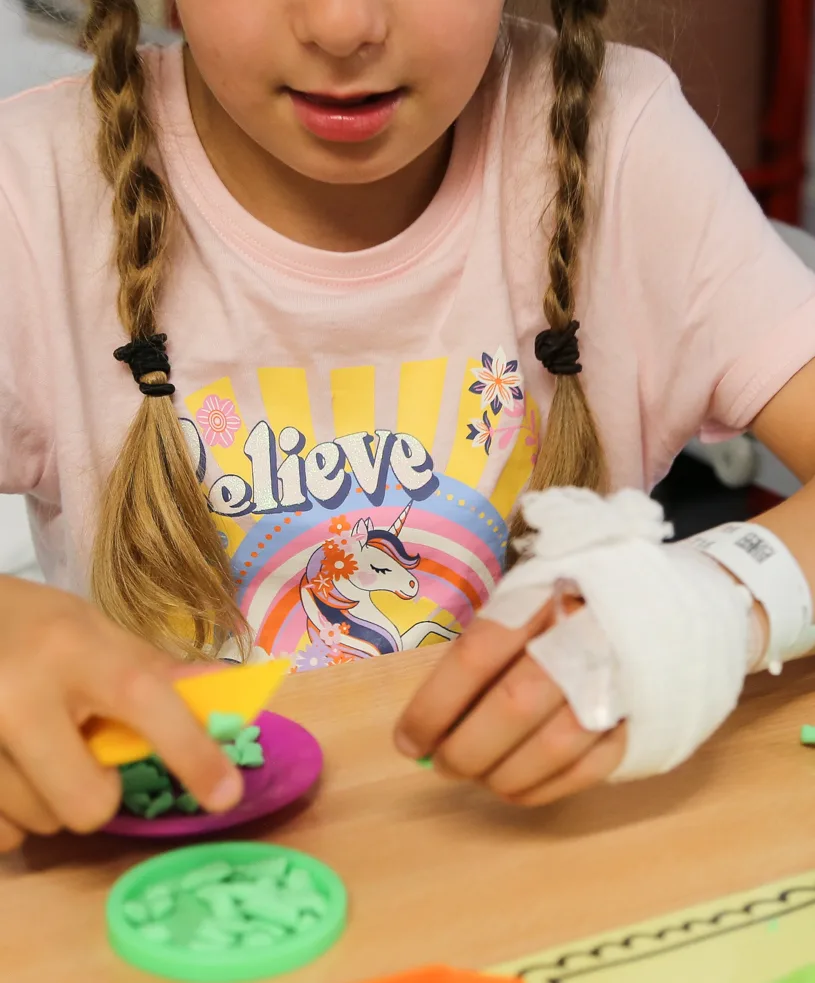
A Play Specialist is a member of staff on the ward who uses play as a therapeutic tool to help children understand their illness and treatment and works with other healthcare professionals to prepare children for treatment and engage them during difficult procedures.
Emma told me she spends a lot of time with babies on the ward as it’s so important to help their development from an early age. She held out a small knitted octopus so the baby could practice grabbing the tenticles to help strengthen her fine motor skills. It was clear the baby loved Emma’s company as she started kicking her little legs in excitement.
In the next bed was a baby boy, just less than a year old, standing up in his cot and giving us all a cheeky smile, like he was planning an escape to a kids only adventure!
When his parents said they were expecting his surgery to take place in a few hours, Emma straight away offered them use of the playroom and access to more toys. His mum told us he had been up since 4.30am this morning which had been challenging as all children need to fast during the day of surgery, so she was very welcoming of Emma’s support.
She also told us what it was like to turn up at hospital in an emergency situation as the first time they came to the ward her little boy was only a few weeks old and she didn’t pack any toiletries.
She couldn’t thank our Children’s Heart Surgery Fund Family Support Workers enough as they gave her a package of toiletries, including a toothbrush and toothpaste. She said having a shower and brushing her teeth in what was a very stressful situation gave her a huge sense of relief.
Spending time with Emma this morning has really made me believe it’s the smallest things in life that have the biggest impact.
Emma’s wish list of new things for the ward includes items for tiny babies, including:
- little rattles
- black and white pattern books
- comforters
- blankets
These items wouldn’t require huge amounts of funding, but would all have the ability to help babies with their development skills so they can reach their full potential.
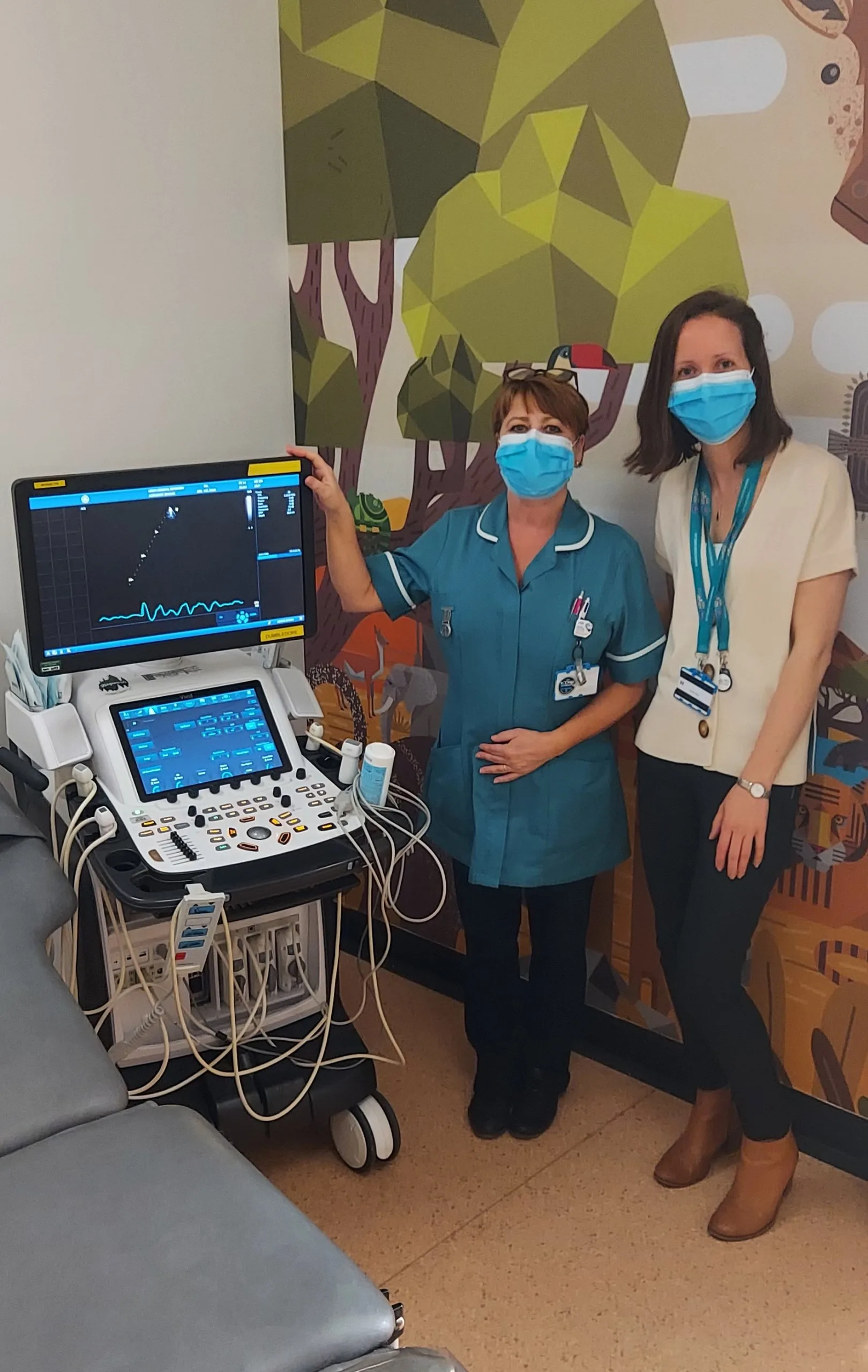
If you would like to find out more about how your company could work in partnership with Children’s Heart Surgery Fund and help us make Emma’s wish list a reality, I would love to hear from you. Contact us at corporate@chsf.org.uk
Georgie Abbott
Corporate Partnerships Manager
georgie.abbott@chsf.org.uk
Recruiting Corporate Partners across Yorkshire, The Humber, North East Lincolnshire and North Derbyshire who want to help improve the lives of children born with congenital heart defects.
The Gerlis Collection, consisting of 785 human hearts with defects, is being brought to life in stunning 3D holograms and models, because of you!
Back in the 1960s, Killingbeck Hospital in Leeds pioneered congenital heart defect repairs when knowledge was still limited.
Dr Leon Gerlis was a pathologist and paediatric cardiologist, who added enormously to the scientific understanding of congenital heart defects by building a collection of preserved human hearts.
Gerlis’ collection played a pivotal role in training cardiac surgeons in Leeds. However, regulations now make access to the specimens for learning difficult (Human Tissue Act).
But with modern technology the Leeds Congenital Heart Unit (led by surgeon and CHSF Trustee Carin Van Doorn) is performing MRI scans to create virtual archives of Gerlis’ hearts.
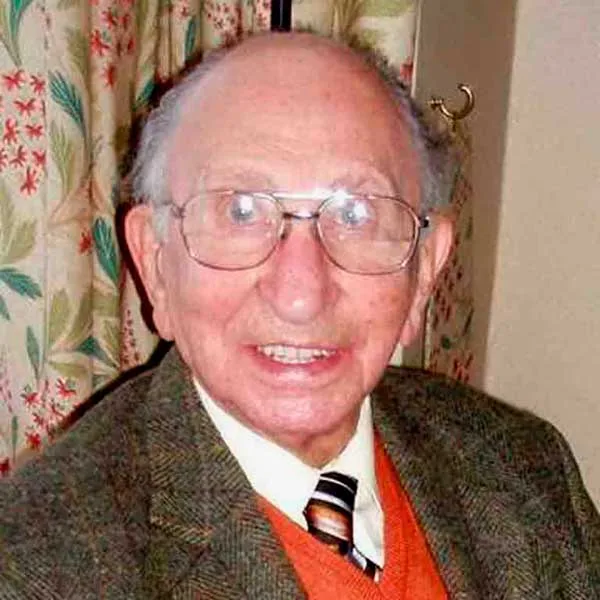
Dr. Leon Gerlis’ collection ensured Leeds was at the forefront of congenital cardiac repair when knowledge was limitied.
This is also thanks to a generous grant of £115,800 from Children’s Heart Surgery Fund, Heart Research UK and Leeds Hospitals Charity.
These scans will generate 3D models and holograms – breaking down barriers to education and research.
This innovation will empower healthcare professionals with advanced training tools and aid patients, families and the public in visualising congenital heart defects.
Children’s Heart Surgery Fund said:
“We are excited to help to digitise the pioneering work of Dr Gerlis for educational benefit, and incredibly proud the work is being led by Miss Carin Van Doorn, one of our long-standing and principal cardiac surgeons and a hero to many of our charity’s heart families.
“The world-class Leeds Congenital Heart Unit supported by CHSF was built on a legacy of pioneering achievements and medical breakthroughs from its origins at Killingbeck.
“This revolutionary project will enhance the understanding and treatment of congenital heart disease all around the world, and make a huge difference to the lives of future generations.”
Read all about it!
Thanks to the Yorkshire Evening Post for featuring the beginnings of this exciting project in the paper this week.
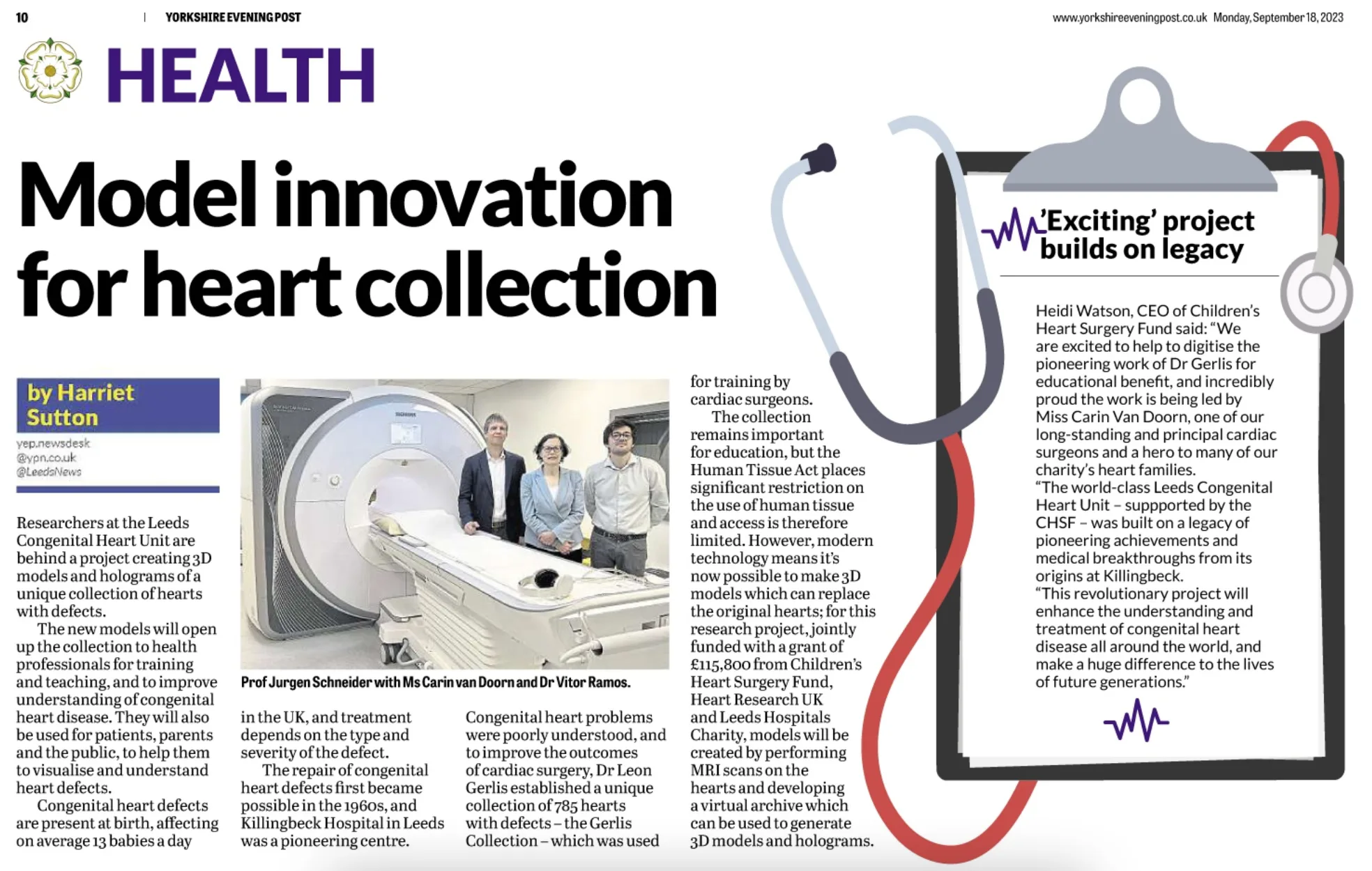
Because of you, CHSF have been able to fund new state-of-the-art software for the Congenital Echo department at the Leeds Congenital Heart Unit.
The team got it up and running in July, and it’s already making a big difference in the clinic!
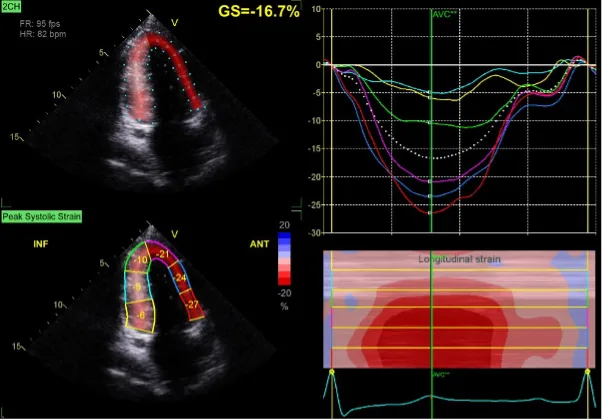
This software provides the tools to check how well the heart is doing and is particularly useful if the team suspect there’s something not quite right with the heart muscle, for patients who have a family history of heart problems, or if a patient has some heart issues where the cause is unknown.
Dr Grazia Delle Donne, Consultant Paediatric Cardiologist said:
“We wish to express our sincere gratitude to Children’s Heart Surgery for providing funding for software for one of our congenital echocardiography (ECHO) machines. The software was installed in July and placed immediately into clinical practice.
“The software provides us with the tools for additional assessment of cardiac function. This is useful in patients with a family history, or suspect abnormalities of the heart muscle where there is a possibility of inheriting an abnormality of the heart muscle.
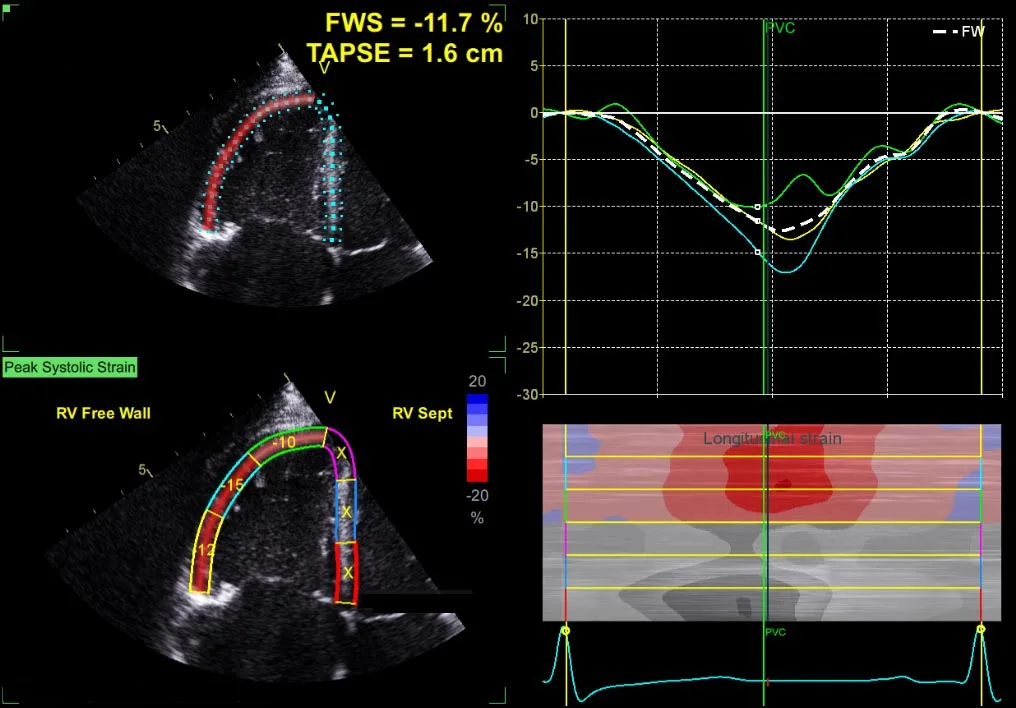
“The images to the left are of 2D of the right heart and the images to the right are strain curves. This allows us to identify normal and abnormal patterns and recognize abnormalities of the heart muscle.” – Sam, Sonographer
This includes dilated, hypertrophic or arrhythmogenic cardiomyopathy, or in patients with idiopathic heart disease.
“This [software] is useful in patients with a family history, or suspect abnormalities of the heart muscle.”
“Some patients with conditions such as dilated cardiomyopathy may recover, and the subtle changes detected using the software may help to predict those who are more likely to recover.”
This brilliant new software, funded thanks to CHSF supporters, does a lot of things automatically. This means it makes the sonographer’s jobs easier and means that the team can be more consistent when checking up on patients over time.
Sam Bainbridge, Congenital Sonographer said:
“Many thanks again for supporting this project, we are already using the software in clinical practice!”
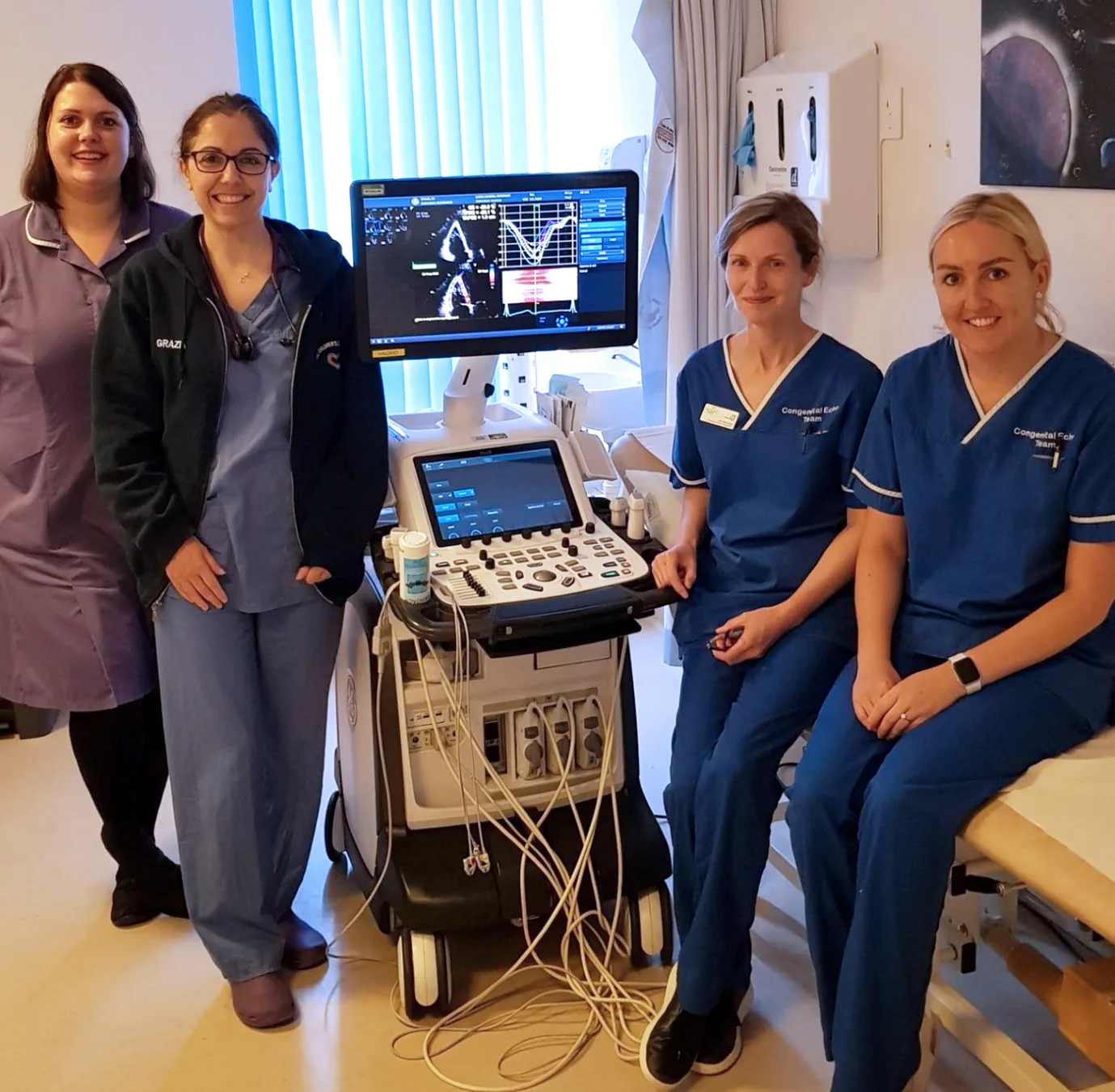
In the photo left to right:
Beth Lunn (Children’s Cardiac Nurse Specialist), Dr Grazia Delle Donne (Consultant Paediatric Cardiologist), Sam Bainbridge and Hannah Shaw (Congenital Sonographers).
Every donation – big or small – makes a huge difference.
Your generosity can really mean the world to babies, children and adults with congenital heart disease across our region. Help us to continue funding more projects like this by making a donation.
MORE OF WHAT YOU’VE FUNDED
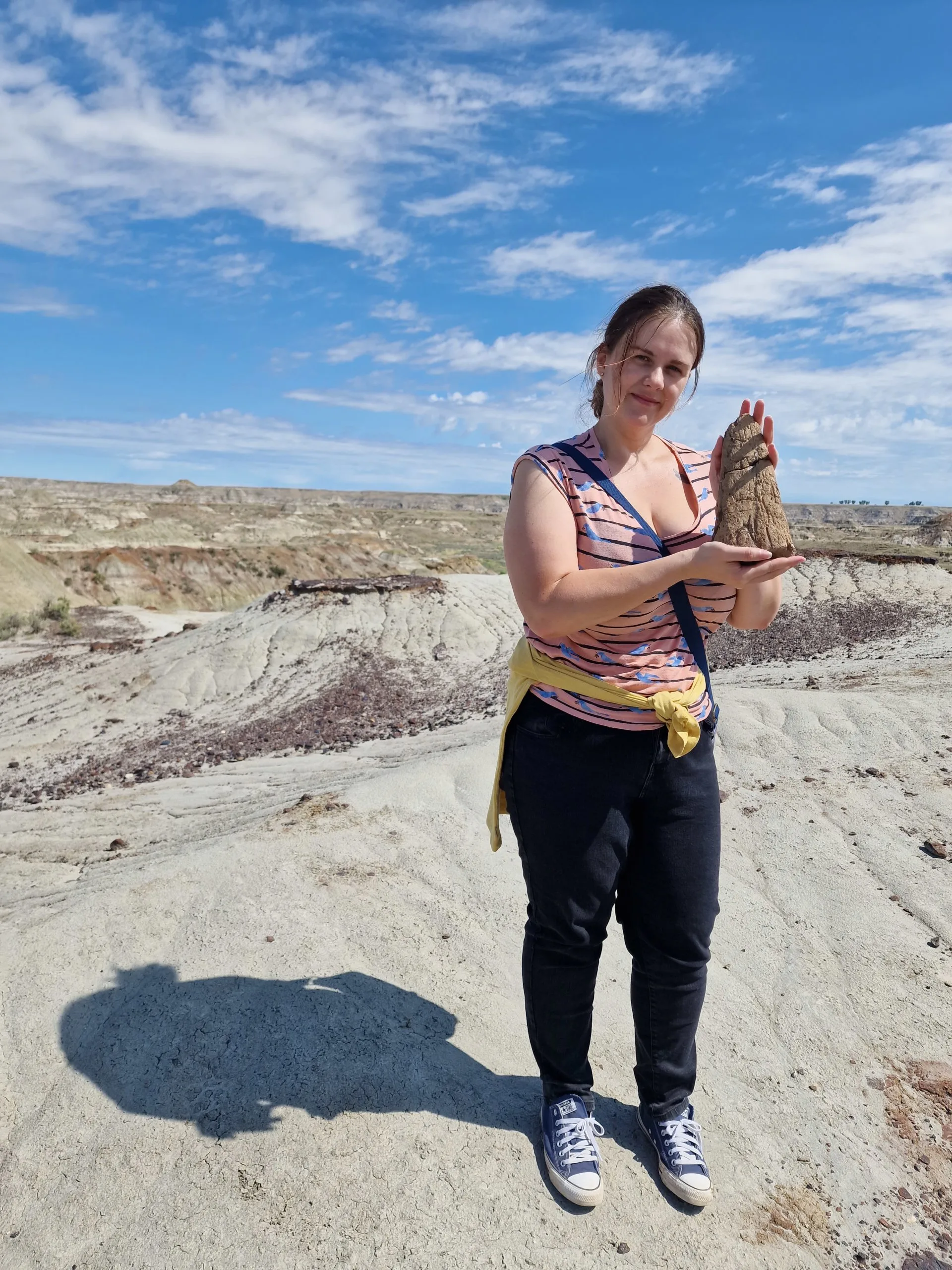
Leila is a Paediatric Cardiologist at our wonderful Leeds Congenital Heart Unit caring for our youngest heart patients and their families, before and after surgery.
Last year, Children’s Heart Surgery Fund collaborated with Leeds Hospitals Charity to offer financial support for Leila Rittey’s international fellowship in Edmonton, Canada.
One year on, Leila updates us on her experience working as a Fetal and Neonatal Cardiology Fellow ‘across the pond’ and how it will positively impact her role at Leeds Children’s Hospital…“I worked with the team at Stollery Children’s Hospital where I carried out the intraoperative studies on babies. I was able to further develop skills in performing transoesophageal echoes, a procedure to look at the heart chambers and valves using a flexible telescope placed down the oesophagus helping to identify congenital heart disease in patients undergoing neonatal surgery.” “I also had the opportunity to get involved in Fetal Cardiology teaching, where I was able to develop my skills in showing fetal echo images to people who are not trained in this field and know how to explain the images we were obtaining. It was incredibly useful to see how things are done differently in another centre and see what best practice I could bring back to Leeds.” “During the week, I took part in fetal cardiology clinics, where the team saw a wide variety of mums to be. The big difference is that the fetal echo is routinely offered from 10 weeks of gestation in Canada, 8 weeks earlier than is normally seen in most centres. This allowed me to develop skills in imaging at earlier gestation and knowing how scanning in the first trimester is different than scanning in the second or third trimester. In addition to the early scanning the team in Edmonton carry out detailed assessment of diastolic function on every fetus which is not routinely carried out in the UK, this allows earlier potential identification of disease.”
“We would also meet with parents at around 34-week gestation via Zoom with the Fetal medicine, Fetal Cardiology and Neonatology Consultants and fellows from each speciality. This gave us the opportunity to update families on their baby’s health and explain a little more about what would happen after birth, helping them prepare for a time that would undoubtably be very difficult for them.”
“The parents found this really very useful and really appreciated having everyone together in the same meeting so there would be someone present who could answer any questions that they had. This is something that I would like to try and take forward in Leeds for our more complex patients.”
“I was able to attend the Phoenix Fetal Cardiology International Meeting. It was invaluable to be able to meet the leaders of the … field internationally and listen to the current advances happening in the field. The funding provided by both charities ensured that I was able to afford to attend this meeting and I am very grateful.“
“During the fellowship, I was involved in two large research projects. The first was looking into the accuracy of early fetal echo, both in identifying any heart problems and confirming that the heart is normal. This project found that early fetal echo was highly accurate in skilled hands and has been presented internationally at the American Society of Echocardiography annual meeting.”
“My second research project was in the assessment of atrial function in fetuses and comparing if there is any significant difference between different pathology groups. This is a very novel area of work and was a pilot project which has shown some differences in a small sample. This has been accepted for presentation at the World Congress in Paediatric Cardiology meeting in Washington DC at the end of August.”
“Finally, I was able to attend the Phoenix Fetal Cardiology International Meeting. This was the first time I had ever attended a meeting dedicated to fetal cardiology of this magnitude. It was invaluable to be able to meet the leaders of the Fetal Cardiology field internationally and listen to the current advances happening in the field. The funding provided by both charities ensured that I was able to afford to attend this meeting and I am very grateful.”
“I am now back working in Leeds and this extensive training has allowed me to be able to cover compassionate leave taken by one of the Fetal Cardiology Consultants to ensure that the Fetal Cardiology clinics aren’t reduced and patients waiting for longer than they should to be seen. I am also able to teach the sonographers and other consultants what I have learnt whilst away to enable that the whole Fetal Cardiology Department are benefitting from the world class training that this funding allowed me to obtain.”
written by Georgie Abbott
What do you think defines a productive and happy team of colleagues? This morning I had the privilege to spend some time with the Paediatric Cardiac Outpatients team at the Leeds General Infirmary and I’m sure all teams could learn something by the way they work seamlessly together.
Due to the current industrial action within the NHS, my preconceived thoughts meant I was expecting to find a team of nurses tired, over-worked and sadly looking for opportunities outside of the NHS…and I was thrilled to find the exact opposite!
One of the Cardiac Consultants initially left the department to retire and is now back working with the team as he told me he missed the contact with colleagues and patients.
Jo Fox, a Clinical Support Worker, who has been working at the Cardiac Outpatients department for over 12 years told me the team usually see 70 patients in a day and that this figure has grown by around 75% in the last decade.
Initially I thought this would mean the team would be rushing around without a moment to breathe for themselves, but because of their incredible teamwork, it meant that they have worked out ways to efficiently manage their workload and stagger their individual lunch breaks.
Outpatients is the part of a hospital designed for the treatment of people with health problems who visit the hospital for diagnosis or treatment, but do not at this time require to be admitted for care.
I asked each of the team what they enjoy most about their role and it was unanimous they love working in the cardiac outpatients because they enjoy watching their young patients grow from babies into adults, which gives them a unique opportunity to have consistency with the young heart families.
As the team are all long standing members of NHS staff, it was clear to see that the young patients feel at ease in the presence of the nurses familiar and friendly faces.
As well as the longevity of the team providing welcome familiarity to the patients I was also impressed with their knowledge about the complexity of cardiac conditions. Their receptionist, Catherine, who has been working in the team for over 15 years had a fountain of knowledge about heart surgery.
This enables her to go over and beyond her administration role, because she is able to offer reassurance and understanding to patient families when they need it.
She mentioned in particular she is able to put worried mums and dads at ease if they’ve been told their child is born with a heart murmur.
Children’s Heart Surgery Fund recently funded new artwork and distraction equipment for multiple rooms in the department, to help young patients stay still during their ECHO scans so their cardiac consultant can get the best possible 3D images of their heart.
However, there is always a need to provide more support and currently the paediatric consultant rooms are also in need of new child friendly artwork and distraction toys.
If you or your business would be interested to work together to help CHSF continue supporting our Cardiac Outpatients team I would love to hear from you at georgie.abbott@chsf.org.uk
Georgie Abbott
Corporate Partnerships Manager
georgie.abbott@chsf.org.uk
Recruiting Corporate Partners across Yorkshire, The Humber, North East Lincolnshire and North Derbyshire who want to help improve the lives of children born with congenital heart defects.
Two new ECG machines are set to make a life-saving difference to young patients in Grimsby and Scunthorpe, thanks to supporters of a local charity.
The machines have been provided by Children’s Heart Surgery Fund (CHSF) – who are funded solely by public donations – and are already up and running at both Scunthorpe General Hospital and Diana, Princess of Wales Hospital in Grimsby.
Electrocardiography (ECG) machines give vital information to clinicians about a patient’s heart rhythm and are used to monitor and diagnose cardiac conditions.
Previously there was no specific ECG machine for the paediatrics and neonatal departments at Scunthorpe, and the existing machine at Grimsby needed replacing.
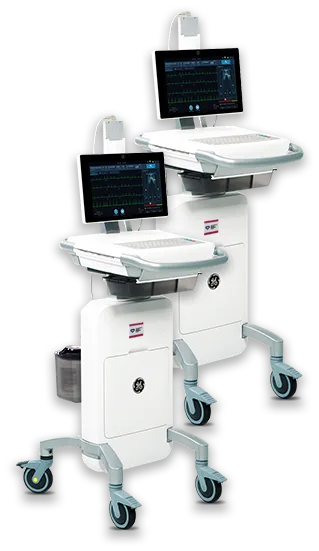
The equipment is crucial for acute CHD patients where a diagnosis is urgently needed, and to record a patient’s ECG data at critical times
Consultant Cardiologist Sandeep Kapoor says the ECG machines will be used for children from 0 to 16 years of age, and many young patients at each hospital would benefit. He said:
“Currently we have to borrow an ECG machine from our A&E department which can mean a delay of several hours. Having our own ECG machine in the paediatrics and neonatal department will help our babies and children with a heart condition get a timely diagnosis. It will also help in monitoring heart rhythms while we give cardiac drugs to some children.”
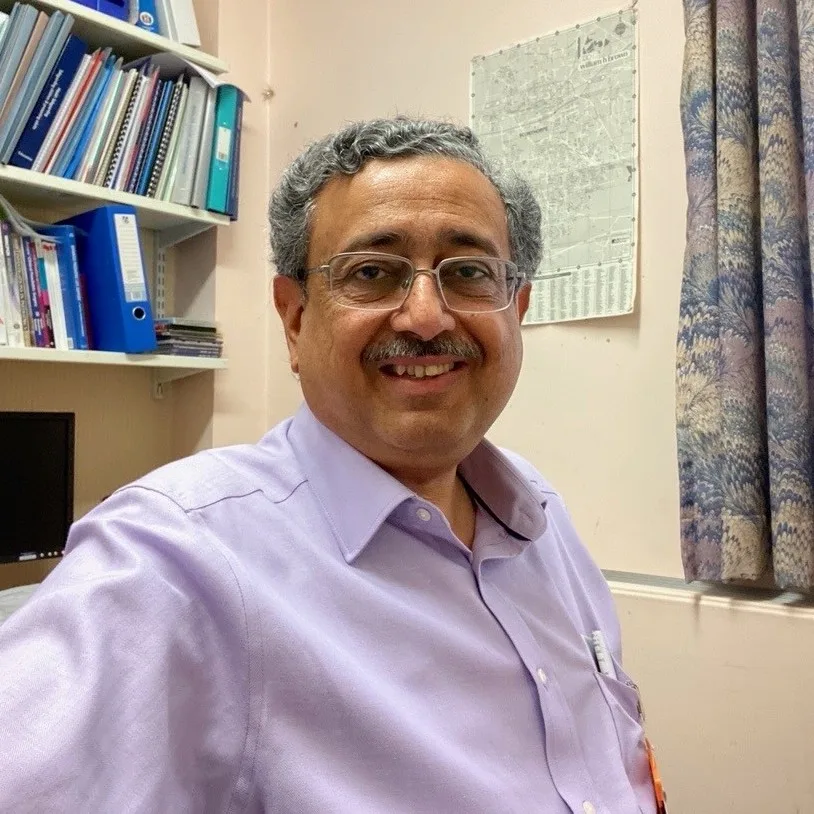
CHSF’s mission is to care for the heart, mind, family and future of congenital heart disease patients (CHD) across our region. 1 in 125 babies are born with CHD in the UK, and over 17,000 patients of all ages are cared for by the CHD regional network every year.
The charity is based near the Leeds Congenital Heart Unit – the region’s specialist centre for patients with congenital heart defects – but also supports 19 outreach hospitals including Scunthorpe and Grimsby.
CHSF have also funded a Children’s Cardiac Nurse Specialist to work specifically at Grimsby and Scunthorpe hospitals.
Nurse Nikki Meanwell complements the resident paediatricians, by helping local CHD patients and their families following diagnosis, or further along the treatment journey, without them having to travel into Leeds.
She also works to provide a link between the local hospital and the specialist Leeds Unit, and can help families access further support from CHSF which can include financial, emotional and practical support from the charity’s Family Support Workers.
The provision of a specialist cardiac nurse in Grimsby and Scunthorpe is in addition to similar roles funded by CHSF which are already up and running in Sheffield, Bradford and Calderdale.
CHSF’s CEO Heidi Watson says both the ECG machines and cardiac roles illustrate the charity’s commitment to the whole region’s CHD patients:
“The new ECG machines will make a hugely positive difference to the diagnosis and treatment of future CHD patients in Grimsby and Scunthorpe, and further enhance the fabulous care given by these hospitals. We would like to thank our supporters, whose donations continue to make projects like this possible.”
“CHSF exists to ensure everyone with CHD across Yorkshire, the Humber, North Lincolnshire and North Derbyshire receives the best treatment possible. Although the region’s specialist unit is based in Leeds, we are excited to be able to provide care closer to home by funding local nurses with expertise in congenital heart disease.”
You can make a donation to help further CHSF’s life-saving work across the region here.
Leeds Children’s Hospital heart surgeons perform life-changing heart surgery for two patients in a UK first.
Leeds Congenital Heart Unit heart surgeons have performed two scimitar syndrome repairs using an innovative surgical procedure, never-before performed in the UK.
Scimitar Syndrome is a rare congenital condition in which a vein from the right lung is abnormally connected to the heart causing oxygenated blood from the lung to return to the wrong side of the heart. This causes an overload and enlargement of the right side of the heart and in time could lead to heart failure.
The new ‘Lugones’ procedure – pioneered in Argentina by Dr Ignacio Lugones – is an innovative way to redirect the blood to the correct (left) side of the heart, using the heart’s own lining.
The traditional procedure involves creating a long artificial tunnel between the abnormal ‘scimitar’ vein and the correct side of the heart. This carries greater risks as the long tunnel can narrow or block over time. The Lugones procedure uses the body’s own tissue and creates a more direct route with less chance of narrowing or blocking.
Dr Lugones travelled to the UK to oversee the first use of his procedure in the country, working closely with heart surgeons at Leeds Children’s Hospital, led by Consultant Congenital Cardiac Surgeon Giuseppe Pelella.
Children’s Heart Surgery Fund provided four night’s accommodation for the visiting surgeon, Dr Lugones.
Other UK centres have since performed the procedure, following success at Leeds Children’s Hospital.
Adult patients Vicky Waite (43) from Tingley and Emma Clements (29) from Wetherby are the first patients in the UK to be treated using the Lugones procedure.
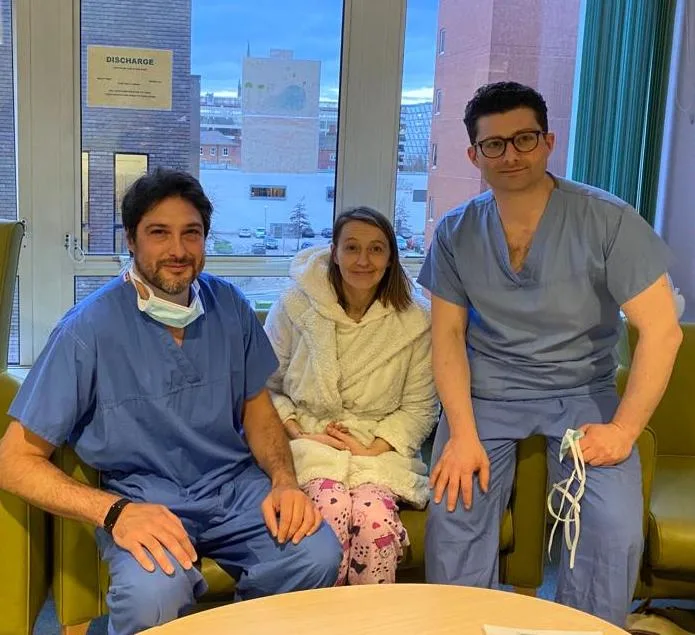
Patient Vicky with Dr Lugones and Mr Pelella before her surgery. Photo credit: Leeds Children’s Hospital
Vicky and Emma are treated within the children’s hospital as congenital cardiac patients. The Leeds Congenital Heart Unit looks after patients born with heart conditions from before birth, through childhood and throughout adulthood.
Full time mum of two, Vicky, only discovered she had been born with a heart condition after she’d had children. She found herself feeling breathless and tired even after climbing one flight of stairs or cleaning around the house.
Special Educational Needs teacher Emma was diagnosed with Scimitar Syndrome at the age of 19 but only required surgery recently when her condition deteriorated. Emma was easily fatigued and didn’t feel able to go out which affected her mentally as well as physically.
Both patients may not have been candidates for surgical interventions due to the complexity of their condition and risks associated with the traditional procedure. Surgical alternatives would have been temporary whereas the Lugones procedure has the potential to be a permanent fix that will reduce the risk of heart failure and enhance the patient’s quality of life.
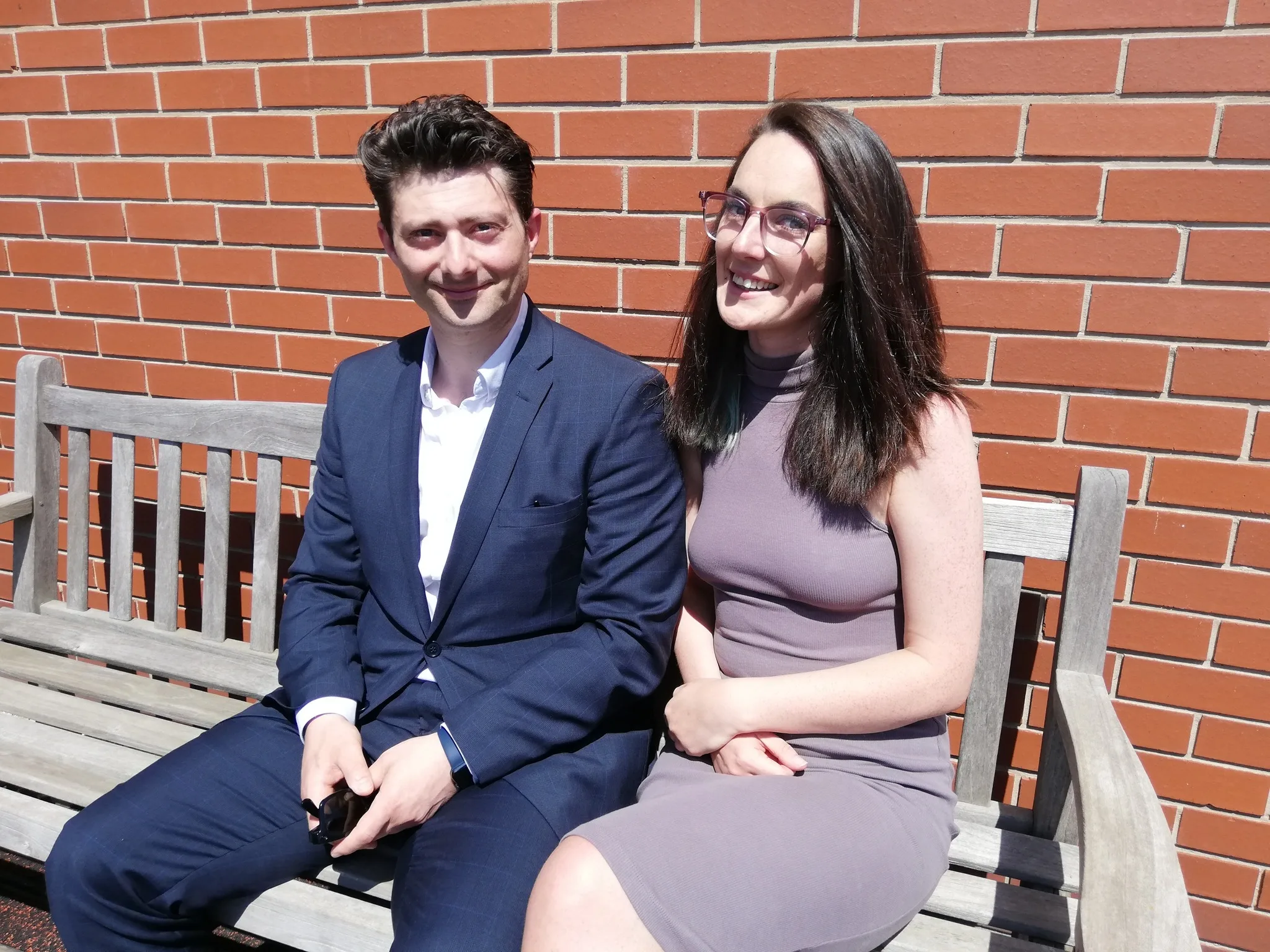
Patient Emma catching up with Mr Pelella after her surgery. Photo credit: Leeds Children’s Hospital
After surgery that lasted between six and eight hours, both patients were discharged within a week of their surgery and are recovering well at home.
Only four weeks after the major heart surgery Vicky already felt better then pre-surgery, had a better appetite, is sleeping better and a post-operative scan four days later showed that the right side of heart (that was severely enlarged) had already dramatically reduced in size.
Dr Lugones is a Paediatric Congenital Cardiac Surgeon working at the Buenos Aires General Children’s Hospital and has pioneered this new procedure.
Mr Pelella was introduced to Dr Lugones and his procedure at a surgical conference in Milan. Mr Pelella identified that this procedure could be beneficial for patients in the UK and invited Dr Lugones to deliver training and fly into the UK to supervise procedures on the first two UK patients.
Mr Pelella said:
“The Lugones procedure has the potential to improve the quality of life of the patients, correcting an anatomical defect. With the defect corrected patients will have reduced risk of heart failure, feel less fatigued and be able to live full and active lives.”
“The procedure can be used for patients who previously would not have been candidates for surgical intervention because the risk of failure was too high. I’m extremely pleased for our first two patients, and I hope that more patients will now benefit from this procedure in Leeds, and across the UK.”
Speaking four weeks after her surgery, Emma said:
“I can’t thank Dr Pelella and his colleagues enough for being so committed and finding the best outcome for me. Despite the procedure being so new he made me feel so relaxed, he was there every day checking I was OK… Before surgery my heart might not have been strong enough to cope with a pregnancy. Our prospects for starting a family are now so much more positive – thanks to this procedure.“
Emma and her fiancé have rescheduled their wedding for 2025 having postponed it pending Emma’s surgery.
Vicky reflected:
“It was a bit unnerving and scary but I had confidence in Mr Pelella and it was really reassuring that Mr Lugones could be there to supervise the operation… It wasn’t like meeting two surgeons it was like making two new friends. I’m looking forward to being able to go to the beach, play football with my kids without getting out of breath… just do normal things without having to take a million breaks!”
Mr Colin Holton (Clinical Director at Leeds Children’s Hospital) said:
“I’m extremely proud of the team who have brought this innovative procedure to Leeds in a UK first. Our Congenital Cardiac Team are well known for leading the field and pushing the boundaries when it comes to surgical interventions. It’s great to know that children and adults have a world class service on their doorstep here in Leeds.”
Surgeons at Leeds Children’s Hospital hope that other centres will adopt the procedure, improving the outlook for hundreds of congenital cardiac patients across the UK.
Corporate Partnerships Manager Georgie recently had the opportunity to shadow Shelly, one of our Family Support Workers at CHSF, as she visited families currently staying on the children’s heart ward (L51).
Shelly’s crucial role is only made possible by generous donations from our amazing supporters. In this blog, we delve into a typical day for Shelly and discover the significant impact our family support service has on heart families…
“Today, before I started work, I got given the date for my two year old’s ENT surgery appointment.”
“My son, Louis, has been struggling with his speech and language development, which we now know is due to a glue ear issue, that can be corrected with grommets.”
“He will be given a general anaesthetic for this routine operation, which is very common among young children.”
“As much as I want him to have this surgery because I know it will help him to be able to hear and communicate with us (I can’t wait for the day he finally says ‘mummy’!), I am also scared at the thought of him being put to sleep, and not having any control over this situation. I thought I was going to start crying when I saw the date written in black and white.”
“I then walked through our Children’s Heart Surgery Fund office doors and put my family life behind me to get to work, which today included spending time with our Family Support Worker, Shelly. We started our time together by visiting some of our young patients on the cardiac ward at the Leeds Children’s Hospital where babies and children recover from heart surgery.”
“We met a gorgeous 3-month-old baby who has been in hospital since the day she was born. Her mum was cradling her in her arms, careful not to disturb her vital feeding and medicine tubes. She told us she was due to have surgery last Friday, but this got cancelled because of an emergency situation and she is hoping she will have her open heart surgery this week.”
“Shelly was able to give the baby’s mum a Tesco voucher to help ease the financial burden of being in hospital 24/7, and thankfully CHSF have funded her a room in nearby accommodation at Eckersley House.
In this video, see some of the key areas around Leeds Children’s Hospital as well as hearing a bit more about the support CHSF provide families.
“I imagined myself in the mum’s situation and thought ‘how would I cope living in hospital every day waiting for a surgery date for my baby to be confirmed?‘. I think I would really struggle living day by day, waiting and wondering what will happen.”
“I know I’ll be thinking about Louis’s surgery for the next month, but at least I can distract myself with other things away from a hospital environment.”
“It made me realise again how valuable it is for CHSF to fund our Family Support Workers, like Shelly, because she is giving vital support for our young heart warriors and their families, making sure they have someone to talk to during this time, offering reassurance as well as direct emotional and practical support.”
If you or your business would be interested in working together to help CHSF keep funding our incredible Family Support Workers, like Shelly, I would love to hear from you at georgie.abbott@chsf.org.uk
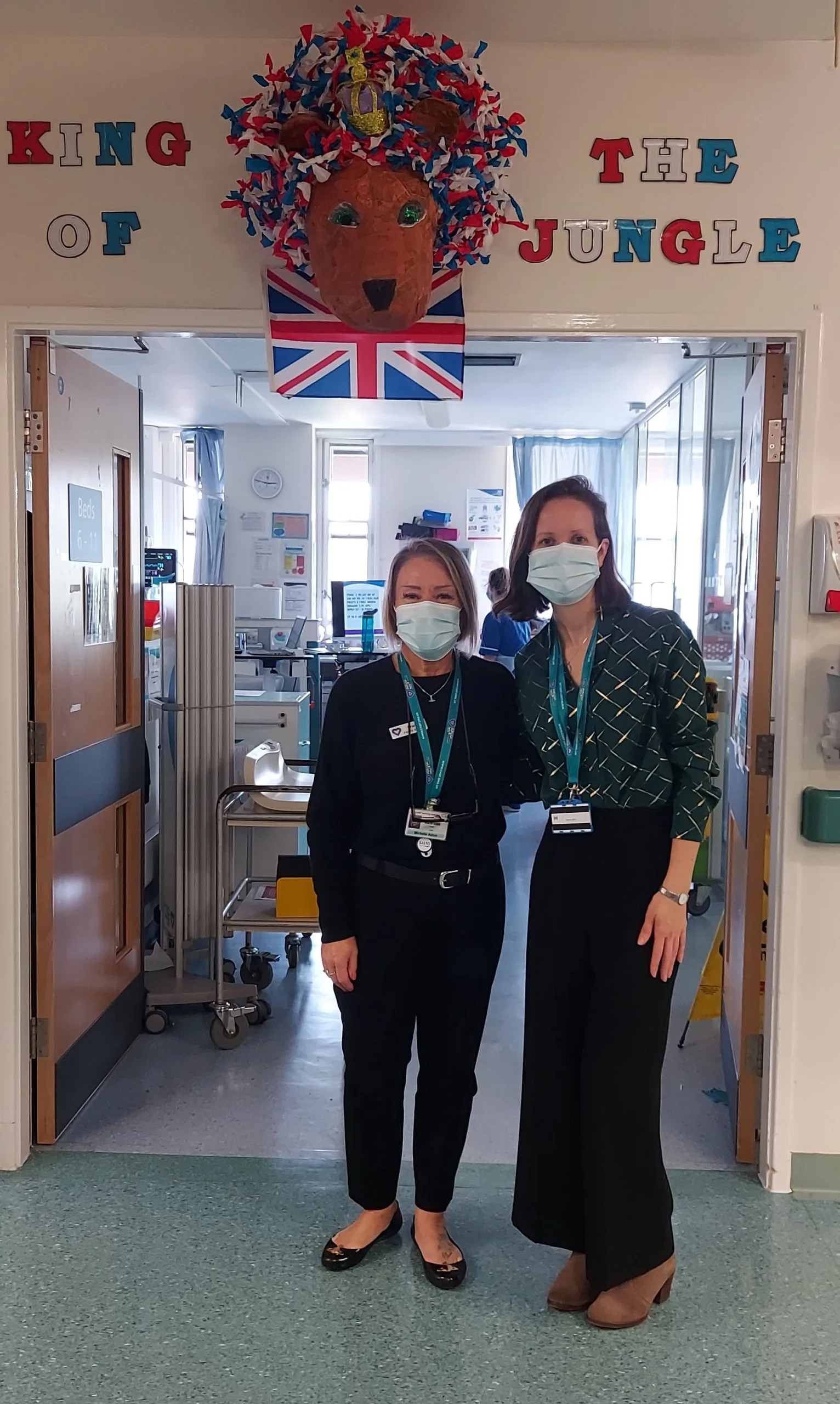
Georgie Abbott
Corporate Partnerships Manager
georgie.abbott@chsf.org.uk
Recruiting Corporate Partners across Yorkshire, The Humber, North East Lincolnshire and North Derbyshire who want to help improve the lives of children born with congenital heart defects.