Children’s Heart Surgery Fund has supplied a new high tech incubator to the neonatal intensive care unit at Leeds General Infirmary
Article written by Mark Lavery, Yorkshire Evening Post, Friday 27th November
Every year the neonatal unit cares for around 1,600 premature and seriously ill babies, including around 150 suffering from significant heart conditions.
Before they are moved to the congenital heart unit they stay on the neonatal intensive care unit until they have gained enough weight to have the best chance for successful heart surgery.
Paediatric teams from both units work together to ensure the babies receive the best care.
The new incubator, which was provided thanks to generous donations to the Children’s Heart Surgery Fund (CHSF) by local Trusts and Foundations, is the latest in neonatal technology.
The Trusts & Foundations who supported the Baby Leo were:- The Annandale Charitable Trust
- Green Hall Foundation
- The Michael Cornish Charitable Trust
- Next plc
- P F Charitable Trust
- The Tony Bramall Charitable Trust
It is built and designed around the needs of the family and baby and will ensure the best possible care and chances of survival for babies with heart, and other conditions from across the region.
Dr Lawrence Miall, consultant neonatologist at the Leeds Centre for Newborn Care, said:
All the staff and consultants on the Leeds Children’s Hospital Neonatal Unit are incredibly grateful to the Children’s Heart Surgery Fund for their recent purchase of a Draeger ‘BabyLeo’ incubator. This new piece of equipment is a high tech incubator which allows us to provide the best thermal and developmental environment for preterm babies and some smaller babies with congenital heart disease whilst they are receiving intensive care. In the Leeds neonatal intensive care unit we care for a large number of babies with complex congenital heart disease, alongside our cardiology and cardiac surgical colleagues. This incubator allows us to prepare them for surgery in the best environment, so that they can put their energies into growing rather than into keeping warm. This will improve their outcomes from surgery. The hybrid incubator offers a number of state of the art features, especially the ability to nurse the baby with the lid open or closed, depending on what procedures are being performed, whilst maintaining the correct temperature. It can be personalised with the baby’s name and with different coloured soothing lights. This new Baby Leo is especially important at this time as some of our hybrid incubators are getting quite old, and due to Covid 19, all new babies admitted have to be admitted into an incubator rather than a cot, until we know their Covid status. We really appreciate all the fund raising that goes into making such a substantial donation and would like to thank all the Children’s Heart Surgery Fund supporters.
Senior sister Catherine Livingstone, said:
The new Baby Leo is extremely valuable to our unit, they are more up to date and have some wonderful features. This makes it more user friendly for the nursing staff to operate and they can also be personalised on the screen which is lovely touch for the parents. This incubator is very adaptable as it has many modifications for the tiny premature baby, or a bigger cardiac baby requiring full intensive care or a surgical baby recovering after theatre.
Sharon Milner, chief executive officer of Children’s Heart Surgery Fund, said:
We are incredibly grateful to the funders who helped to finance this amazing hi-tech incubator. We know it will make a positive, life-saving difference to the outcomes of critically-ill babies with congenital heart disease for years to come.
The Leeds-based CHSF provides vital funding to support the Leeds Congenital Heart Unit, at LGI, in becoming a world class centre of excellence for children and adults with congenital heart disease.
This year, as the charity sets itself the impressive fundraising target of £1m, the YEP is issuing a clarion call to Leeds residents to Have A Heart and help back its bid.
The charity has helped the unit by footing bills for life-saving medical equipment, parent accommodation, vital ward resources, staff training, scientific research and new clinical roles.
To donate: visit chsf.org.uk/donate to give a one-off donation or to set up a regular, direct debit donation.
Or pay cheques to: Children’s Heart Surgery Fund at Suite D17, Joseph’s Well, Hanover Walk, Leeds, LS3 1AB
Because of you and your amazing fundraising, CHSF are able to fund INR home testing kits for our heart warriors.
These kits reduce stress and allow a patient to test their blood levels themselves at home without missing school for hospital appointments.
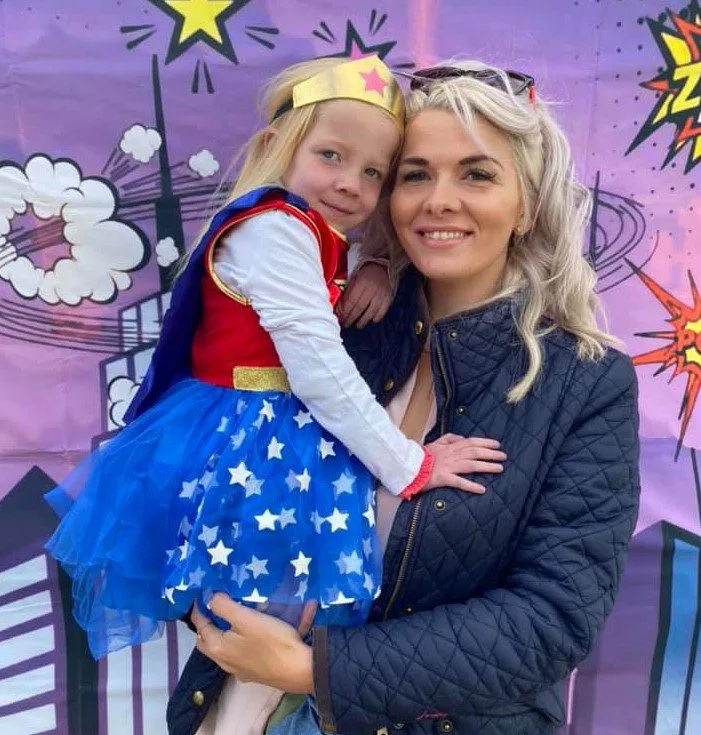
Rebecca tells us all about her daughter Bella’s journey with congenital heart disease so far and the difference your donations have made to their family…
Isabella is six in December. She has Hypoplastic Right Heart syndrome which means she has no right ventricle. She has spent many nights in hospitals due to heart procedures. From open heart surgeries to cardiac catheter procedures and MRI scans.
All the heart surgeries Bella has had are life prolonging surgeries. Before she was born we were made aware that she would need three stages of heart surgery. But the first two stages she needed repeating.
She has just had her final stage in July this year and the difference in her is amazing. I never realised just how much she had deteriorated before this surgery until she recovered from the Fontan and she could run up a flight of stairs and it hardly take her breath. Before the surgery I would have to carry her up the stairs.
Bella has had many blood tests and each one has been traumatic for her. The older she is the harder blood tests are. The last few blood tests were horrendous and emotionally draining for both her and me.
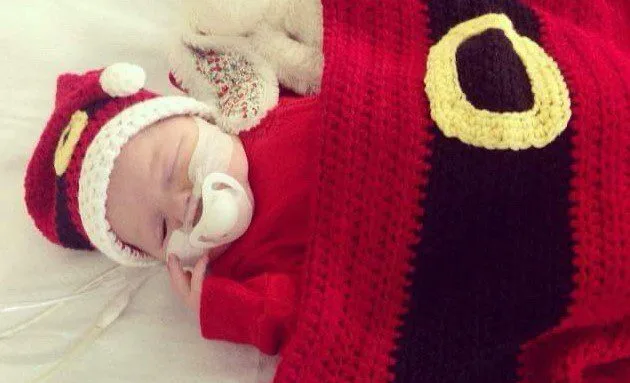
Bella in hospital, December 2014
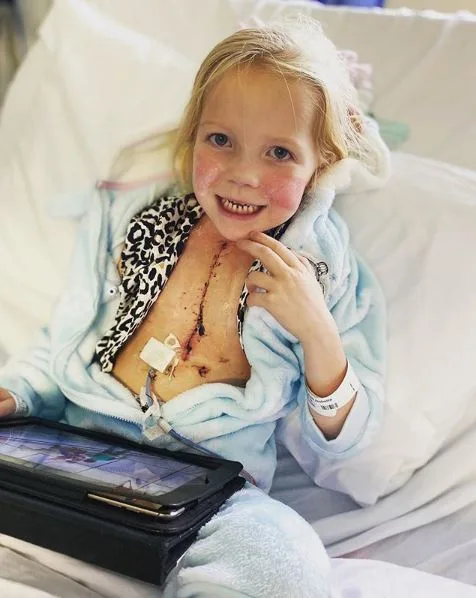
Bella after her most recent surgery, July 2020
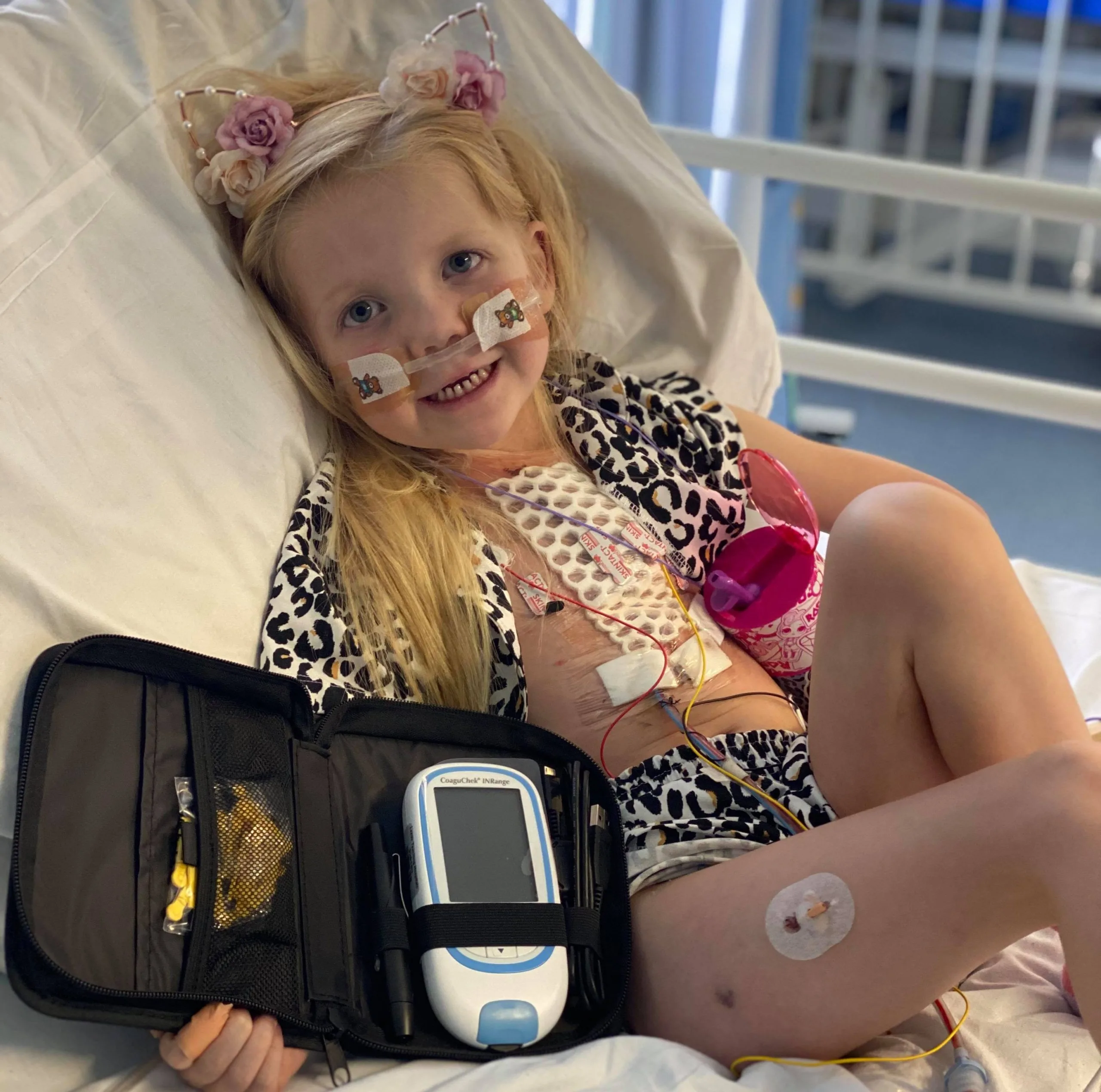
Bella with her new INR kit, funded #BecauseofYou
The bloods needed the day before her last surgery were awful. Phlebotomy waited 20 minutes for her to calm down but she didn’t so they said they couldn’t do them right away. We then had to go back onto the ward for another go before going to theatre.
The first few weeks with Bella’s new INR machine were a little challenging, but me being able to do it for her was a massive help. Bella much prefers it that I can do this with her and we do not need to go to the doctors for a blood test.
When she first started taking Warfarin her INR numbers were, and still are, a little all over the place. If she’d needed to go to hospital each time we needed to test her INR level she’d be petrified of all doctors – and they’d be her least favourite people!
That’s the last thing we want. I can’t even begin to tell you how grateful I am that Bella and I are able to do her INR test together at home. And it’s nothing to her now. It doesn’t phase her. She’s proud of herself and how brave she is.
The machine makes a noise as it turns on and I’ve sat next to Bella while she’s playing/watching telly and it’s made the noise. She’s half rolled her eyes, looked at her hands to pick the finger I’m allowed to use and pointed at me with it. She picks out a LOL or My Little Pony plaster and then scrunches up her eyes so I can be a “vampire”!
We high five when the machine takes the blood sample straight away (because in the beginning when I was learning I didn’t always get it straight away!) and try to guess the number that will come up on the screen. We make it a fun experience because she needs to do it so regularly and it will be something she’ll need to do for the rest of her life.
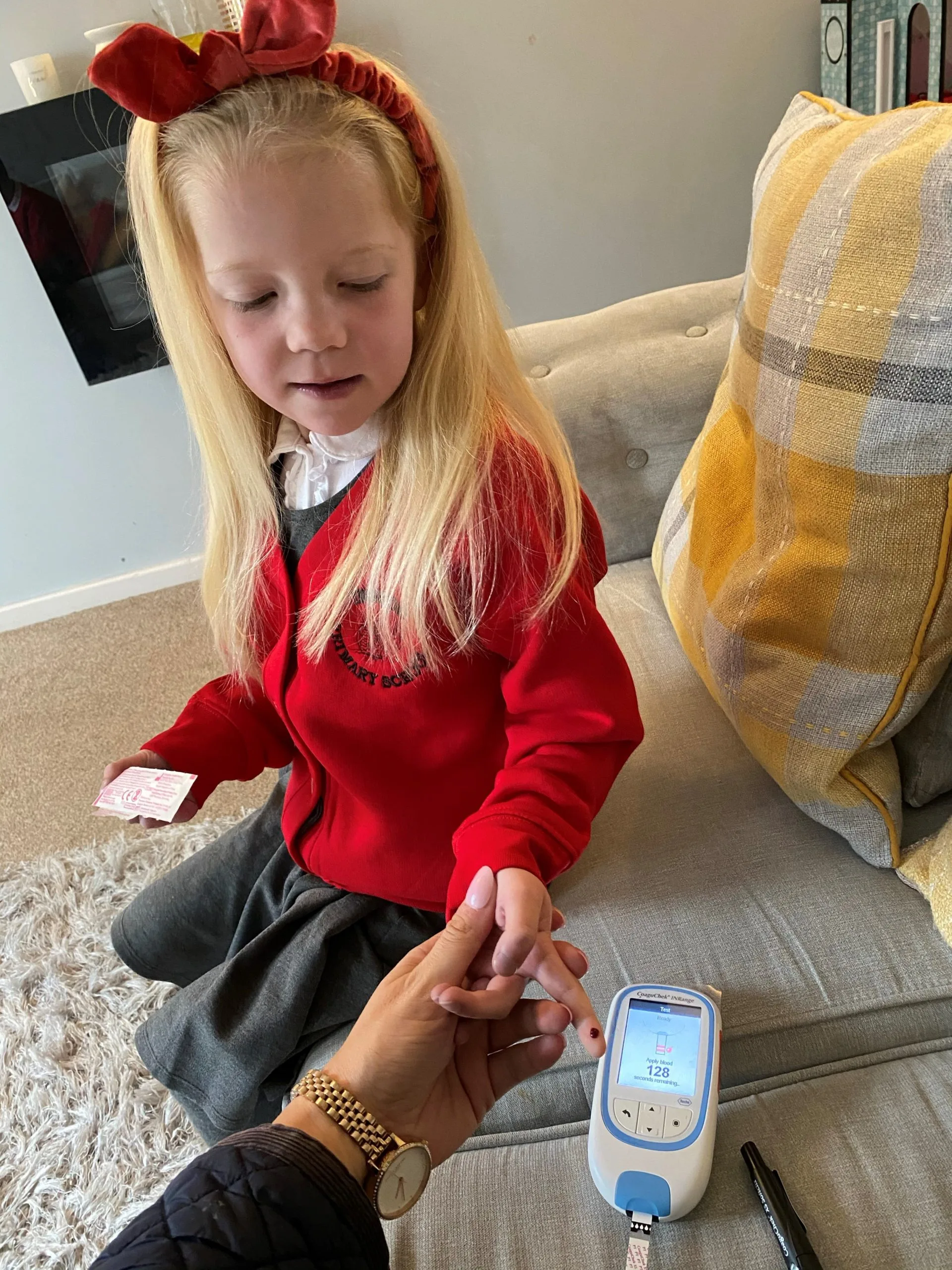
She loves that she has some level of control of the machine, picking the finger we can use and the plaster. It’s so much better for her than the alternative.
If we didn’t have the INR home testing kit having to go into hospital all the time would be an absolute nightmare! It would be traumatic for Bella and it’s 25 minutes from our home. Also a hospital is one of the last places we want to be at the moment with the pandemic.
The convenience of this machine for so many reasons is a godsend and we are so grateful to Children’s Heart Surgery Fund for taking away the trauma of regular blood tests for Bella.
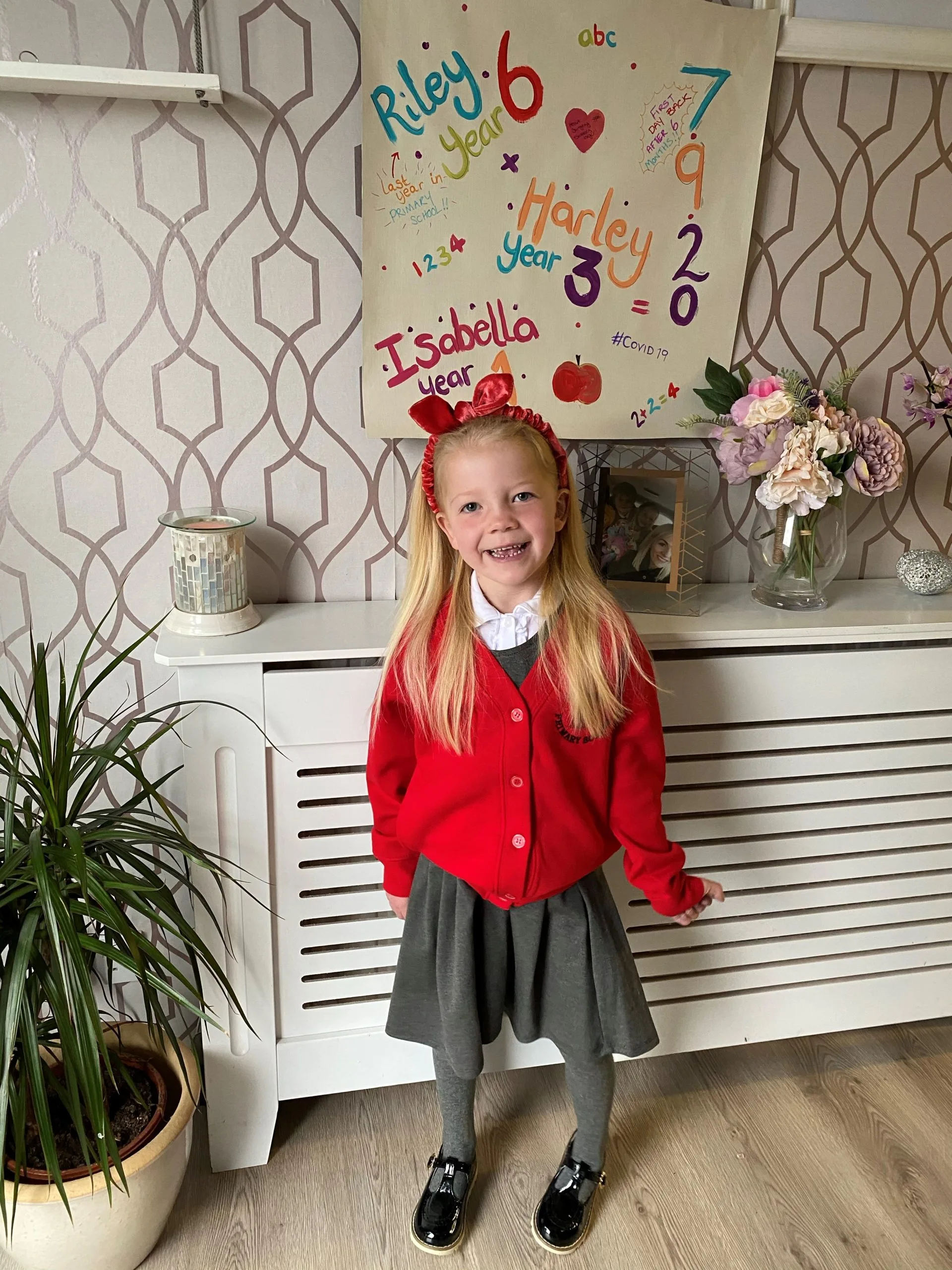
Bella started year one in September and on her first day of school we needed to do a blood test for a telephone appointment I had in the afternoon.
The INR machine meant that we were able to do the test and she could get on with the first day being back to school after six months off – due to the pandemic and her big heart surgery!
Because of you and your donations Bella can now regularly check her blood, with her mummy at home, without the the stress of going to hospital.
By making a donation to Children’s Heart Surgery Fund, you ensure we can keep being there for children like Bella and keep supporting hearts for life. Thank you.
Click here to make a donation to CHSF…
 As reported in the Yorkshire Evening Post
, babies being treated for congenital heart disease at Leeds Children’s Hospital will soon have access to a new life-saving piece of kit – the first of its kind in Europe.
The Morrisons Foundation has donated £25,000 to the Children’s Heart Surgery Fund to buy an MRI coil for the congenital heart unit.
The coil fits around a baby’s chest to take high-quality images of complex heart defects during MRI scans without the need for a general anaesthetic – which can cause cardiac arrest in such high-risk babies.
While currently being used for research purposes with outpatients, the coil will ultimately be used for inpatient babies in a soundproofed, temperature-regulated ‘closed incubator’ which will allow them to have MRI scans while asleep, cutting out the noise from the MRI scanner itself.
You can watch a video by Dr Malenka Bissell explaining how the equipment works here.Here’s a close-up picture of the new MRI Coil (pictures by YEP’s Simon Hulme):

While coils and closed incubators are used widely for MRI brain scans, the Leeds Congenital Heart Unit will be the first in Europe to use this set-up to take images of babies’ hearts.
Dr Malenka Bissell, clinical lecturer in Paediatric Cardiology, said:
I would like to say a big thank you to Morrisons Foundation for this MRI coil. It will enable me and my colleagues to continue to perform MRI scans for newborn babies with congenital heart disease, who will still need life-saving surgery during the current health crisis. This generous support will make a big difference to the treatment and outcome for babies categorised as high-risk, and help to make Leeds an outstanding centre of excellence for treatment and research into paediatric congenital heart disease.
Each year, it is thought that the MRI coil will be able to treat around 100 babies aged six months or under with complex heart defects in high-risk clinics at the unit and 50 babies in the neonatal intensive care unit, for at least the next 10 years.
And the images from the MRI scans are also expected to benefit thousands more babies with congenital heart disease through pioneering research studies.
Sharon Milner, CEO of the Children’s Heart Surgery Fund, thanked the Morrisons Foundation for their “generous” grant and added:
This coil will help to improve and save the lives of thousands of babies with complex heart defects treated in the Leeds Congenital Unit at Leeds Children’s Hospital.
David Scott, Morrisons Foundation trustee added:
I’m delighted we were able to provide this vital support for the Children’s Heart Surgery Fund. The work they do makes such a huge difference to the lives of children and their families.To keep up to date with the latest children’s Heart Surgery Fund news, direct to your Inbox, please update your marketing preferences at chsf.org.uk/stay-updated.
Adult heart hero Daniel needs to regularly test his blood because of his heart condition. Thanks to your funding he can now do this in the comfort of his own home!
Despite our name, CHSF also fund the adult CHD service as well as babies and children. CHSF Trustee and Adult Congenital Nurse Specialist Jo Quirk used her exercise time wisely today to make a very special delivery…
Jo said:
As Lead Nurse for the CHD Network for Yorkshire & Humber and currently Trustee of CHSF, I have delivered a home test INR machine to an adult patient to assist him in following the government guidelines of “Stay at Home”. The INR kit was kindly donated by Children’s Heart Surgery Fund thanks to your super fundraising.
The values of the Congenital Heart Disease Network is to promote care close to home, so to have the opportunity to deliver a machine whilst doing my daily exercise makes me very proud.

I can’t thank Children’s Heart Surgery Fund enough for supporting the unit (adults, as well as children, with congenital heart disease). A home blood test machine prevents Daniel from attending the hospital clinics for his blood tests, therefore keeping him safe.


“Through this lockdown this kit will be of great help as I was recently advised that my local INR clinic wasn’t running”

Heart patient, Daniel said:
I’m Daniel Farrell and in 2010 I had an Aortic Root Replacement which has left me with a metallic valve and the need to take Warfarin and have regular INR checks.
Initially I had to attend various community INR clinics which meant taking time off work and over time having to take additional holidays. This is the second INR Home testing kit that you have kindly supplied me and it has been a massive benefit.
I can take my INR whenever needed and phone in the results without the need to attend community clinics.
Through this lockdown this kit will be of great help as I was recently advised that my local INR clinic wasn’t running and that I would need to travel to a different area of Leeds.
With my new Home Testing Kit it will help me to follow government advice of staying at home, protecting the NHS and saving lives.

Children’s Heart Surgery Fund have been supporting the NHS for 31 years and we want to make sure we can keep supporting them for years to come.
Any support you can give to help CHSF weather COVID-19 is so very appreciated. Help us keep supporting hearts for life. Thank you.
Heart mum, Jade, never thought she’d be the one up dancing but the Over The Wall family camp soon helped her leave all her worries behind!
Last September, Jade and her family attended our two night residential activity camp specifically designed with heart families in mind. We asked her to tell us a little bit about their experience…
When we go on a holiday and they ask for parents to come up to the front to volunteer, I am the mum that quickly hides away!
Going to the Over the Wall Family Camp, I soon realised that this camp was going to be my idea of a worst nightmare. Singing, dancing, abseiling…!
Inside I was dreading it but my partner and the kids were so looking forward to it. So, I put on a brave face and tried to show that I was excited!
When we arrived, we were greeted by such lovely volunteers and staff. They gave us t-shirts to wear and free water bottles and that’s when we met our volunteers for the weekend…


Each family is assigned either one or two volunteers to help your family in any way possible over the weekend.
From carrying your water bottles, to playing games with the kids or even making you a cup of tea… I was beginning to come around to this camp!
I realised how important these ladies were to our family. When it’s lunch time and you’ve got three kids to sort out and suddenly, you’ve got someone helping you – it’s unreal!
On the first night of the camp the children were allowed to dress the parents up and paint our faces – no rules! Our kids were in their element! I was cringing on the inside, but the laughter and smiles were worth it!
“Sometimes we get so wrapped up in the taking care and organising that we forget about the joining in and letting our hair down.”
One of my children is extremely quiet and he doesn’t like social situations. Yet, he became very close to some girls who were staying at the camp with us.
He was doing things out of his comfort zone and not wanting mum or dad there!


Our son Bobby has just turned four and has hypoplastic right heart syndrome.
Before we went on the camp we were worried he wouldn’t be able to do all of the activities that his brothers could. But he did it all, apart from the abseiling!
If it was too cold outside there was a room full of games we could take him to but this wasn’t often as he wanted to join in.
Each mealtime or group meeting means dancing! The mum who normally hides away was joining in! Sometimes we get so wrapped up in the taking care and organising that we forget about the joining in and letting our hair down.
The Over the Wall family camp makes sure you do just that. No one is left holding the bags or waiting with one of the children. You have volunteers by your side making sure you enjoy your family.
We go on plenty of holidays but the Over the Wall camp was the first time we actually felt like a family with nothing holding us back.
You really don’t need to worry about anything – apart from brushing up on your dancing skills!

18 – 20 September FREE
Two night residential family activity camp
To qualify for a place at camp, one child must be between 0-17 and have been treated at the Leeds Congenital Heart Unit. If the heart child is under 8 years old, then at least one sibling must be aged 8-17 in order to take part in the designated activities and enable the family to apply for a camp place.
CHSF family camps are run in partnership with Over The Wall. If you have any queries about camp including camp activities, suitability and eligibility please email campers@otw.org.uk or call 02392 477 110
The children’s cardiac ward now have 13 brand new bedside TVs thanks to your amazing fundraising!
The TVs are a welcome distraction and a way to de-stress for children recovering from or awaiting surgery.
Mum Laura Fletcher and daughter Ava who has been recovering in Ward 51, have taken advantage of the new TVs. Laura said:
The new TVs are great because they have given us lots of positive distraction. It’s nice that Ava can be distracted from things like being fasted, or waiting to go down to theatre, by watching her favourite TV programmes.
It’s great for us parents too as the days can be long here so we can use them too when the little ones are resting. A huge thank you to CHSF supporters for funding these new TVs.
To see more of the incredible things you have funded click here.

We’ve been able to fund four iPads for children on PICU because of you!
Lots of children are awake on PICU post cardiac surgery and the iPads will now provide some entertainment for children while they recover. The iPads will also be used as a distraction during medical procedures.
Acting Family Care Sister, Leanne Williams said:
Thank you very much to everyone who has donated to Children’s Heart Surgery Fund as it has allowed the children on Paediatric Intensive Care to have access to four brand new iPads and covers.
This will give some of the sickest children in the hospital the opportunity to listen to music and watch programmes which we have not been able to offer before. Thank you very much, it is greatly appreciated by all the staff, children and families on PICU.
To see more of the incredible things you have funded click here.

Your amazing donations enabled CHSF to buy a Parallel Simulator which attaches to the ECMO heart-lung bypass machine.
It simulates various training exercises for the 12 PICU trainees to follow and respond to.
The Parallel Simulator is programmed with a variety of medical emergency scenarios, such as when the pressure in the pipes increases or if bubbles appear in the pipes while a patient is on the bypass machine.
I was lucky enough to visit the first training session and the equipment is going to be an amazing resource that will help to save lives in future.
PICU Consultant Santosh Sundararajan said:
The Parallel Simulator will help us to train ECMO nurses and PICU medical staff to work as team in managing real life based ECMO emergencies. We are incredibly thankful to CHSF for raising the money to buy this vital teaching equipment. This equipment will be used in monthly team training, and will further help us to improve survival for children needing ECMO support.
 This machine is invaluable, it will enable: better training; big cost savings for the hospital as nurses rather than doctors will be providing the ECMO service; and measurable training for the team.Thank you!
With your help we have funded some special toy MRI equipment to help young patients. MRI research nurse Ruth Foley tells this very special “Because of You” story!

Meet James! James is 6 years old and has Tetralogy of Fallot.
Read his backstory here.
James came to visit the Advanced Imaging Centre for a research MRI scan and is the youngest participant we have had take part in our study so far.
James and his mum Claire hoped that taking part in our study might mean his next clinical MRI scan could be done awake and prevent James needing a general anaesthetic.
Because of youwe received enough funding to buy a toy MRI scanner which looks just like the real thing in miniature.
We were also able to buy figures to put on the MRI scanner and a toy hospital and ambulance.

These toys are used to help explain to participants like James what will happen during an MRI scan. The toy MRI makes realistic noises to show just how loud the scanner is.
We want to make sure that our participants are fully aware of how the MRI looks and sounds before they are scanned for real.
Play therapy is particularly important for our child participants because we know that children learn through play. It gives them time to explore and ask questions about what is going to happen to them during their visit.
James had brought his favourite teddies with him to accompany him onto the scanner so our first job was to scan them first to make sure they didn’t have any metal in them… we think they enjoyed their scan too!

James was so prepared after spending time playing that when he saw the real MRI scanner his shouts of “WOW! That’s so cool” made everyone smile!
Dr Malenka got James all ready to be scanned and James said he felt like a space man going into space. Our participants are able to watch a film or series whilst on the scanner.
James had already decided he was watching
Minionsand loved that only he could hear it with his special ear phones. James’s Mum was able to sit with him during the scan.
James could see her through the mirror we use so participants can see the film they are watching.
Once James and his teddies were ready we started the scan and what a superstar James was! We were all very proud of James and when his MRI scan was finished his first question was “can I go play with the toys again?”
The toy MRI scanner and figures were obviously a very important part of his experience with us. Being able to offer this play therapy is all
because of you.
J ames and his Mum left our department with big smiles on their faces, feeling more confident that when James has to have a clinical MRI scan that he will be able to tolerate it being awake.Because of you we were able to make sure that James’s visit was a positive experience from start to finish.Your contribution to our research study has been incredible – taking part directly or raising money to help us buy these important toys.You are all playing a big part in making this a big success. Thank you!
We would like to give a huge thank you to
Sovereign Health Carefor helping us fund two Vein Viewer Flex Machines!
A Vein Viewer Flex uses infrared to show a patient’s veins beneath the skin.
This helps makes the experience of blood tests or cannulas more positive for children and adults with heart conditions and reduces their anxiety.
This will improve the experiences of many heart patients and their families when visiting the hospital for treatment.
Our CEO Sharon Milner said
We are extremely thankful to Sovereign Health Care for funding these Vein Viewer devices. They provide a great distraction for children and make the process of taking their blood samples at the Leeds Congenital Heart Unit that much easier. Charity grants such as this one are vital in enabling us to carry out our mission to support hearts for life amongst young and often vulnerable patients.
We also spoke to Phlebotomists Sammy Slater, Karen Heany and Fiona Ashworth (pictured above) about the difference the Vein Viewers are making in the hospital…
The Vein Viewer Flex has been a big help to us and our patients. Taking blood samples can be a difficult experience for some children, but the Vein Viewer helps to make the process quicker and easier. It also helps to distract the children who might otherwise be anxious. They love the neon green lights.
Here’s two anonymised comments from heart parents too, when we announced the machines on social media:
- “Fantastic news! It’s so difficult to find a vein on my son, he’s always so brave, but this should make the process less stressful for all concerned!”
- “This is amazing my son is so hard to cannulate hopefully this should help so much & so many more families.”
A big thank you to all concerned, the machines are making a huge difference.