

Information taken from fellow heart charity Little Hearts Matter
Hypoplastic Left Heart Syndrome is a congenital heart condition (a condition that a baby is born with). It is made up of a collection of abnormalities on the left side of the heart.
In a majority of cases, the pumping chamber (left ventricle) is small (hypoplastic) and the mitral and/or the aortic valve may be narrow, blocked or not formed at all. The body artery (aorta) is often small (hypoplastic).
In some cases there will be a hole between the two upper chambers of the heart, known as an atrial septal defect.
The blood’s journey through the heart is very different from normal. The blue (deoxygenated) blood flows into the right collecting chamber (right atrium), through the valve (tricuspid valve) into the right pumping chamber (right ventricle). From there it is pumped to the lungs where the blood receives oxygen. This is like the normal heart.
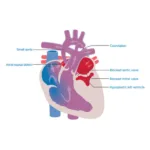
The red oxygen-filled blood then flows from the lungs into the collecting chamber (left atrium) in the left side of the heart, but it will be unable to then pass into the left pumping chamber (left ventricle), as the mitral valve between the two chambers will be small or blocked.
The blood has no choice but to return to the left collecting chamber from where it then passes through the hole (atrial septal defect / foramen ovale) between the two collecting chambers into the right side of the heart, where it mixes with the blue blood and follows the path through the lung valve (pulmonary valve) to the lungs.
This structure does not allow for oxygen-filled blood to move into the body. The only way for oxygen-filled blood to reach the body is through the ductus arteriosus, the duct between the lung artery (pulmonary artery) and the main body artery (aorta). As the mixture of the blue and red blood passes through the lung artery, some of the blood passes down the open (patent) ductus tube into the aorta and then onwards to the baby’s body. The mixture of blood does mean that the baby is blue (cyanosed) as the blood is not totally filled with oxygen but it also means that some oxygen is available to make energy.
Both the foramen ovale and the ductus arteriosus normally close after birth. It is at this point that many babies with a heart condition start to have difficulty getting blood and oxygen around their body. Medical teams will start an infusion of Prostaglandin, a drug that mimics the mother’s hormones, to slow the closure of the ductus arteriosus. This allows the baby time to recover from birth and the medical team time to plan and discuss the first treatments.
Possible treatments for Hypoplastic Left Heart Syndrome
Having explained your child’s diagnosis, the doctor will go on to discuss what treatments are available. Although none of the treatments provide a long-term cure, for many children they can offer a reasonable quality of life.
It is vital that parents are fully included in the treatment discussions and decisions taken for their child. Parents are their child’s advocates until they reach an age when they can be involved in discussions about their own treatment. These treatment options may include:
Surgical treatment
The aim of surgical treatment is to re-route the blood through the right side of the heart, bypassing the blockages on the left side. This surgery is offered in three stages over three or more years and involves extremely high-risk, open heart surgery. Your doctors will explain the individual risk for your child.
Even after all the surgery has been performed, your child’s heart will not look normal or work normally. Most children have a good quality of life although they will always have less energy than their peers. Eventually the heart will tire and may fail, if this is the case they may be considered for heart transplant. More information on the surgery is provided below.
Supported comfort care
As the long-term outcome is unclear for children with Hypoplastic Left Heart Syndrome, it is important to know that there is the option to not put a child forward for surgery. This would be discussed fully with you by your medical team. The baby would be allowed to die peacefully either in the hospital, at a local children’s hospice or at home; the family would be fully supported by hospital and community nursing and medical staff.
Transplantation
Heart transplantation is one of the possible treatments for single ventricle heart disease, but it is not offered as a first treatment within the United Kingdom for the following reasons;
- Very few donor hearts small enough for a baby are available in the United Kingdom and babies with a single ventricle heart would not survive long enough for a donor to become available.
- Transplanted hearts do not last forever and there are many risks involved throughout the recipient’s life. Offering surgery as a first treatment path and retaining transplant as a future option offers a greater chance of a long life for a child
Tests
It is important that the cardiac team have as much information about the baby’s heart or circulation as possible. A number of tests are available to help them as they plan treatment and assess recovery.
Oxygen saturation
This is a simple painless test where a plastic strip or clip is attached to a finger or foot to measure the amount of oxygen circulating in the blood of babies, children and adults. It is particularly important for children with complex heart conditions who are blue (cyanosed) because of low oxygen levels as it helps the medical team to plan their treatment and care.
Blood tests
Blood is a very important part of the circulation because it carries all sorts of things around the body: oxygen, nutrients and chemicals. Taking samples of blood can be a very helpful way of monitoring how well a baby, child or adult is and how the body is coping with an illness or long-term condition.
Chest X-rays
For doctors to see if a baby’s, child’s or adult’s chest is healthy, especially before and after surgery, the easiest test is to take an X-ray of the chest, so that they can see how the chest is healing but also to look for infections or fluid collections in the lung area. These tests help plan treatment and post-surgery recovery support.
Echocardiogram (Echo)
Echocardiography uses sound waves to scan the heart which is then shown as a picture. This is the same type of scan that mothers have during pregnancy. The test does not hurt, but children sometimes have a light sleeping medicine (sedative) so that they stay still. This is the first test that will be done on the baby, as it is the easiest and least stressful way of making a diagnosis of congenital heart disease.
ECG
Electrocardiography (ECG) is the recording of the electrical activity of the heart. The heart has its own electrical system, which passes the message to beat (to pump) through the heart’s muscle tissue. Sometimes the message breaks down and so by recording the rhythm, the medical team can see if the messages are being passed properly. It is also possible to assess the size of the pumping chamber and the thickness of the heart wall.
Cardiac catheterisation
It is often necessary for the doctors to gain more information about the heart than an Echo or ECG can provide, so the child may need to undergo cardiac catheterisation. This investigation is best done with the child asleep, so they will be given a light general anaesthetic. Teenagers and adults may be awake during the tests but they will be given an injection to anaesthetise the place where the catheter tube/wires are inserted. A long thin tube (catheter) is passed into the heart via a big blood vessel, either from the groin or the neck. Through this tube a dye (radio-opaque fluid) is injected that can be seen on X-ray. The dye passes into the heart and X-ray pictures can be recorded. The doctor is then able to see the structure of the heart more clearly. It is also possible to measure the blood pressure in the different chambers and blood vessels. This information is extremely important when deciding what further treatments can be offered safely. This test is often performed whilst planning the timing and type of the next stage of surgery.
MRI scan
MRI (Magnetic Resonance Imaging) scans use radio-frequency radiation to gain a picture of the soft tissues of the heart from different angles. This can be very useful when looking at the results of surgery. Children need to lie still for this scan, meaning that many of them need some sedation or a light general anaesthetic.
CT scan
Computerised tomography, also known as a CT or CAT scan, uses X-rays and a computer to create detailed images of the inside of the body. The pictures are taken in small slices and then pieced together to create a multi-view of different sections of the body.
Treatment
Treatment for HLHS happens in three stages. You can find out more about each stage on the Little Hearts Matter website.
- Norwood Procedure rebuilds the main blood vessel (aorta) so it can carry blood from the heart to the body. It also connects the pulmonary artery to the aorta, allowing blood to reach the lungs for oxygen – usually done when a baby is a few days old.
- Glenn Procedure directly connects a major vein (superior vena cava) and a child’s pulmonary artery. This lets oxygen-poor blood from the upper body go straight to the lungs to get oxygen – usually done when a baby is a few months old.
- Fontan Procedure connects another major vein (inferior vena cava) and the pulmonary artery. This lets oxygen-poor blood from the lower body get oxygen directly from the lungs – usually done between ages three and six. Read more about the Fontan circulation here.
There is lots more information on Hypoplastic Left Heart Syndrome (HLHS) on the Little Hearts Matter website.
Contact
Please note: Children’s Heart Surgery Fund is not a medical resource and cannot provide medical advice. Heart conditions are very individual and what can be right for one person could potentially be dangerous for another. If you have any questions about yours or your child’s condition, please get in touch with Leeds Congenital Heart Unit directly, or the specialist nurses.
If you have any questions about your or your child’s heart condition, please contact the Cardiac Nurse Specialists
Children’s Cardiac Nurse Specialists
Phone number: 0113 3925467
Email: ccns.lgi@nhs.net
Adult Cardiac Nurse Specialists
Phone number: 0113 3928154
Email: leedsth-tr.achdnurse@nhs.net

Support for families: September 2026

Grandad Colin climbs a mountain for Ezme-Rae
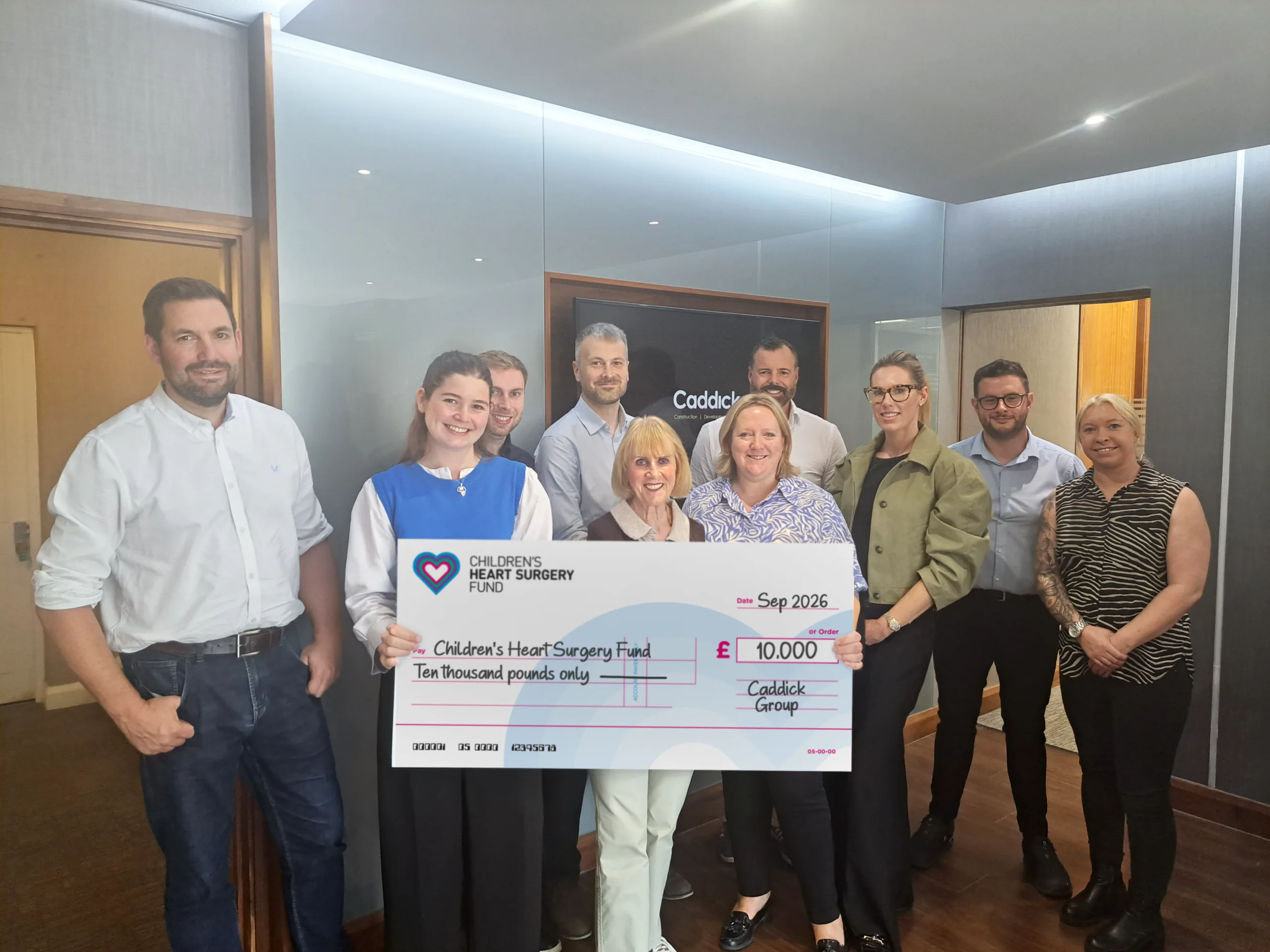
Caddick Donates Another £10,000 to Children’s Heart Surgery Fund (CHSF)
Join Our Facebook Group
Our private community group on Facebook is a peer-support forum for heart families to network with others who have shared experiences

Support for Families
We can offer a range of practical, wellbeing, financial and sign-posting support for our families at every stage of thir heart journey.