
 May 13, 2024
 Latest News


As part of Mental Health Awareness Week we are sharing these fab resources from the Yorkshire & Humber Congenital Heart Disease Network. The theme for 2024 is ‘Moving more for our mental health’. Not only is movement super-important for cardiac health, but is brilliant for our mind too.
Does your child have a congenital heart condition? Here are some activities for 0-12 month old infants to encourage the development of gross motor skills…
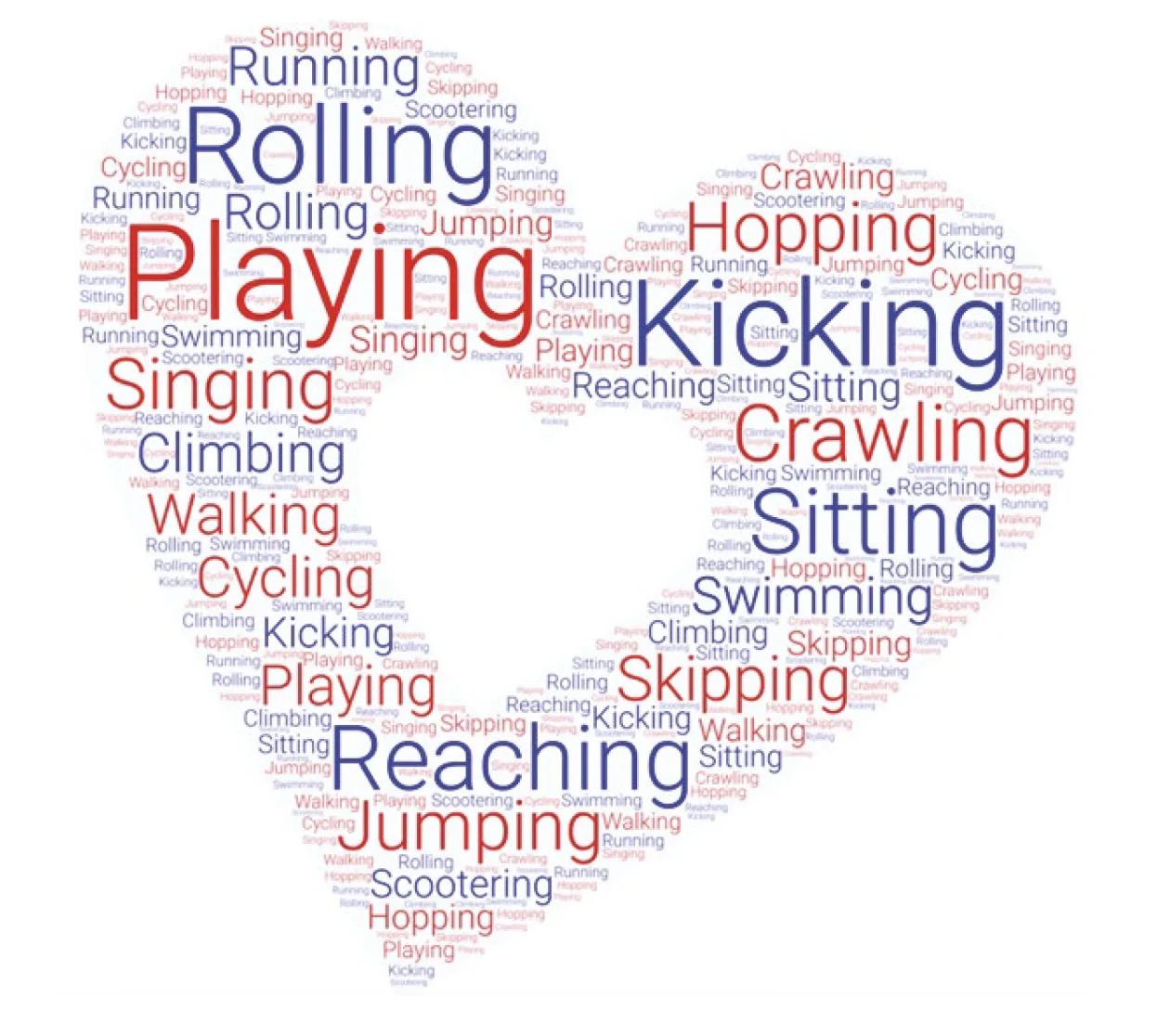
Babies and Children with congenital heart conditions need to be involved in play as much as possible. Regular position changes will help them develop their motor skills.
Babies with congenital heart conditions may develop at different speeds but we would anticipate that they still follow the normal milestones. They need opportunity to explore their environment.
If your child has had a sternotomy (surgery involving an incision down the middle of the chest) then it may be necessary to avoid tummy time for six weeks following surgery and scoop them to pick them up. However after six weeks tummy time should be encouraged.
If your baby has had a thoracotomy (surgery involving an incision round the side of the chest) or has not had surgery at all they can start tummy time from new born.
Most babies and children will not require any extra help or advice to enable them to develop, occasionally if they are not progressing as well as anticipated they maybe referred for physiotherapy.
If you are worried about their development please discuss with your Cardiologist, Paediatrician, Specialist Nurse or Physiotherapist.
The Children’s Physiotherapy team at Leeds Children’s Hospital can offer advice on 0113 392 0609
Jump to…
0-3 months 3-6 months 6-9 months 9-12 months
0-3 months developmental activities
Please ensure that your back is well supported when carrying out all activities.
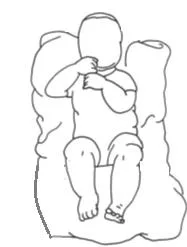
Child on their back


Encourage:
- Head in line with the body
- Arms forward and down, hands together
- Hips bent and legs relaxed
Helps to:
- Develop eye contact with you
- Enable hands to reach and touch legs
- Develops stomach muscles
- Reduces arching
Play ideas:
- Small lightweight toys in midline to explore
- Watching toys move side to side
- Eye contact and interaction, singing songs together
Child on your tummy
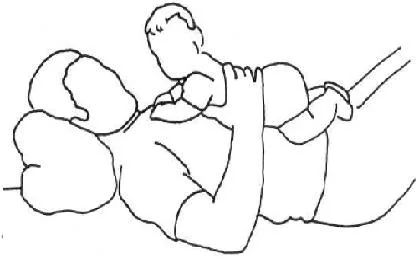
Encourage:
- Arms forward
- Head in midline
- Weight bearing on forearms
- Little and often
Helps to
- Develop eye contact with you
- Develop back muscles
- Develop head control
- Strengthen arms and shoulders
Play ideas:
- Eye contact with you
- Interacting and singing with baby
- ‘Cooing’ at baby
Child in side lying
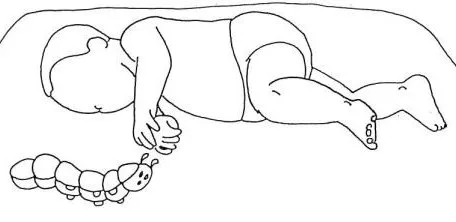
Encourage:
- Shoulders forward and hands together
- Bend top leg to help balance
- Place bottom leg straighter
Helps to:
- Bring arms and legs together
- Develop play skills in midline
- Develop the beginnings of rolling.
- Develop the rib cage muscles and enhances breathing capacity
Play ideas:
- Toys in both hands
- Small lightweight rattles
- Mirror
3-6 months developmental activities
Please ensure that your back is well supported when carrying out all activities.
Child supported between your legs
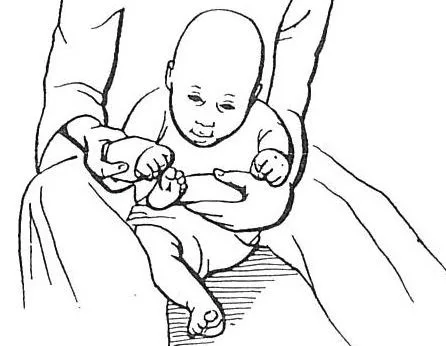
Encourage:
- Child supported between your legs or lying on the floor
- Encourage child to reach for feet
- You may have to help them with this
Helps to:
- Promote awareness of the hands and feet
- Develop head control
- Aid awareness of feet and of midline
- Small lightweight toys placed on feet (foot rattles)
- Tickle feet
- Sensory toys and different textures on feet
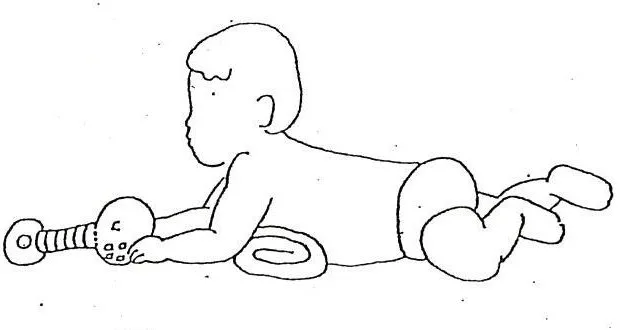 Encourage:
- Head up in line with the body
- Arms out from under the body and in front of the towel
- Elbows under or slightly in front of the shoulders
- Develop head control
- Develop muscles in the arms and shoulders
- Develops muscles of the back
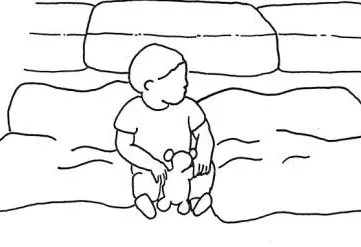 Encourage:
- Head upright in line with body
- Body upright and straight
- Hips at 90 degrees and legs forward
- Arms forward and down
- Develop balance
- Develop muscles of the body, back and hips
- Free the arms for play
- Develop independence in sitting
- Sit in front of child and encourage play with toys
- Knocking over stacking blocks
- Singing songs
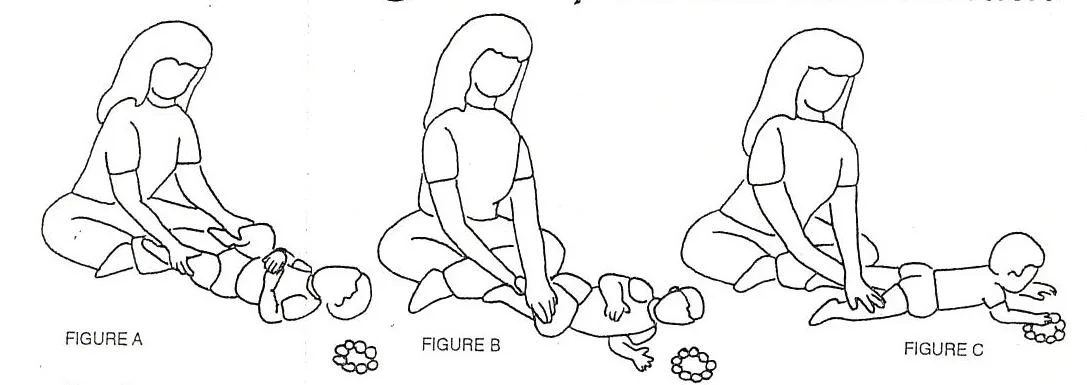 Encourage:
- Head in line with body
- Body straight, then rolling to follow the movement of the hips
- Arms down, out from under the body
- Top hip bent when rolling, both hips flat when on tummy
- Develop muscles of the tummy and back
- Develop body coordination for rolling
- Allow the child to experience shifting of body weight
- Place a musical toy or brightly coloured toy next to the child’s shoulder but just out of reach to entice them
- Sing a song and complete roll in time to the music
6-9 months developmental activities
Please ensure that your back is well supported when carrying out all activities. Child supported in sitting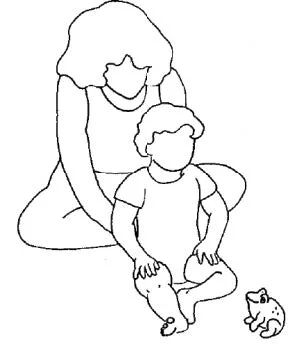 Encourage:
- Child to reach for toys in front of them and then side to side
- Develop hand eye coordination
- Develop balance
- Develop advanced sitting skills
- Expose child to shift of body weight and how to maintain balance
- Row row row your boat rhyme
- Rolling a ball between child and parent/carer
- Place a toy just out of reach.
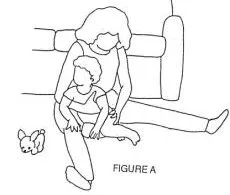
 Encourage:
- Head and body upright when side sitting
- Body over leg when on hands and knees
- Develop muscles of the body, hip, shoulders and arms
- Develop coordination
- Allow child to experience shifting of weight
- Pre-cursor to crawling
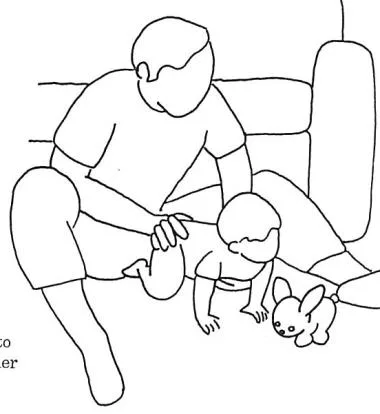 Encourage:
- Head in line with body
- Shoulders even, arms straight elbows under shoulders
- Hands under elbows, hands open
- Knees under hips
- Develop muscles in the upper and lower limbs
- Develop balance
- Develop muscles for crawling
- Gently use your hands to rock child backwards and forwards
- Sing a song
- Help the child push a ball or reach for a toy
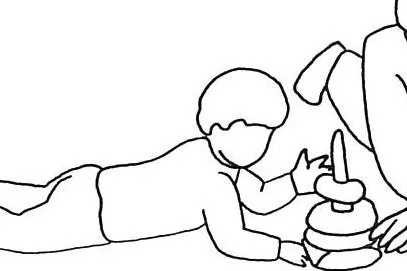 Encourage:
- Child starting to control own body and needing less support
- Reaching further for toys and up in the air
- Do little and often.
- Develop balance
- Increase weight bearing through upper limb
- Encourage transition from sitting to crawling.
- Place toy out of reach in front and to one side to encourage child into side sit
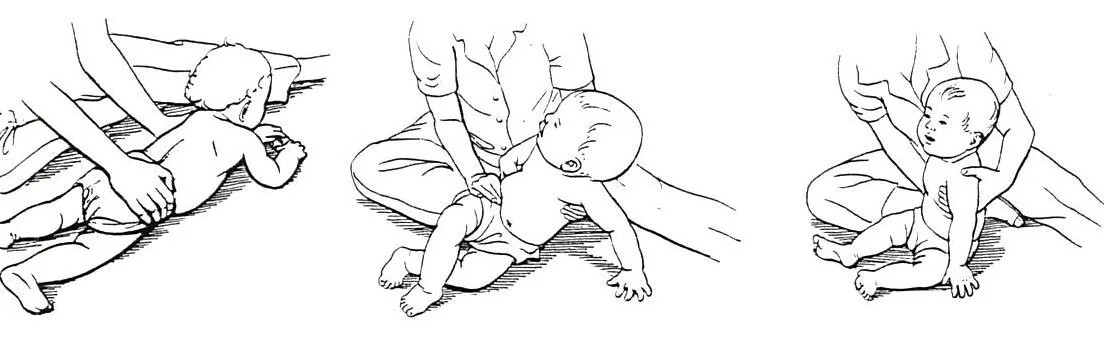 Encourage:
- Child to come up into a sitting position
- Weight bearing on arm
- Trunk rotation
- Place child lying on stomach. One of your hands should be on the opposite hip, place your other hand under arm next to you
- Gently pull up back and then down on hip, assist as needed under the shoulder by pulling forward and up
- This activity should be done slowly and steadily to encourage child to help in coming to a sitting position
9-12 months developmental activities
Please ensure that your back is well supported when carrying out all activities. Child crawling across your lap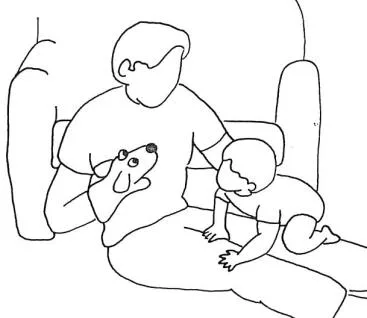 Encourage:
- Head in line with body
- Arms straight and elbows and hands underneath shoulders, hands flat on the floor
- Knees under hips
- Develop balance
- Develop muscles of back
- Develops muscles in upper limbs
- Place a puppet on your hand or a favourite toy on the other side of your leg to encourage child to crawl over your leg
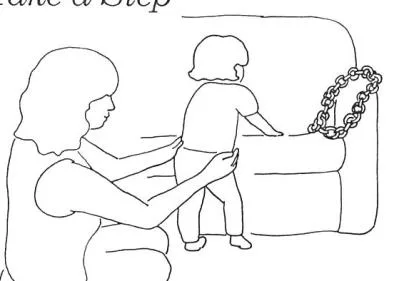 Encourage:
- Head upright in line with chin, body upright and straight
- Feet flat on the floor facing forward
- Arms on forward on the stool to play or lean on
- Develop muscles of the body
- Develop balance and control of body
- Increase weight bearing through lower limbs
- Child can pretend to be a drummer with rattles or wooden spoon on the stool
- Push cars along the top of the stool
- Place a book on the stool for child to look at.
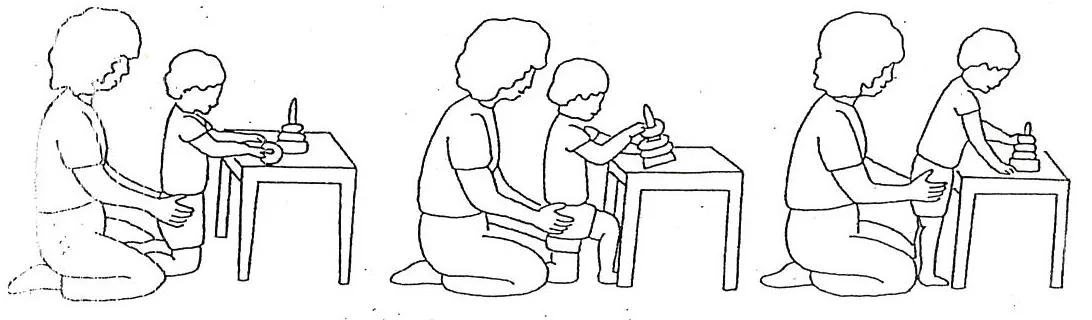 Encourage:
- Head and body upright and straight
- Knees start off bent then one becomes flexed as the child come up into half kneeling then support given to come up into standing.
- Develop muscles of the legs, hips and body
- Develop ability to shift body weight forward and up over the feet
- Develop coordination of the legs
- Develop balance
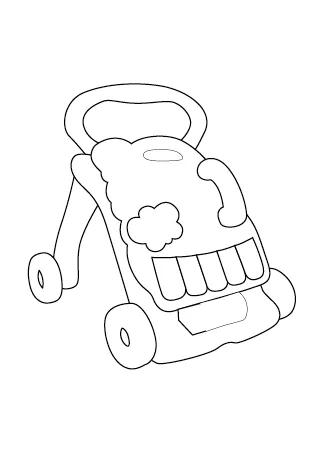 Encourage:
- Child to pull up to the walker
- Walk on carpet rather than laminate to begin with
- Walk in straight lines free from obstacles
- Develop balance
- Develop muscles for walking
- Increase confidence to take independent steps
- Walkers
- Trolley with blocks
- Push a baby or a teddy
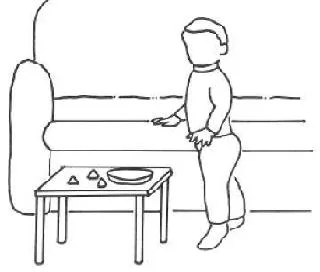 Encourage:
- Turning head to look for and reach toy behind them
- Reaching between two pieces of furniture
- Gradually increase the distance between furniture to encourage stepping.
- Refine development of balance control of the body and legs
- Develop coordination
- Gain confidence in standing in preparation for walking
- Place toys or snack on a table or stool behind the child to encourage them to turn round and reach.
- Place blocks on one surface and encourage child to move them from one surface to another.
 Information published by Specialist Childrens Physiotherapists, Leeds Children’s Hospital and the Yorkshire & Humber Congenital Heart Disease Network.
Download the full PDF booklet here