

Inherited cardiovascular conditions (or ICCs as they are known) cover a diverse range of conditions but they all have three things in common:
- ICCs can affect the heart
- ICCs can affect young people
- ICCs can run in families
The service in Leeds is designed to deal specifically with each of these issues:
- Adult Cardiologists manage problems relating to the heart in adults
- Paediatric Cardiologists manage heart disease in children
- Clinical Geneticists focus on issues relating to the family
The following information in taken from the Leeds Teaching Hospitals website
What are Inherited Cardiovascular Conditions?
Inherited Cardiovascular Conditions (or ICCs) are a group of different genetic conditions that mainly affect the heart or main blood vessels.
There are 4 main groups of conditions that we deal with:
Cardiomyopathies – these conditions mainly affect the muscle of the heart. Examples include:
- Hypertrophic cardiomyopathy – when the heart muscle becomes too thick
- Dilated cardiomyopathy – when the heart enlarges and the muscle becomes weak
- Arrhythmogenic cardiomyopathy – when the muscle of the heart is replaced by fat and scar
- Restrictive cardiomyopathy – a quite rare condition that can cause heart failure
- Non-compaction – an abnormality of muscle development
Ion channel disorders – these conditions mainly affect the electrical system of the heart. Examples include:
- Long QT syndrome – when the heart takes too long to relax
- Short QT syndrome – when the heart relaxes too quickly
- Brugada syndrome – an unusual condition with a characteristic pattern on the heart trace
- Catecholaminergic polymorphic VT – a rare condition that causes heart rhythm problems during times of stress or exercise
Neuromuscular conditions – these conditions affect both the muscles of the body and the muscle or electrical system of the heart. Examples include:
- Muscular dystrophy – conditions such as Duchenne and Becker’s muscular dystrophy can cause significant weakness of the muscles of the body and can also cause heart failure
- Lamin – can cause problems with skeletal muscles, rhythm problems and heart failure
- Myotonic dystrophy – this is a condition in which the muscles of the body get tired easily and it can also affect the heart electrical system
Conditions affecting the major blood vessels – these conditions affect the major blood vessels. Examples include:
- Marfan syndrome – a condition that affects many different aspects of the body including the eyes, the joints, the heart and the main artery called the aorta.
- Ehler’s Danlos syndrome – a condition that affects the skin and joints and the main artery (aorta).
- Loeys-Dietz syndrome
What We Do
It is a busy clinic and we see hundreds of patients each year, but because it is a specialist clinic we are able to spend a lot longer with you than normal.
Inherited conditions are often difficult to diagnose and can be complicated to assess, so we often need to do a number of tests on your heart. We try to do as many of these tests as we can on the day of your clinic appointment so that we can provide you with the results straight away and to try and minimize the number of visits you need to make. For this reason we have designed the clinic so that when you come for your first appointment we will:
- Spend some time talking to you about your family and make a family tree
- Arrange some tests for you in the morning such as a scan of your heart, a heart trace or an exercise test
- See the consultant who will assess any symptoms you may have, talk to you about the condition that may run in your family and discuss your test results with you
- If you require any further tests, we will explain what they involve and why we are arranging them for you
- If you require any treatment this will be discussed with you and you may be given a prescription on the day
- Some patients may find it useful to see our dedicated counsellor and we can often arrange an appointment on the day of your visit as well
- Provide you with an information pack which will include contact details, patient information about the relevant heart condition, information about charities that support patients and their families, and information sheets for your relatives
- To fit all this in takes some time so for your first appointment please expect to be in the hospital for about 3 to 4 hours. There will be plenty of time to get a coffee or some lunch so don’t panic! We believe that it is much better to spend more time on the first visit and get as many of your tests done as possible.
Sometimes it is helpful to share information about you and your test results with some of your relatives. We would never share any details about your health without your permission and if you wish to keep your results to yourself that is absolutely fine. If on the other hand you are happy to share some basic clinical information then we will ask you to sign a consent form. You can change your mind at any time however.
Referrals
The role of the Inherited Cardiovascular Conditions Service is changing and expanding. National and international guidelines now recommend that individuals with, or at risk of having, an inherited cardiovascular condition should be seen in a specialist clinic at least once.
This is a new development and is supported by:
- Association for Inherited Cardiovascular Conditions (AICC) – the national body for inherited cardiovascular conditions
- NHS England
- European Heart Rhythm Association and (US) Heart Rhythm Society consensus guidelines
- Not all patients will need to keep coming back to the clinic and many with stable or mild disease can be seen in secondary and tertiary care.
There are several ways in which patients are referred to the Inherited Cardiovascular Conditions Service:
- GP referral – any patient with, or at risk of having, an inherited cardiovascular condition who isn’t already being seen should be referred.
- Hospital referrals – any patient who has a suspected or confirmed diagnosis can be referred. Reasons for referral might include diagnostic confirmation, exclusion of phenocopies (conditions that mimic a genetic condition), genetic testing, risk stratification, management advice, long term follow up, family screening.
How to contact us
Please note: Children’s Heart Surgery Fund is not a medical resource and cannot provide medical advice. Heart conditions are very individual and what can be right for one person could potentially be dangerous for another. If you have any questions about yours or your child’s condition, please get in touch with Leeds Congenital Heart Unit directly, or the specialist nurses.
For clinical questions in patients over 16 years of age:
Contact the Clinical Nurse Specialists on 07584 184602
For appointments:
0113 3926476
For questions relating to genetic testing:
Contact Kath Ashcroft on 01133924436 or kathashcroft@nhs.net
Paediatric Liaison Nurses – 0113 3925467
Stories
Get the latest news, updates, and opinion from the Children’s Heart Surgery Fun Team
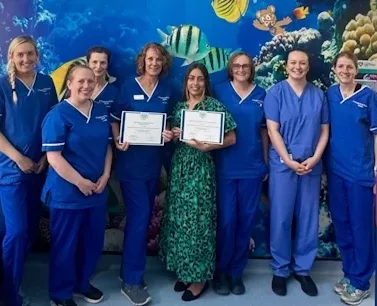
UK first for Leeds Congenital Echo Team
Support for families: June 2026
Ruth’s Round-up | July 2026
Join the CHSF team: Corporate Partnerships Manager
Join Our Facebook Group
Our private community group on Facebook is a peer-support forum for heart families to network with others who have shared experiences

Support for Families
We can offer a range of practical, wellbeing, financial and sign-posting support for our families at every stage of thir heart journey.